Science & natureAges 5–84 min read
By Olivia ·
10 Kitchen Science Experiments for Ages 5–8
Ten safe kitchen science experiments for ages 5 to 8 using everyday ingredients, with a simple question to ask and the science in one sentence.
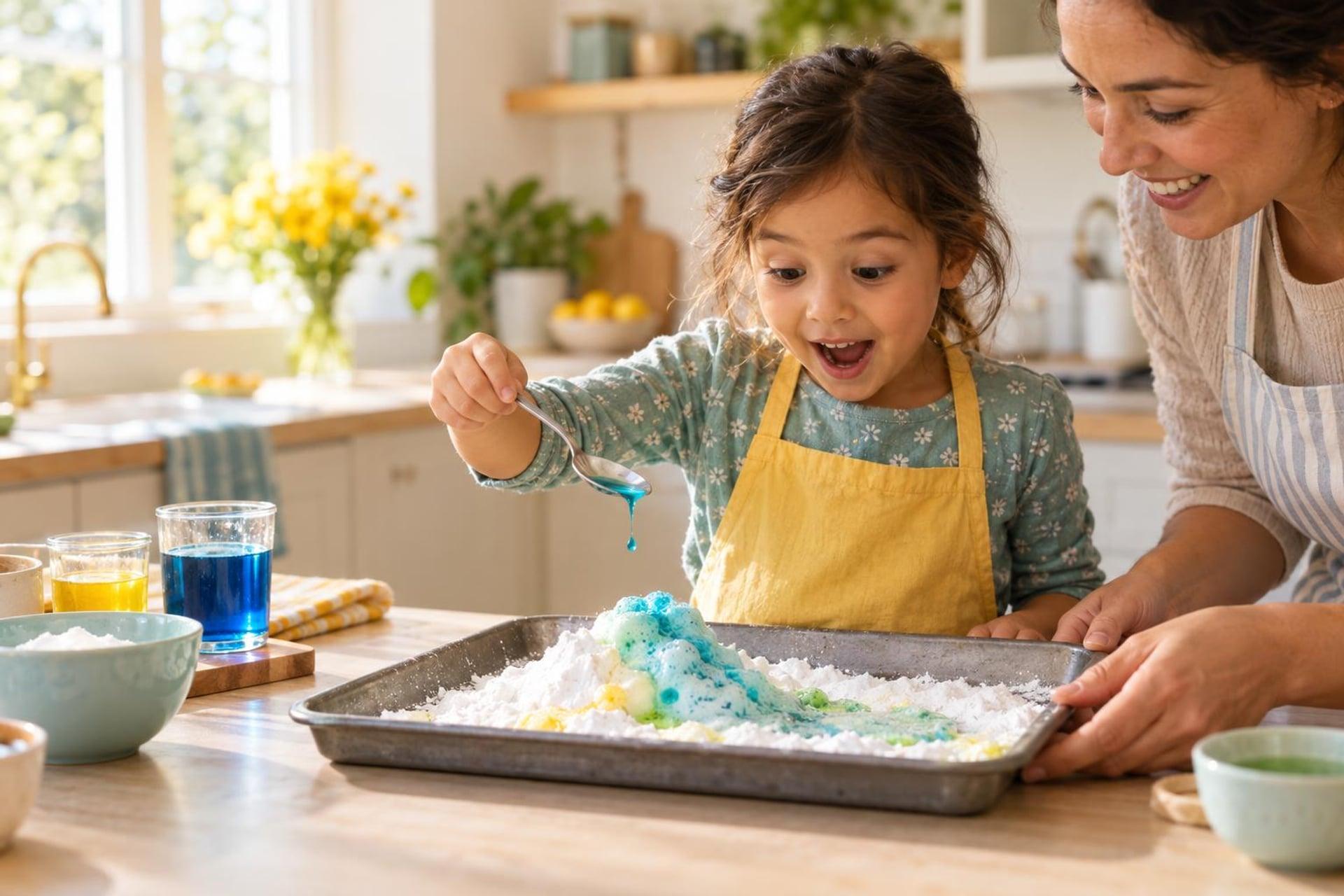
It is raining, your five-year-old is bored and the kitchen cupboard is full of science equipment you did not know you owned. These ten experiments need nothing you have to buy.
Choose experiments that are quick, safe and surprising. Ask your child to predict first, watch closely and say what they noticed. One experiment and one good question is enough for an afternoon.
How to run an experiment with a young child
- Ask what they think will happen. Any answer is a good one.
- Let them do the pouring and stirring.
- Ask what they see, hear and smell.
- Change one thing and try again.
- Finish with one sentence about what happened.
Use a baking tray under everything. It contains the mess and makes clearing up part of the routine.
Experiments 1 to 4: fizz and colour
1. Fizzing colours
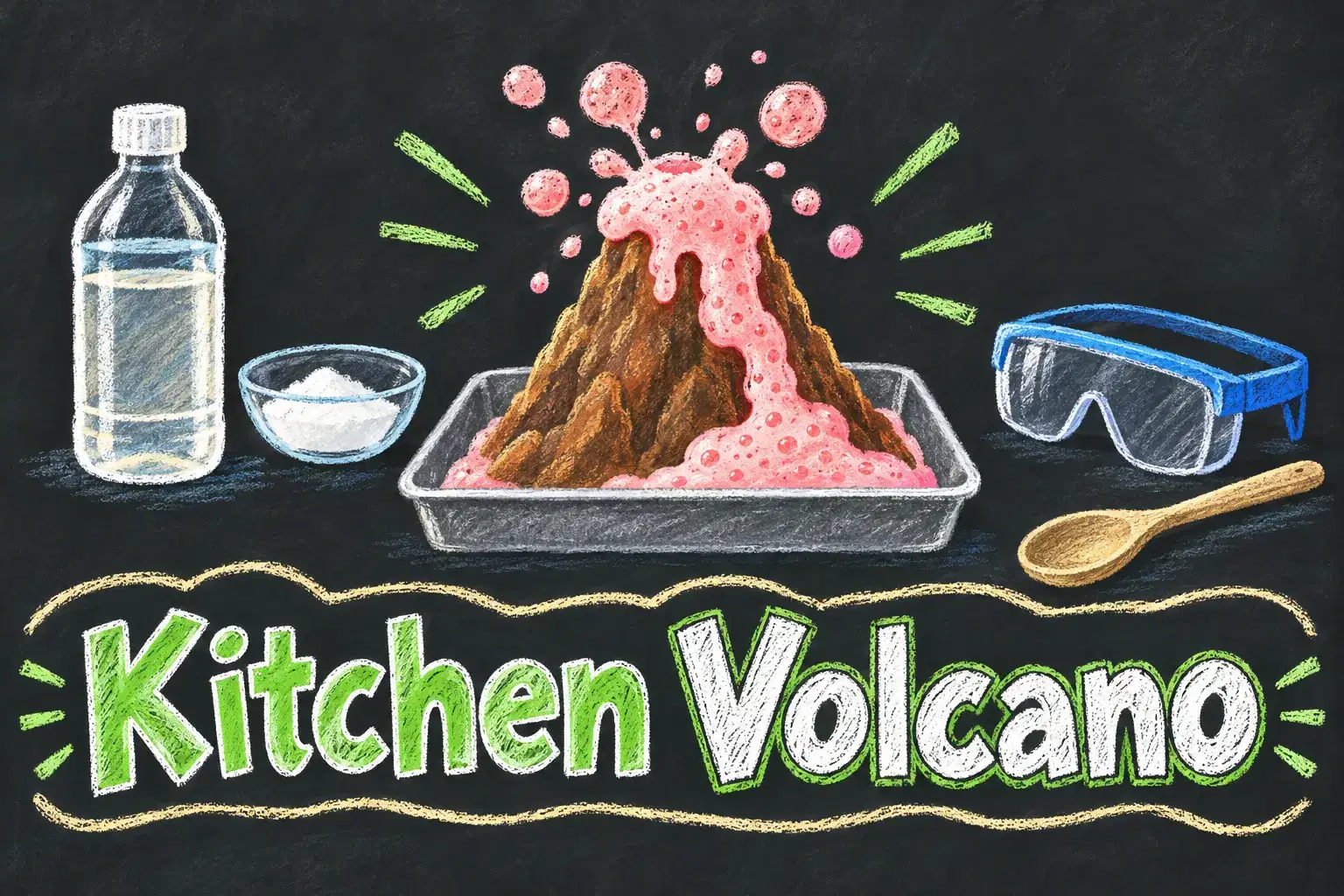
Spoon baking soda onto a tray and drip coloured vinegar onto it. The fizz is gas being made when the two mix.
2. Walking water
Stand three glasses in a row, the outer two with coloured water, and link them with folded kitchen paper. Water climbs the paper and the colours meet in the middle.
3. Milk fireworks
Add drops of food colouring to a plate of milk and touch the surface with a cotton bud dipped in washing-up liquid. The colours race away because soap breaks the surface of the milk.
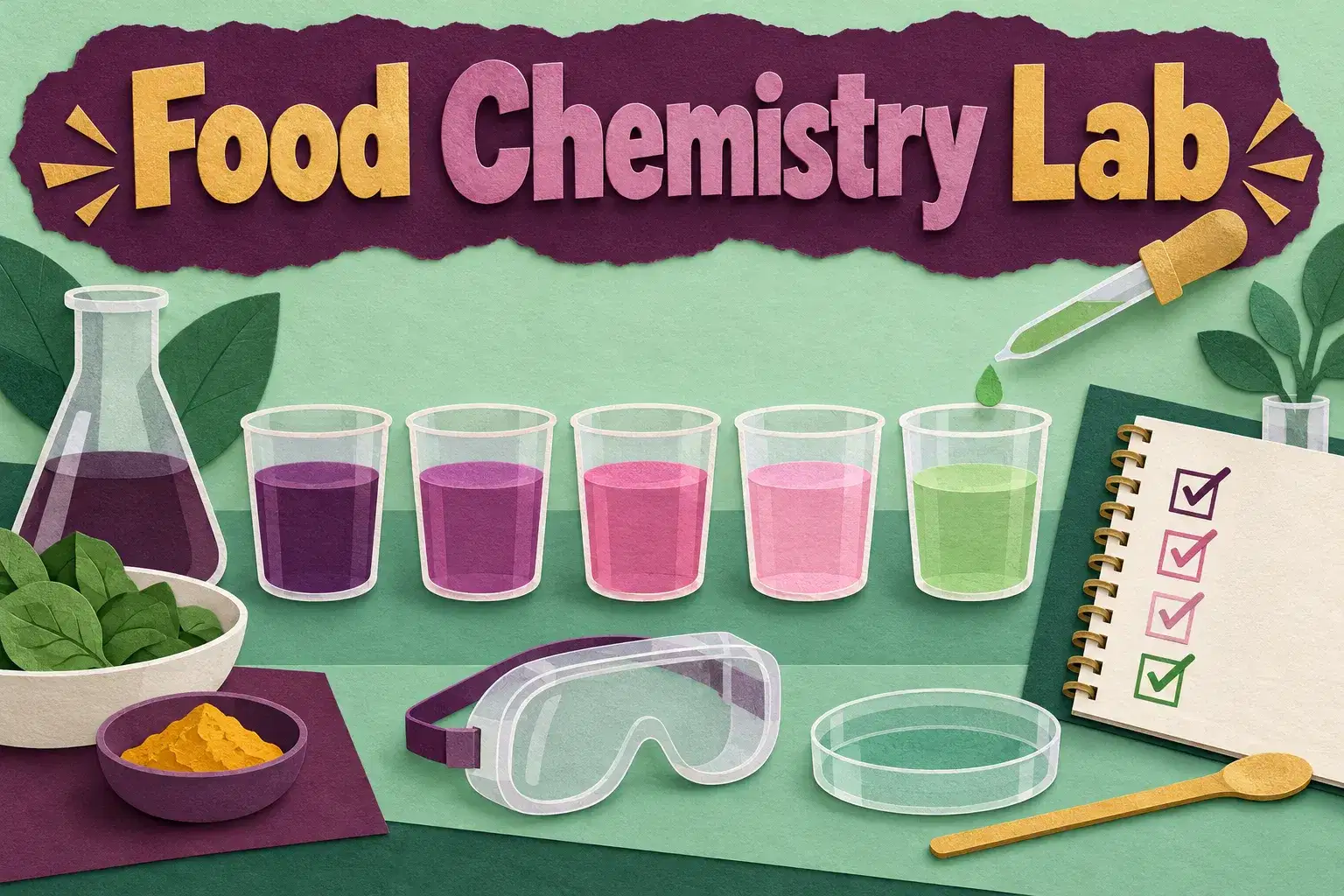
4. Cabbage colour change
An adult soaks chopped red cabbage in warm water. Children add lemon juice to one cup of the purple water and baking soda to another, and watch the colours change.
 A live class on this1-on-1 Earth & Space Science Experiments TutoringAges 8–13
Experiments 5 to 7: float, sink and dissolve
5. Sink or float
Predict, then test: an orange with its peel and without, a grape, a coin, a cork. The peeled orange sinks, which surprises everyone.
6. Dancing raisins
Drop raisins into a glass of fizzy water. Bubbles lift them up, pop, and let them fall again.
7. What dissolves?
Stir salt, sugar, flour and rice into separate cups of water. Some disappear and some do not.
| Experiment | Question to ask | The science in one line |
|---|---|---|
| Sink or float | Which will float? | Air trapped in the peel helps the orange float |
| Dancing raisins | Why do they go up? | Gas bubbles stick and lift |
| What dissolves? | Where did it go? | Some things break up too small to see |
Experiments 8 to 10: things that change
8. Butter in a jar
Shake cream in a sealed jar for several minutes. It thickens, then separates into butter and liquid.
9. Invisible ink
Write with lemon juice on paper and let it dry. An adult warms the paper gently with an iron or hairdryer and the writing turns brown.
10. Ice and salt
Sprinkle salt on one ice cube and leave another plain. The salted cube melts faster.
Heat and tasting. An adult should handle anything warm, and children should not taste experiments unless you have said that one is food.
Where to go next
When your child starts asking 'what if', they are ready for more. Try kitchen physics experiments and safe chemistry experiments at home for older children.
What parents can do next
- Pick two experiments and check you have the ingredients.
- Set out a tray, cups and spoons.
- Ask for a prediction before you start.
- Let your child choose what to change for a second try.
Frequently asked questions
Are these experiments safe for a five-year-old?
Yes, with an adult present. They use food ingredients, and an adult handles anything warm.
How long does each one take?
Most take 10 to 15 minutes. Walking water and invisible ink need a little waiting time.
What if the experiment does not work?
That is science too. Ask what might have gone wrong and try again with one change.
Do I need to explain the science?
One simple sentence is enough at this age. Noticing and asking questions matter more than vocabulary.
Find a science experiments class
Live classes run hands-on experiments with household materials and a teacher who asks good questions.