





Picture Patterns and Sequences

Children find what comes next in shape, colour and position patterns and explain the rule out loud.
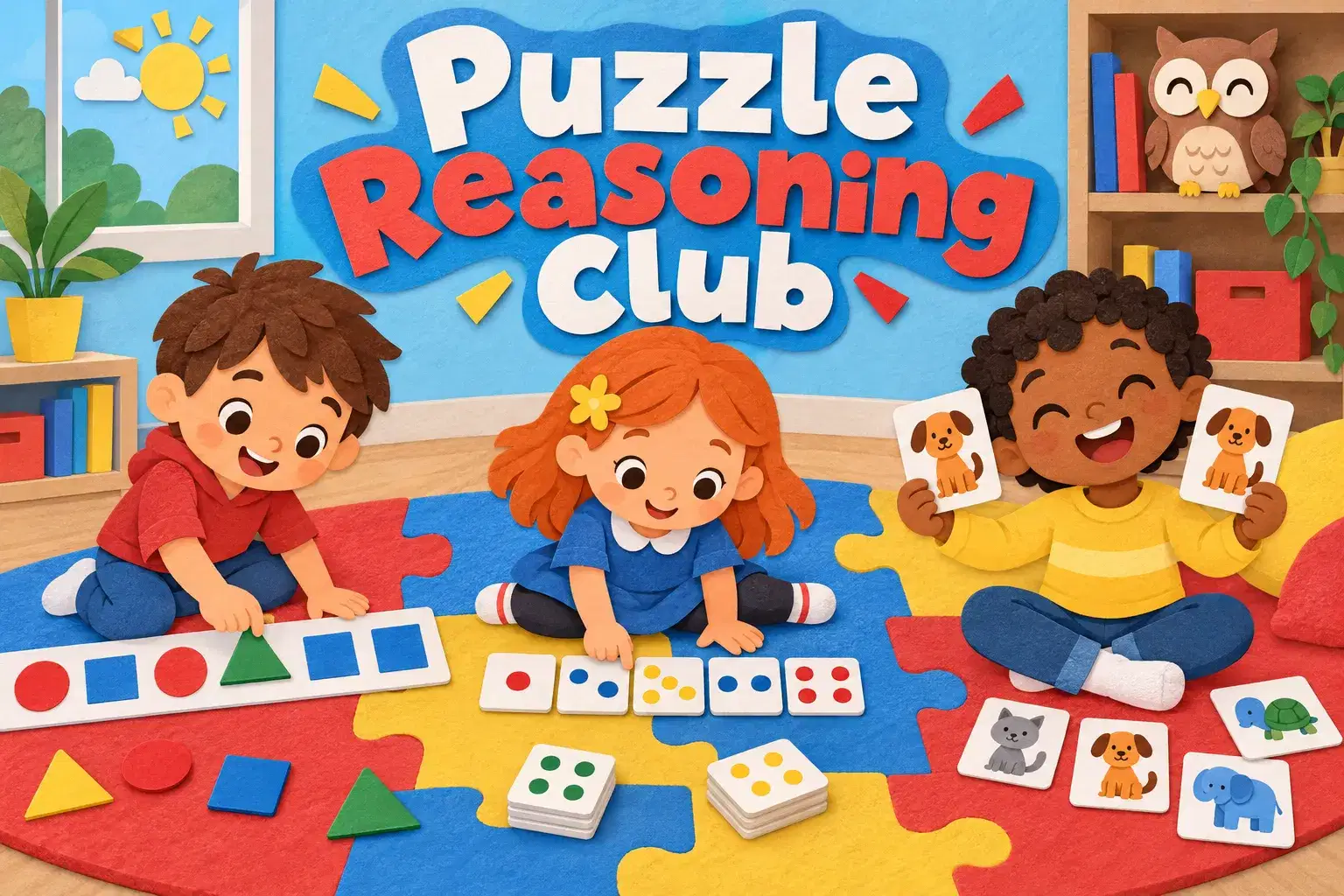
A weekly puzzle club for ages 6 to 8 that builds the reasoning skills used on gifted and talented screening tests. Through a 4-week rotating cycle of picture patterns, number puzzles, word analogies and shape challenges, children practice original puzzles in the style of common gifted tests.
Paid once.
Young children are natural puzzle solvers, and this club turns the reasoning skills used on gifted and talented screening tests into playful weekly challenges. Instead of drilling, kids solve, build and explain puzzles together in a small, friendly group.
The club follows a 4-week rotating cycle, so children can join any week. One week explores picture patterns and sequences, the next number puzzles and quantity thinking, then word and picture analogies with classification, and finally shapes, paper folding and spatial challenges. Each theme returns with new puzzles in the next cycle.
All puzzles are original and written in the style of common gifted tests such as the CogAT, NNAT and OLSAT; no official test questions are used. Children learn useful habits like looking at every answer choice, saying the rule out loud and checking their thinking.
The club is dyslexia-friendly. Most puzzles are picture-based, any written words are read aloud, and children can answer by pointing, holding up cards or saying their choice. Creative thinking is celebrated: kids often invent their own puzzle for friends to solve at the end.
The goal is confidence and curiosity with these question types, not a particular test result. Families receive a short optional puzzle page each week to try at home.
Each session starts with a quick brain warm-up, then the teacher introduces the week's puzzle type with one example. Children solve puzzles together, explain their rule and finish by creating a puzzle of their own.
Week 1: Picture Patterns and Sequences – Find what comes next in shape and colour patterns.
Week 2: Number Puzzles and Quantity Thinking – Compare groups, balance scales and solve simple number trains.
Week 3: Analogies and Classification – Match picture pairs and find which one does not belong.
Week 4: Shapes, Folding and Spatial Puzzles – Explore paper folding, shape matrices and pieces that fit together.

Recognise and continue picture and shape patterns
Solve simple number and quantity puzzles
Explain analogies and classification rules in their own words
Use paper folding and shape matrices to build spatial reasoning
Check every answer choice before choosing
Invent a simple puzzle for others to solve
Puzzles are mostly picture-based, all written words are read aloud and children can answer by pointing or holding up cards, so early and struggling readers take part fully.
No preparation needed. Children should be able to count to 20 and recognise basic shapes.
Printed puzzle pages sent before class (optional, also shown on screen); crayons or coloured pencils; a few square sheets of paper for folding; child-safe scissors.
A step-by-step plan of what your child learns, class by class.
Children find what comes next in shape, colour and position patterns and explain the rule out loud.
Children compare groups, balance picture scales and solve simple number trains using counters and drawings.
Children match picture pairs that go together in the same way and find the one that does not belong.
Children explore paper folding, shape matrices and pieces that fit together, then invent a shape puzzle for a friend.
Next 7 days, US Eastern Time
It is for children aged 6 to 8 who enjoy puzzles or who may take a gifted and talented screening test. Children of all levels are welcome, and puzzles are adjusted so everyone can join in.
No. Every puzzle is original and written in the style of common gifted tests such as the CogAT, NNAT and OLSAT. We never use official test questions.
Yes. Most puzzles are picture-based, any words are read aloud and children can answer by pointing or holding up cards. The club is designed to be dyslexia-friendly.
The club runs on a 4-week rotating cycle, so each puzzle type returns in the next cycle with fresh puzzles. You can also try the optional take-home puzzle page for the missed week.
We cannot promise any test result or placement. The club builds familiarity with the puzzle types, reasoning habits and confidence in a fun setting.
Drawing from seventeen years of classroom experience, this educator makes exam preparation engaging and practical. Instruction targets Cambridge Starters, Movers and A2 Key skills—speaking, listening, reading and writing—using targeted practice, mock-style tasks and confidence-bu…
Sonia K.
Ages 7–10 · 45 min · 4 / Week
$19.00per classSee schedule

Nandini S.
Ages 10–14 · 60 min · 1 / Week
$20.00per classSee schedule
Tapati N.
Ages 6–9 · 45 min · 1 / Week
$20.00per classSee schedule
Pooja K.
Ages 15–17 · 60 min · 1 / Week
$20.00per classSee schedule
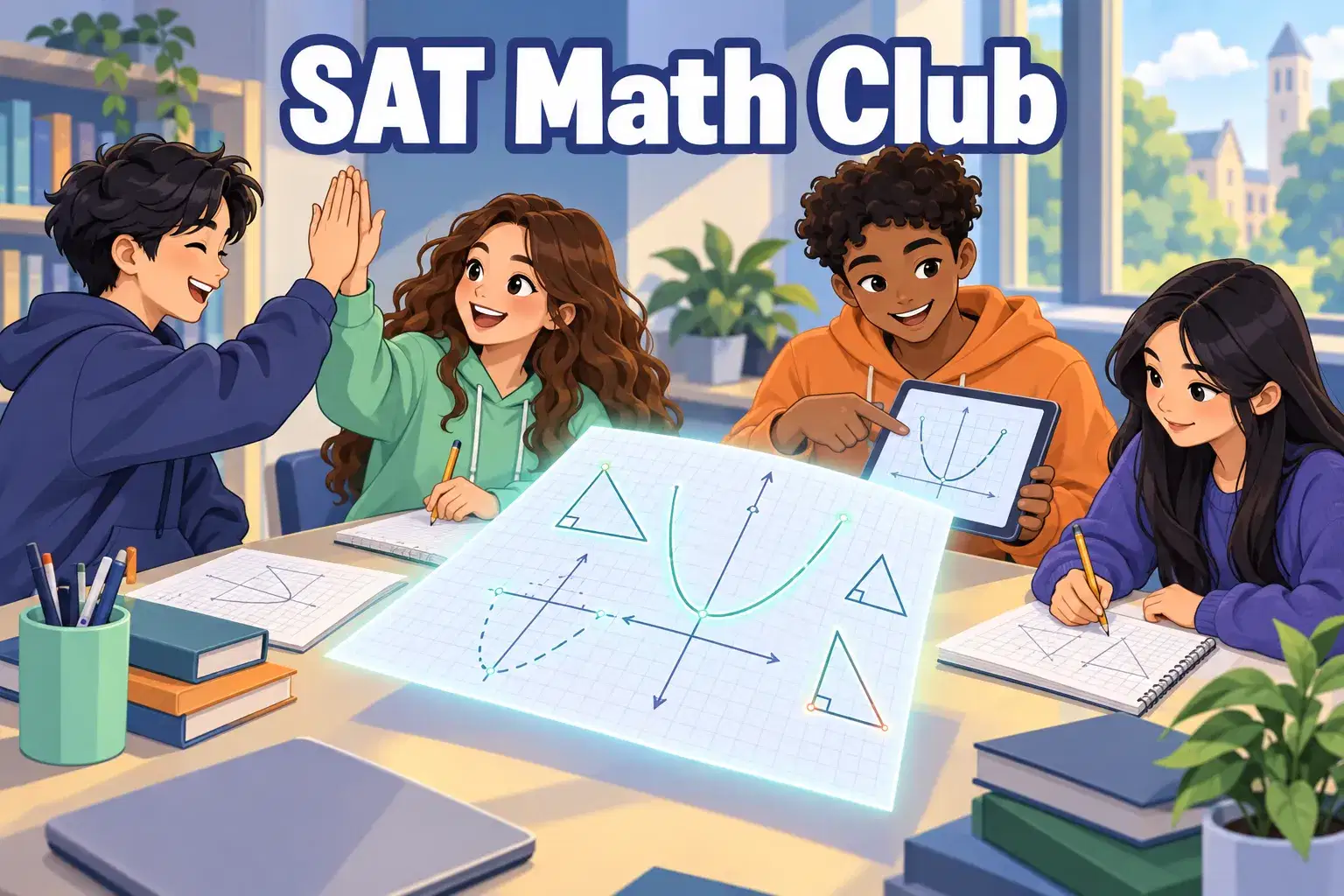
Nandini S.
Club · Ages 15–17 · 75 min · 1 / Week
$28.00per classSee schedule

T. R.
Tutoring · Ages 15–18 · 45 min · 1 / Week
$26.00per classSee schedule

Simran T.4.7
Tutoring · Ages 15–18 · 55 min · 1 / Week
$27.00per classSee schedule
Sonia K.
Mixed Level
Level
7–10
Ages
45 min
Duration
4 / Week
Classes
1
Weeks
Nandini S.
Intermediate
Level
10–14
Ages
60 min
Duration
1 / Week
Classes
1
Weeks
Tapati N.
Beginner
Level
6–9
Ages
45 min
Duration
1 / Week
Classes
1
Weeks
Pooja K.
Advanced
Level
15–17
Ages
60 min
Duration
1 / Week
Classes
1
Weeks
Nandini S.
Advanced
Level
15–17
Ages
75 min
Duration
1 / Week
Classes
Ongoing
Weeks
T. R.
Advanced
Level
15–18
Ages
45 min
Duration
1 / Week
Classes
Flexible
Weeks
Simran T.
Intermediate
Level
12–16
Ages
50 min
Duration
1 / Week
Classes
1
Weeks
Simran T.
Mixed Level
Level
15–18
Ages
55 min
Duration
1 / Week
Classes
Flexible
Weeks