Science & natureAges 5–105 min read
By Olivia ·
How to Grow a Windowsill Garden With Your Child
Fast-growing seeds, simple containers and a growth journal: a low-mess plant project that teaches kids how plants live.
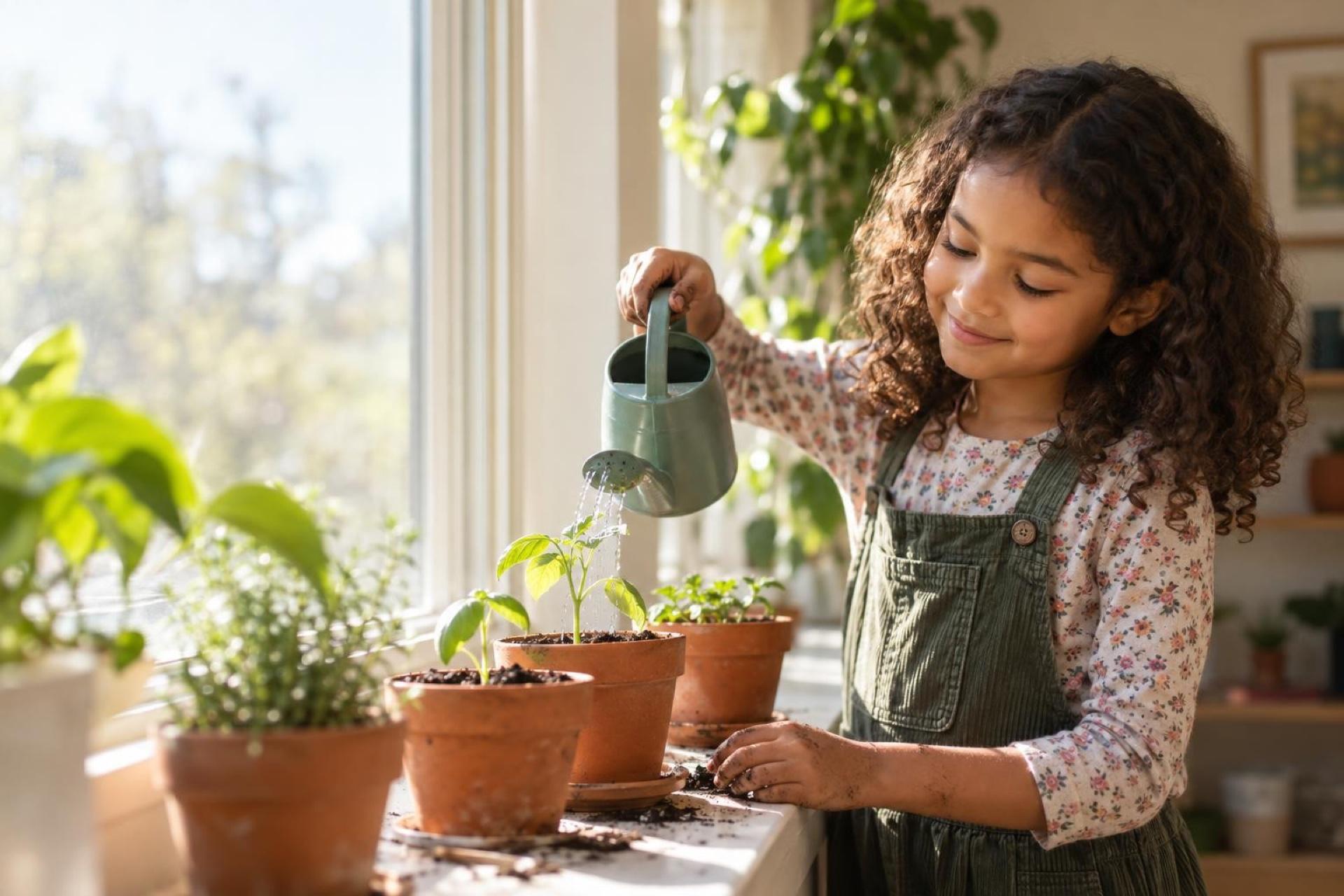
A windowsill, a few seeds and a pot of soil are enough to show a child how plants live. Fast-growing seeds give results in days, which keeps young gardeners interested long enough to learn something.
Choose quick seeds such as cress, radish or beans, let your child do the planting and watering, and keep a short growth journal. Light, water and patience are the whole lesson.
Why grow something indoors
Growing a plant from seed teaches what living things need, and it teaches it slowly enough for a child to notice each stage. It also builds a small daily habit of care. And unlike a garden bed, a windowsill works in any home, in any season with enough light.
What to grow
| Plant | First shoots | Why it works for kids |
|---|---|---|
| Cress | A few days | Grows on damp kitchen paper and can be eaten within about a week or two |
| Radish | Under a week | Fast, and the root is ready to pull in about a month |
| Beans | About a week | Big seeds that are easy to handle, with roots you can watch |
| Pea shoots | About a week | Tasty to snip and eat |
| Basil | One to two weeks | Smells good and goes on pizza |
Timings vary with warmth and light, so treat them as a guide. Check the seed packet for details.
 A live class on this1st Grade Full Curriculum — Part 2Ages 5–7
What you need
- Seeds from a garden shop or supermarket.
- Small pots, or clean yoghurt pots with holes poked in the base by an adult.
- A tray or saucer to catch water.
- Peat-free potting compost.
- A small watering can or a cup.
- A bright windowsill.
How to plant and care for the seeds
- Fill each pot almost to the top with compost and water it lightly.
- Plant seeds at the depth given on the packet. As a rough guide, small seeds go just under the surface and big seeds a little deeper.
- Label each pot with the plant name and the date.
- Put the pots on a bright windowsill and turn them every few days so the shoots grow straight.
- Keep the compost damp but not soggy. Touch the surface each day; water when it feels dry.
Too much water is the most common mistake. If the pot sits in a puddle, tip the extra water out of the saucer. Wash hands after handling compost.
See the roots: bean in a jar
Bean in a jar
Line the inside of a clear jar with damp kitchen paper and push a bean seed between the paper and the glass. Keep the paper damp. Within about a week your child can watch the root push down and the shoot push up, whichever way round the bean was placed.
Ask why the root always goes down. Plants sense gravity, and roots grow toward it while shoots grow away.
Keep a growth journal
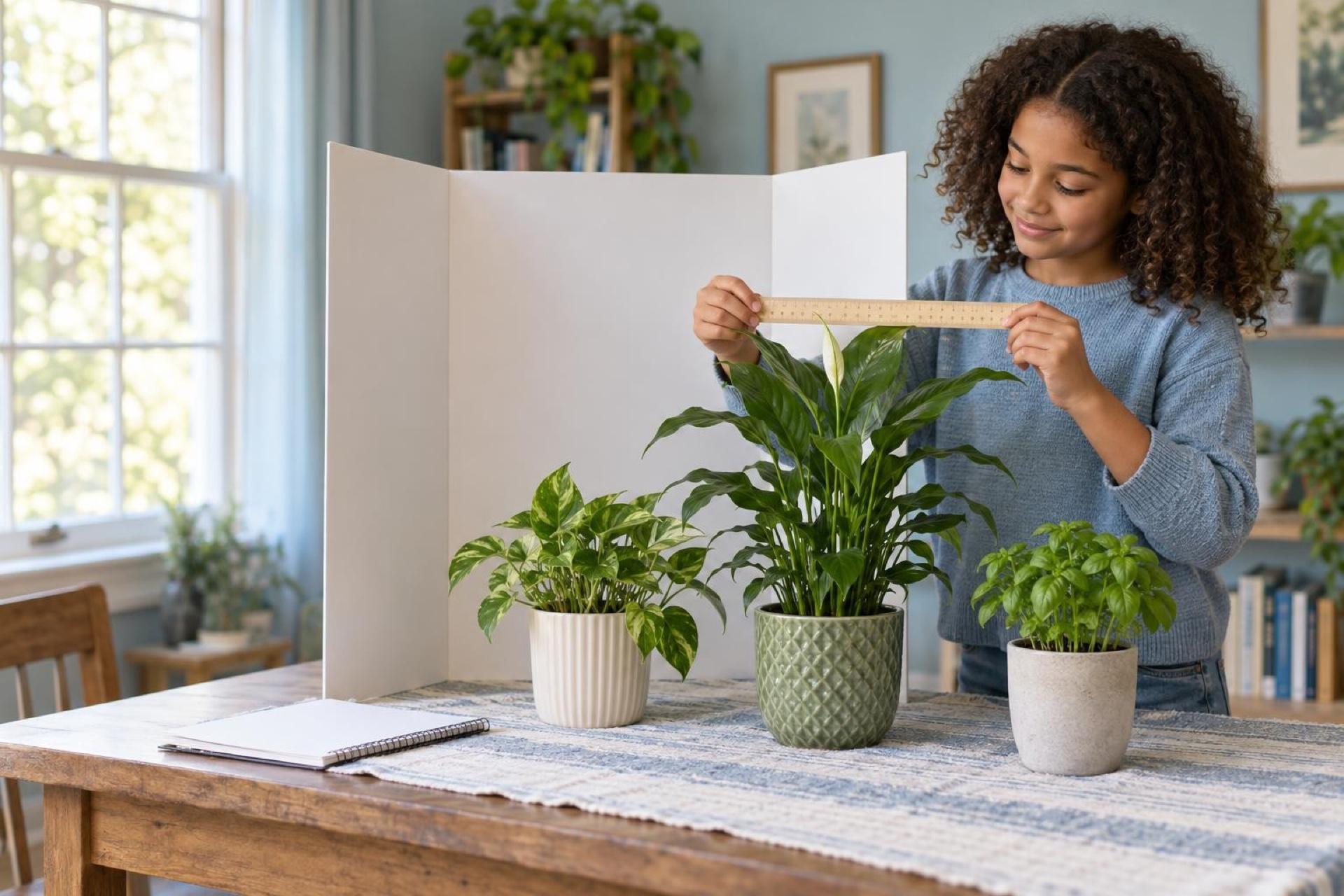
Every two or three days, your child measures the tallest shoot with a ruler, writes the date and height and draws what they see. After a few weeks they can turn the numbers into a simple line graph.
Turn it into an experiment. Grow two pots of the same seeds and change one thing: one on the windowsill and one in a dim corner, or one watered and one not. Ask your child to predict the result first.
Our guide on starting a nature journal has more ideas for drawing and recording.
What parents can do next
- Pick two kinds of seed with your child, one very fast and one a little slower.
- Plant them together and label the pots.
- Agree who waters and when, and put a reminder where your child will see it.
- Eat what you grow, even if it is only a sprinkle of cress on a sandwich.
Frequently asked questions
What if our windowsill doesn't get much sun?
Choose the brightest window you have. Cress and pea shoots cope with less light than most. Shoots that grow long, pale and thin are asking for more light.
Our seeds didn't come up. What went wrong?
Usually too much or too little water, old seeds or a cold spot. Try again with fresh seeds and treat it as part of the experiment.
What age is this for?
Children from about 5 can plant and water with help. From 7 or 8, most can look after the pots and keep the journal themselves.
Can we grow food scraps instead of seeds?
Yes. The base of a lettuce or spring onion stood in a little water will often regrow leaves, which is fun to watch alongside seeds.
More science to try
Live science classes give children new experiments and a teacher to answer their questions.