Science & natureAges 5–105 min read
By Amelia ·
Ocean Animal Activities for Kids Who Love the Sea
Crafts, experiments, drawing ideas and virtual aquarium visits for kids who can't get enough of sharks, whales and octopuses.
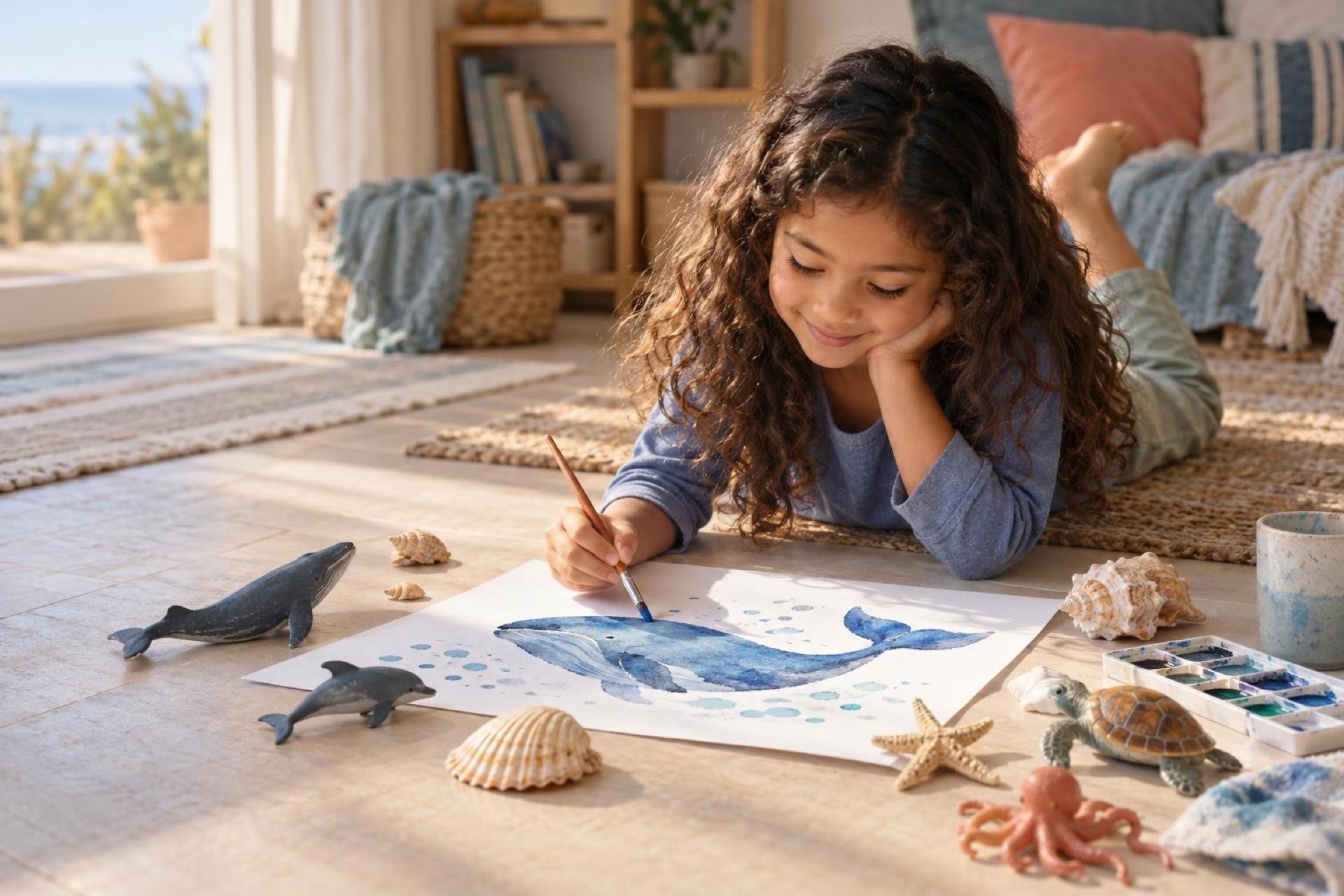
Some children can name more sharks than football teams. If yours is one of them, that interest is a ready-made route into science, art, reading and writing. These activities keep the ocean theme going at home.
Use the ocean as the hook for everything else: an experiment about floating, a drawing of a favourite animal, a fact file to write and a live aquarium camera to watch. Follow the animal your child loves most.
Why follow the interest
A child who loves sea animals will read harder books, write longer sentences and sit through a longer experiment if octopuses are involved. The subject does the motivating for you. It also opens big science ideas, such as habitats, food chains and adaptation, in a way that feels like play.
Ocean experiments
Why is it easier to float in the sea?
Fill two glasses with water. Stir several spoonfuls of salt into one until no more dissolves. Gently lower an egg into each. In fresh water it sinks; in salty water it floats, because salt water is denser.
How do whales stay warm?
Fill a bowl with cold water and ice. Put one hand in a plastic bag, then into a second bag half filled with cooking fat or butter, so the fat surrounds the hand. Put the other hand in an empty bag. Dip both in the water. The fat-covered hand stays warmer, just as blubber keeps a whale warm.
Ocean layers in a jar
Pour water with blue food colouring into a jar, then slowly add cooking oil. The oil floats on top. Talk about how the sunlit surface of the ocean differs from the dark water below.
Wash hands after the egg and fat experiments, and keep food colouring away from clothes and carpets.
 A live class on thisAdvanced Veterinary Science: Nutrition, Behavior, and Clinical TopicsAges 8–12
Ocean art and crafts
- Paper plate jellyfish. Half a paper plate for the bell, with strips of ribbon or paper for tentacles.
- Draw to scale. Chalk the length of a blue whale on the pavement, about 25 to 30 metres, and compare it with a dolphin and with your child.
- Shoebox habitat. Build a coral reef or deep-sea scene inside a box with paper, card and modelling clay.
- Camouflage challenge. Draw a fish, then colour a background that hides it.
Read, write and research
| Activity | What it practises |
|---|---|
| Animal fact file: size, food, habitat, one surprising fact | Research and note-taking |
| Which is which? Compare a dolphin and a shark | Sorting and comparing; fish and mammals |
| A day in the life of an octopus | Story writing from an animal's point of view |
| Food chain drawing with arrows | Understanding how living things depend on each other |
The library's non-fiction shelves are a good place to start. Let your child choose the animal.
Watch real animals
Many aquariums and research groups run free live cameras showing sharks, jellyfish, sea otters and reef fish. Our guide to the best live animal cams for kids lists some to try. Check that a link still works before you promise it.
Give watching a purpose. Ask your child to tally how many different animals they see in ten minutes, or to sketch one and note how it moves.
If you live near the coast, a rock-pool visit or a beach walk adds the real thing. Look closely, handle nothing roughly and put everything back where you found it.
What parents can do next
- Ask your child to name their favourite sea animal and start there.
- Try one experiment and one craft this week.
- Borrow two ocean books from the library.
- Help your child make a fact file to share with a grandparent or friend.
Frequently asked questions
What age are these activities for?
They suit children from about 5 to 10. Younger children will need help with the experiments; older ones can do the research and writing on their own.
My child only wants to learn about sharks. Is that a problem?
No. A deep interest in one animal is a great base. You can widen it gently: what do sharks eat, where do they live, what else lives there?
Are there classes for kids who love ocean animals?
Yes. Live online classes cover marine animals through science, drawing and discussion, in small groups.
How can we learn about protecting the ocean?
Start small: a litter pick at a beach or park, using less single-use plastic at home, and reading about one animal that needs protection.
Classes for young ocean experts
Live classes on animals and ocean life let children go deeper with a teacher who shares their enthusiasm.