Science & natureAges 8–145 min read

By Charlotte ·

Science Fair Project Ideas by Grade (and How to Help)

Testable science fair questions for grades 3–8, a simple timeline, and how parents can help without doing the project.
Science Fair Project Ideas by Grade (and How to Help)

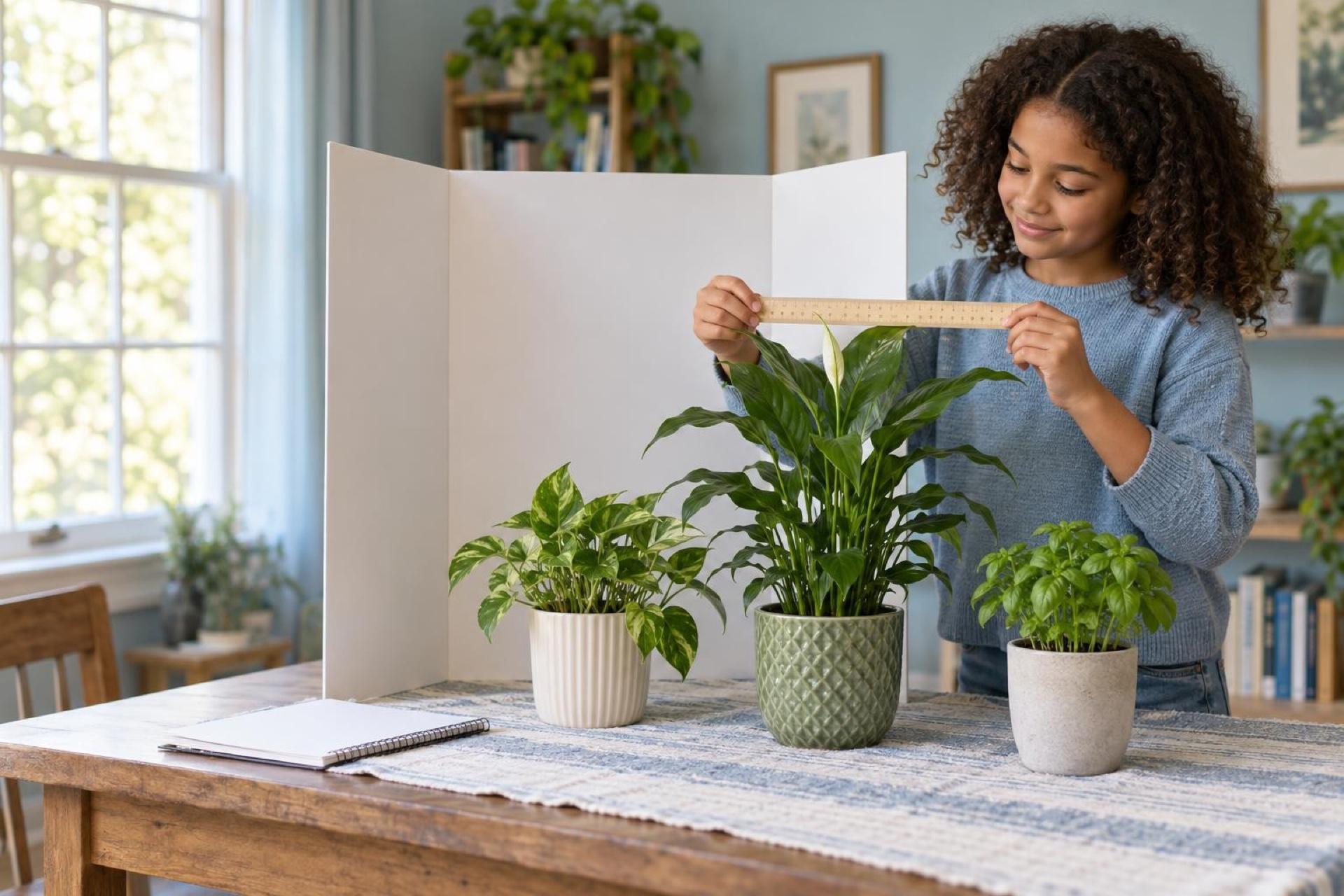
A good science fair project starts with a question your child can test, not a volcano that erupts on cue. The best ones are simple, measurable and chosen by the child. Here are ideas for grades 3 to 8, and how to help without taking over.

Quick takeaway

Choose a question with something to change and something to measure. Keep the project small enough to repeat several times, and start at least four weeks before the fair.

What makes a good project

Judges and teachers usually look for a real experiment, where the student changes one thing, measures the result and keeps everything else the same. A model or a demonstration shows how something works, but it does not test anything.

DemonstrationTestable question
Make a baking soda volcanoDoes the amount of baking soda change how high the foam rises?
Build a paper aeroplaneWhich wing shape flies farthest?
Grow a bean plantDo beans grow taller with more hours of light?

A quick check: can your child say what they will change, what they will measure and what they will keep the same? If so, it is an experiment.

Ideas for grades 3 to 4

  • Which paper towel brand soaks up the most water?
  • Does the temperature of water change how fast sugar dissolves?
  • Which ball bounces highest: tennis, rubber or ping-pong?
  • Do seeds sprout faster in the light or in the dark?
  • Which shape of paper aeroplane flies farthest?
A live class on this10th Grade Core Curriculum — Unit 1 (English, Chemistry, Geometry, Geography)Ages 14–17

Ideas for grades 5 to 6

  • How does the height of a ramp change how far a toy car rolls?
  • Which material keeps a drink cold longest: foil, cloth, bubble wrap or nothing?
  • Does the length of a pendulum string change how long a swing takes?
  • Which liquid makes a cut apple brown slowest: lemon juice, water, salt water or none?
  • How does the amount of water affect how tall a plant grows?

Ideas for grades 7 to 8

  • How does the angle of a small solar panel change the power it produces?
  • Does the type of surface change the friction on a sliding block?
  • How does salt concentration change the temperature at which water freezes?
  • Which bridge design holds the most weight for the same amount of material?
  • Does background music change how many words people remember? Use volunteers, with their permission.
Watch for:

Check your school's rules before starting. Many fairs need approval in advance for projects involving people, animals, heat, sharp tools or chemicals.

A four-week timeline

WeekWhat your child does
1Chooses a question, writes a prediction and lists materials
2Runs the experiment at least three times and records every result
3Makes a table and a graph, and writes what the results show
4Builds the display board and practises explaining it

Repeating the test matters. One result could be a fluke; three or more show a pattern.

How to help without doing it for them

  • Do: help them narrow the question, buy materials, supervise anything risky and listen to a practice presentation.
  • Ask: what are you changing? How will you measure it? What surprised you?
  • Don't: choose the topic, run the tests, write the report or design the board.
A useful approach:

If the results do not match the prediction, that is a finding, not a failure. Encourage your child to report what happened and suggest why.

For experiment ideas to build on, see our guides to safe chemistry experiments at home and building a simple circuit.

Frequently asked questions

How long should a science fair project take?

About four weeks is comfortable. Plant-growing projects need longer, so start those early.

Does the project need to be original?

It does not need to be new to science. A well-run test of a simple question, in your child's own words, is what counts.

What goes on the display board?

Usually the question, the prediction, the method, the results with a graph, and the conclusion. Check your school's guidelines.

What if the experiment goes wrong?

Write down what happened and try again if there is time. Explaining what went wrong and what you would change shows real scientific thinking.

Explore next

Build science skills with a teacher

Live science classes help children ask good questions, run fair tests and explain their results.

Explore Science Classes

Next in Science & nature

Related courses

Weekly Test Confidence Club: Calm, Focused Test Taking
Club
PK

Pooja K.

Weekly Test Confidence Club: Calm, Focused Test Taking

A weekly club that helps tweens and teens feel calm and focused before and during tests. In a 4-week rotating cycle, learners practice breathing and reset routi…

Beginner

Level

10–15

Ages

45 min

Duration

1 / Week

Classes

Ongoing

Weeks

$16.00per class
See schedule
1-Week Gifted Program Prep Bootcamp: Logic and Reasoning
SK

Sonia K.

1-Week Gifted Program Prep Bootcamp: Logic and Reasoning

A 1-week bootcamp of four 45-minute classes that builds the logic and reasoning skills used on gifted program screening tests. Learners team up on original patt…

Mixed Level

Level

7–10

Ages

45 min

Duration

4 / Week

Classes

1

Weeks

$19.00per class
See schedule
One-Time Class: ISEE and SSAT Entrance Exam Tips
NS

Nandini S.

One-Time Class: ISEE and SSAT Entrance Exam Tips

A one-time 60-minute class that walks students through what to expect on the ISEE and SSAT entrance exams. Learners try original practice questions in the style…

Intermediate

Level

10–14

Ages

60 min

Duration

1 / Week

Classes

1

Weeks

$20.00per class
See schedule
One-Time Class: Gifted and Talented Test Practice (CogAT-Style Puzzles)
TN

Tapati N.

One-Time Class: Gifted and Talented Test Practice (CogAT-Style Puzzles)

A one-time 45-minute class where young learners try fun original puzzles in the style of the CogAT and other gifted and talented tests. Children practice verbal…

Beginner

Level

6–9

Ages

45 min

Duration

1 / Week

Classes

1

Weeks

$20.00per class
See schedule
Weekly Gifted Test Prep Club: Puzzles and Reasoning (Ages 6–8)
Club
TN

Tapati N.

Weekly Gifted Test Prep Club: Puzzles and Reasoning (Ages 6–8)

A weekly puzzle club for ages 6 to 8 that builds the reasoning skills used on gifted and talented screening tests. Through a 4-week rotating cycle of picture pa…

Mixed Level

Level

6–8

Ages

40 min

Duration

1 / Week

Classes

Ongoing

Weeks

$15.00per class
See schedule
One-Time Class: ACT Reading Strategies Crash Course
PK

Pooja K.

One-Time Class: ACT Reading Strategies Crash Course

A one-time 60-minute crash course on reading strategies for the ACT Reading section. Teens practice passage mapping, question triage and pacing on original pass…

Advanced

Level

15–17

Ages

60 min

Duration

1 / Week

Classes

1

Weeks

$20.00per class
See schedule
Weekly SAT Math Practice Club
Club
NS

Nandini S.

Weekly SAT Math Practice Club

A weekly club where high schoolers practice SAT-style math problems together in a 4-week rotating cycle. Teens work through algebra, advanced math, problem solv…

Advanced

Level

15–17

Ages

75 min

Duration

1 / Week

Classes

Ongoing

Weeks

$28.00per class
See schedule
One-Time Class: Beat Procrastination and Start Your Homework
GS

Grace S.

One-Time Class: Beat Procrastination and Start Your Homework

A single 45-minute class that helps kids stop putting off homework and actually get started. Learners discover why they procrastinate, try quick start-up tricks…

Beginner

Level

9–13

Ages

45 min

Duration

1 / Week

Classes

1

Weeks

$20.00per class
See schedule
One-Time Class: Advanced Note-Taking Systems (Cornell, Zettelkasten and Mind Maps)
RG

Ritika G.

One-Time Class: Advanced Note-Taking Systems (Cornell, Zettelkasten and Mind Maps)

A 75-minute advanced class where teens aged 13–17 learn and practise three powerful note-taking systems: Cornell notes, Zettelkasten and mind maps. Students lea…

Advanced

Level

13–17

Ages

75 min

Duration

1 / Week

Classes

1

Weeks

$25.00per class
See schedule
Weekly Advanced Study Lab for High Schoolers
Club
GV

G. V.

Weekly Advanced Study Lab for High Schoolers

An advanced weekly study lab where high schoolers aged 14–17 learn evidence-based techniques such as active recall, spaced repetition and practice testing, then…

Advanced

Level

14–17

Ages

75 min

Duration

1 / Week

Classes

Ongoing

Weeks

$27.00per class
See schedule
Weekly Homework Accountability Club
Club
GS

Grace S.

Weekly Homework Accountability Club

A supportive weekly club where students aged 10–14 plan their week, work through homework in focused sprints and check in on progress with a coach and peers. Si…

Beginner

Level

10–14

Ages

45 min

Duration

1 / Week

Classes

Ongoing

Weeks

$16.00per class
See schedule
Preschool Story Theater Workshop (Ages 3–5)
DI

Deepa I.

Preschool Story Theater Workshop (Ages 3–5)

A two-week story theater workshop where children aged 3–5 act out classic tales with silly voices, big movements and simple props. Gentle 25-minute classes help…

Beginner

Level

3–5

Ages

25 min

Duration

2 / Week

Classes

2

Weeks

$15.00per class
See schedule