By Peyton Griffin ·
How to Start a Nature Journal with Your Child
Start a nature journal with your child using just a notebook and pencil. Simple steps, age-by-age tips, prompts and safety notes for outdoor observing.
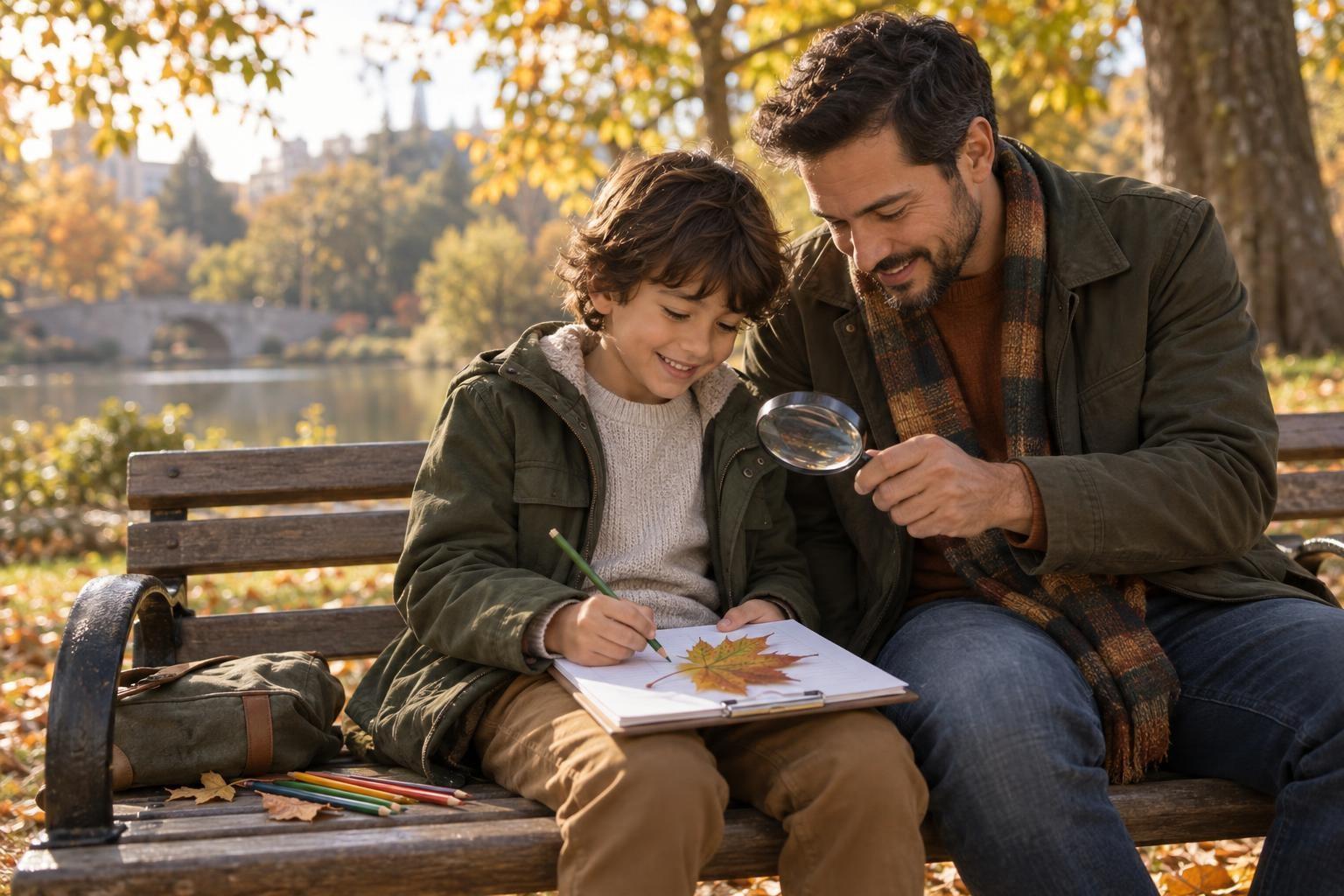
Starting a nature journal takes just a notebook, a pencil and ten minutes outside. Have your child draw one animal or plant, write the date and place, and note one thing they noticed. That simple habit, repeated over weeks, turns a walk into real observation.
You don't need to be an artist or a naturalist to help. Pack a small kit, pick one subject, look for a full minute, then draw, label and write one observation and one question. Use the prompts "I notice, I wonder, it reminds me of", come back to the same spot each week, and look but don't touch.
What you need
Keep the kit small enough to grab on the way out the door. A bag that lives by the shoes works well.
- A notebook. Plain or sketch paper is best. A sturdy cover helps when there's no table.
- A pencil and eraser. Pencil is forgiving and works in damp weather.
- Colored pencils (optional). A small set of five or six colors is plenty.
- A clipboard or hard surface for younger kids.
- A magnifying glass (optional). It makes bugs, bark and leaves much more interesting.
- A small ruler or tape measure for older kids who want to record sizes.
How to make the first entry
The first page sets the tone, so keep it short and easy to finish. Here's a simple routine.
- Pick a spot. A backyard, park bench, balcony or window all count. Nature is everywhere, even in a city.
- Write the basics at the top. Add the date, time, place and weather. This makes the journal useful later when you compare pages.
- Choose one thing. A single leaf, bird, ant or flower. One subject keeps it from feeling overwhelming.
- Look for a full minute before drawing. Set a timer if it helps. Kids notice far more when they slow down.
- Draw it. Encourage big, simple shapes first, then details. Remind them it's a record, not an art contest.
- Add labels. Arrows pointing to "fuzzy," "six legs" or "smells like mint" turn a sketch into science.
- Write one observation. Something they noticed, like "the bee visited three flowers."
- Write one question. "Why are some leaves red already?" Questions give you something to look up together.
Three prompts that work for any age
Many naturalists use a simple trio of prompts. They work just as well for a five-year-old as for a teen.
- I notice… What do you see, hear or smell?
- I wonder… What questions does it raise?
- It reminds me of… What does it look like or connect to?
Younger kids can say their answers out loud while you write them down. Older kids can fill a whole page with them.
Adjusting for different ages
| Age | What to focus on | Tips |
|---|---|---|
| 3–5 | Drawing, colors, simple words | You write, they draw. Tape in a leaf or petal. |
| 6–9 | Labels, counting, short sentences | Count legs, petals or birds. Compare two things side by side. |
| 10–13 | Measurements, maps, questions | Sketch a small map of the spot. Track one tree across seasons. |
| 14+ | Field notes, research, identification | Add scientific names. Look up behavior and habitat. |
Ideas to keep the journal going
The magic of a nature journal comes from repetition. A few routines make it easier to come back.
- Adopt a "sit spot." Visit the same place once a week and see what changes.
- Follow one tree for a year. Draw it each month as the leaves, buds and visitors change.
- Do a window journal. On rainy days, record birds at a feeder or clouds from inside.
- Try a "tiny world" page. Mark a small square of ground and draw everything inside it.
- Use animal tracks. After rain or snow, sketch footprints and guess who made them.
- Visit the shore or an aquarium. Shells, tide pools and fish make great subjects for ocean lovers.
Identifying what you find
Kids will want to know what they saw. A local field guide from the library is a great start.
Free apps can help too. iNaturalist offers Seek, a free app that suggests what a plant or animal might be from the camera view. Treat the answer as a guess to check, not a final word.
Encourage your child to draw first and identify second. Looking closely is the main skill; the name can come later.
What to watch for
A little care keeps nature journaling safe and kind to wildlife.
- Look, don't touch. Some plants, insects and caterpillars can sting or irritate skin. Never eat anything you find.
- Leave animals and nests alone. Observe from a distance and don't move eggs or babies.
- Collect only what's allowed. Many parks don't permit taking plants, rocks or shells. Check the rules first.
- Dress for the outdoors. Think about sun, ticks and weather. Check for ticks after walks in tall grass.
- Keep screens to a minimum. If you use an app, look up the answer, then put the phone away and keep drawing.
- Protect privacy. If your child shares sightings online, use an account a parent manages and avoid posting home locations.
How a class can help
Some kids love journaling more when they learn alongside others. A live class on animals or ocean life can give them new things to look for and a teacher to answer their questions. They often come away with fresh ideas for their next page.
Frequently asked questions
My child says they can't draw. What should I do?
Remind them the goal is noticing, not a perfect picture. Labels, arrows and words count just as much. Drawing skills improve naturally with practice.
How often should we journal?
Once or twice a week is a good start. Short, regular entries build the habit better than one long session a month.
Can we journal if we live in a city?
Yes. Pigeons, street trees, weeds in sidewalk cracks, clouds and insects all make great subjects. A windowsill plant counts too.
What should go at the top of every page?
The date, time, place and weather. These basics make it easy to compare pages later and spot how a place changes across the seasons.
Give your young naturalist more to discover
Live online classes on animals and ocean life give kids new creatures to look for and a teacher to answer their questions.