Wellbeing & friendshipsAges 13–174 min read
By Amelia ·
How to Help a Teen Who Struggles to Make Friends
Practical ways to support a teenager who finds friendships hard: what helps, what backfires, small steps to try and when to ask for professional support.

Your teenager spends most weekends alone and says they are fine. You are not sure whether to step in or step back. Most teens in this position want friends and do not know how to begin.
Friendships grow from repeated, low-pressure time around the same people. Help your teen find one regular activity built on a real interest, support small steps and resist the urge to arrange friendships for them.
First, understand what is going on
A teen with few friends is not always unhappy. Some prefer one close friend to a crowd. The concern is a teen who wants connection and cannot find it, or one who used to have friends and has withdrawn.
Wants to join in but freezes at the start.
Unsure how to keep a conversation going or read the room.
A new school, a friend group that split, a move.
Low mood, anxiety or bullying that needs more than tips.
Ask open questions at calm moments, such as in the car or on a walk. 'Who did you sit with?' lands better than 'Why don't you have friends?'
What actually helps
One regular activity
Friendships form when people see each other repeatedly while doing something. A weekly club, team, class or volunteer shift gives a teen something to talk about and removes the pressure of pure socialising.
Small steps
Break the task down: say hello to one person, ask one question, stay five minutes after the session. Each step should feel slightly uncomfortable and still doable.
Practice at home
Rehearse an opener or a way to join a conversation. It feels awkward, and it works. Teens often know what to say once they have said it aloud.
Shared interests do the heavy lifting. A teen who loves drawing, coding or chess will find talking far easier in a room full of people who love the same thing.
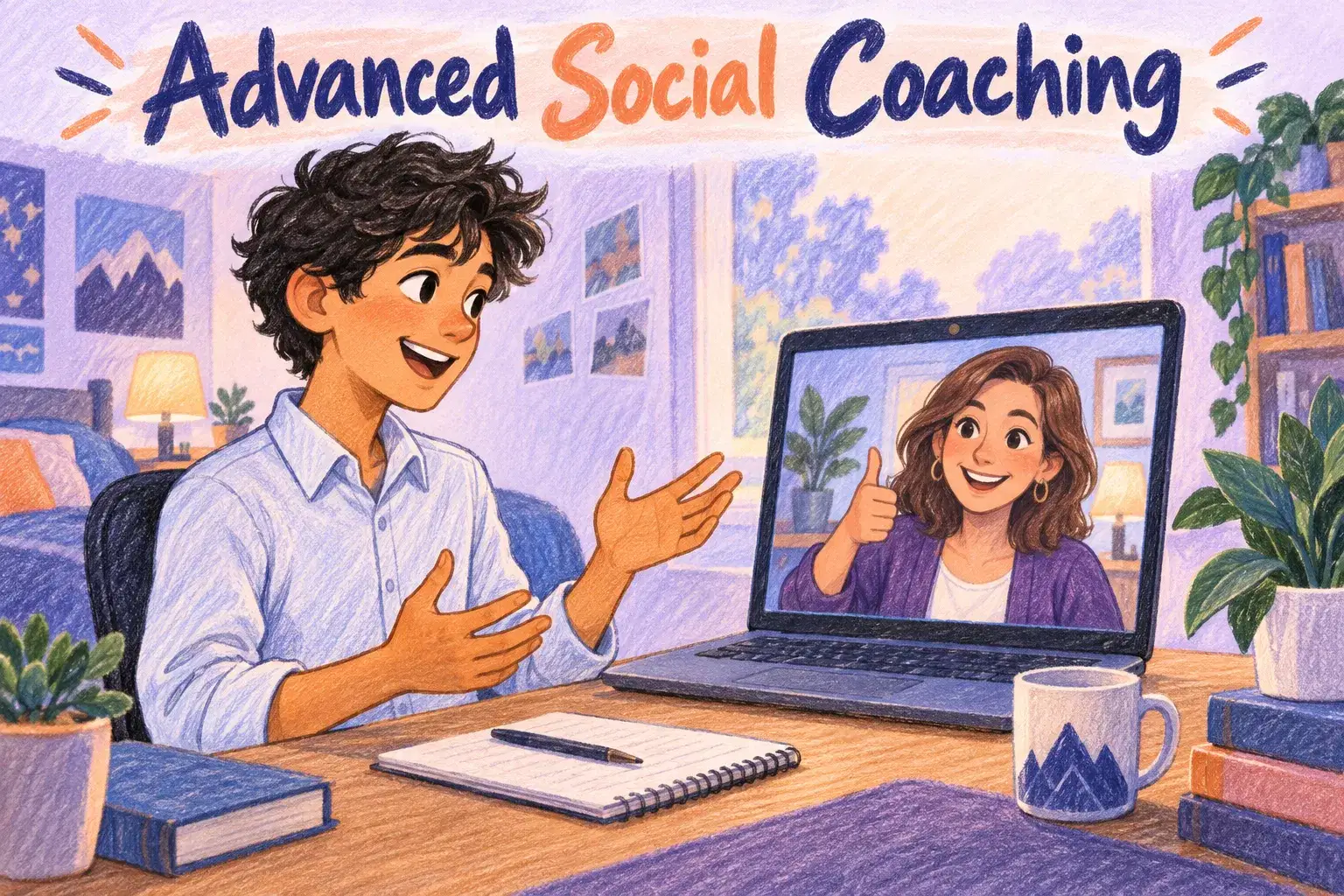
 A live class on this1-on-1 Advanced Social Coaching for Teens: Interviews, Networking and LeadershipAges 15–18
What tends to backfire
- Arranging meet-ups with other parents without asking your teen.
- Criticising how they dress, talk or spend their time.
- Comparing them with a sociable sibling.
- Pushing a large party or camp as the first step.
- Solving every setback for them.
Signs that this is more than a slow start: avoiding school, changes in sleep or appetite, talk of being hated or worthless, or any sign of bullying. These call for a conversation with the school and a doctor or counsellor.
Do online friends count?
They can. For a teen with a niche interest, an online club or class with a teacher present can be the first place they feel at ease. The same safety rules apply as anywhere online, and moderated groups are safer than open servers. See how to help your child make friends in an online club.
A gentle four-week plan
| Week | Goal |
|---|---|
| 1 | Choose one regular activity together and sign up |
| 2 | Attend, and say hello to one person |
| 3 | Ask one person a question about the activity |
| 4 | Suggest one small thing: sharing a link, sitting together, a game online |
Progress is rarely a straight line. A week with no step forward is normal. If your teen is younger, our guides on a child with no close friends and tween friendship drama may fit better.
What parents can do next
- Have one calm, open conversation about what your teen would like.
- Pick a single regular activity based on a real interest.
- Agree one small step for the first two sessions.
- Check in weekly, briefly, and notice effort more than results.
Frequently asked questions
Is it normal for a teenager to have no friends?
It is more common than most parents think, especially after a school change. It deserves attention if your teen is unhappy about it or it lasts many months.
Should I talk to the school?
Yes, if you suspect bullying or your teen is avoiding school. A form tutor or counsellor can also suggest clubs.
Do social skills classes work for teens?
They can help by giving practice in a safe group. They are skills classes, not therapy, and work best alongside a regular activity.
When should we see a professional?
If you notice persistent low mood, anxiety that stops daily activities, self-critical talk or withdrawal from things they used to enjoy, speak to your doctor.
Find a social skills class for teens
Small live groups and 1-on-1 coaching give teens a safe place to practise conversation and confidence. These are skills classes, not therapy.