Science & natureAges 6–125 min read
By Isabella ·
How to Start Birdwatching With Kids
What you need to start birdwatching with children, the best times to look, and easy ways to record and identify what you see.
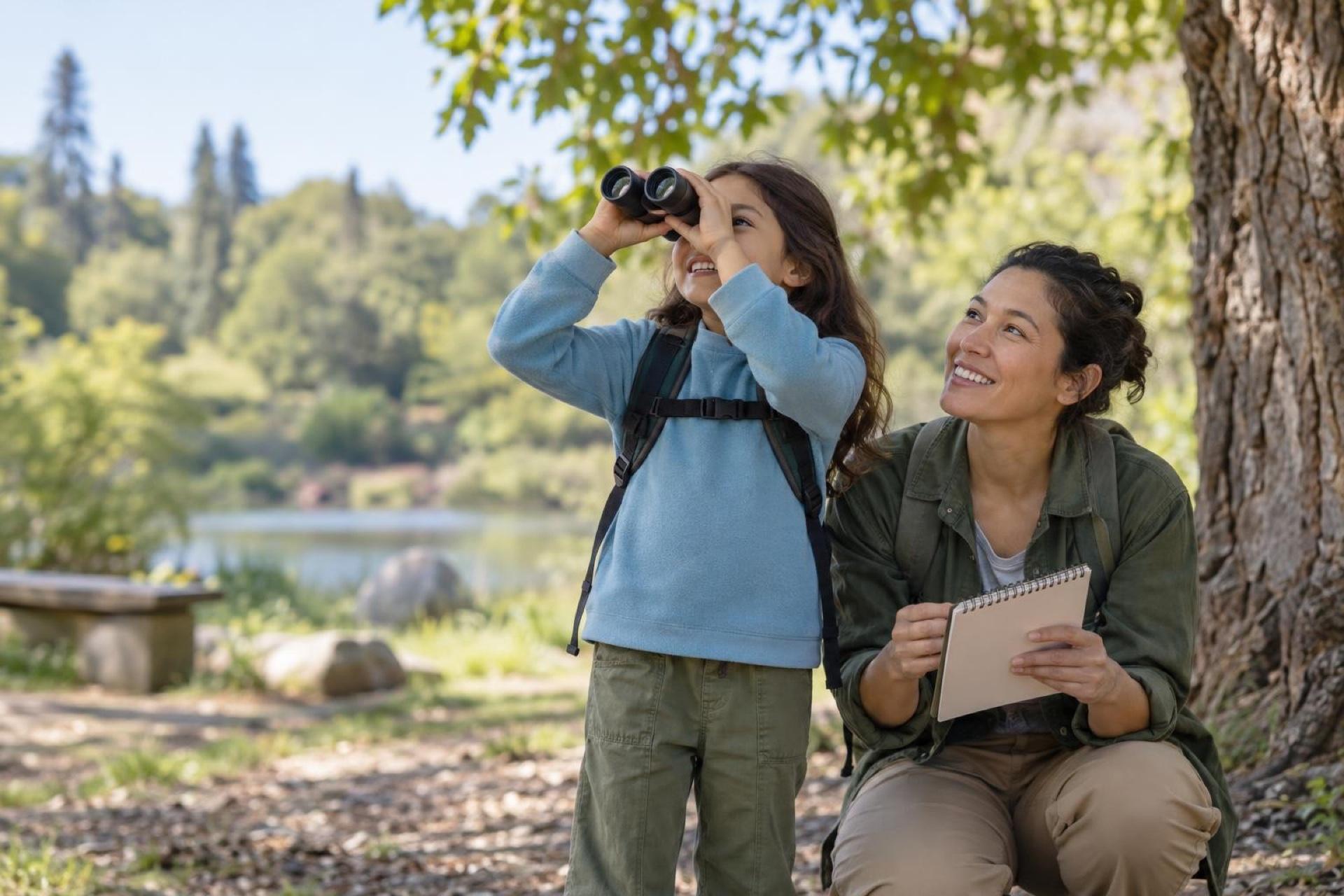
Birdwatching asks for very little: a window, a few quiet minutes and somewhere to write down what you see. It suits children who love animals, and it teaches patience and careful looking along the way.
Start at home with the birds you already have. Learn five common local birds, watch at the same time each day and keep a simple list. Binoculars and field guides can come later.
Why birdwatching suits kids
Birds are the wild animals children are most likely to see every day, in cities as well as the countryside. Watching them builds observation skills: noticing size, colour, shape, sound and behaviour, then using those clues to work out what the bird is.
It also grows with the child. A six-year-old can count birds at a feeder. A twelve-year-old can keep records, learn songs and take part in a community bird count.
What you need to start
For a list of birds seen, with the date and a quick sketch.
A regional bird book from the library, or a bird ID app used together with a parent. Check that any app is free and suitable for your child's age.
Helpful but not needed at first. Small, light pairs are easiest for children to hold steady.
Brings birds closer to a window. Keep it clean and topped up.
 A live class on thisAdvanced Veterinary Science: Nutrition, Behavior, and Clinical TopicsAges 8–12
When and where to look
Birds are most active in the early morning and again in the late afternoon. Ten minutes before school can be enough.
- At home. A window with a view of a tree, hedge, feeder or roof line.
- Local park. Look near water, at the edges of trees and on open grass.
- On the way to school. Wires, rooftops and street trees all have regulars.
Stand or sit still for a few minutes and let the birds come back. Children are often surprised by how much appears once they stop moving.
How to identify a bird
Teach your child to notice four things before reaching for the book.
| Clue | Questions to ask |
|---|---|
| Size and shape | Smaller than a sparrow, about pigeon-sized or bigger? Long tail or short? What shape is the beak? |
| Colour and markings | Main colour? Any stripes, spots or patches on the head, wings or chest? |
| Behaviour | Hopping or walking? Feeding on the ground or in a tree? Alone or in a group? |
| Sound | A short chirp, a long song or a harsh call? |
A quick sketch with notes is more useful than trying to remember. It does not need to be a good drawing.
Keeping a bird list
A list gives the hobby a goal. Write the bird, the date and the place. Some families keep a home list on the fridge and add to it together.
Once your child knows the regulars, try a ten-minute count: how many of each kind visit in ten minutes? Repeat it weekly and see how numbers change through the year.
Children who like drawing what they see may enjoy starting a nature journal, and on a rainy day live animal cams include bird nests and feeders.
Look, don't touch. Keep a distance from nests and young birds, and never handle eggs or chicks. A baby bird on the ground is often being watched by its parents.
What parents can do next
- Choose a window or a park bench as your regular watching spot.
- Borrow a bird book for your region from the library.
- Help your child learn five common local birds first.
- Start a list and add to it each week.
Frequently asked questions
What age can children start birdwatching?
Children of five or six can watch and count with an adult. From about eight, many can identify common birds and keep their own list.
Do we need binoculars?
Not to begin with. Birds near a window or feeder are close enough to see well without them.
Can we birdwatch in a city?
Yes. Pigeons, sparrows, starlings, crows and gulls are all worth watching, and parks often hold many more species.
What should we feed garden birds?
Bird seed mixes sold for wild birds are a safe choice. Avoid salty or mouldy food, and clean feeders regularly.
Classes for animal lovers
Live classes on animals and ocean life let children learn about wildlife with a teacher and other curious kids.