Art, music & makingAges 3–54 min read
By Emma ·
Music and Movement Activities for Preschoolers
Songs, rhythm games and dance breaks for ages 3–5 that build listening, coordination and early language, no instrument needed.
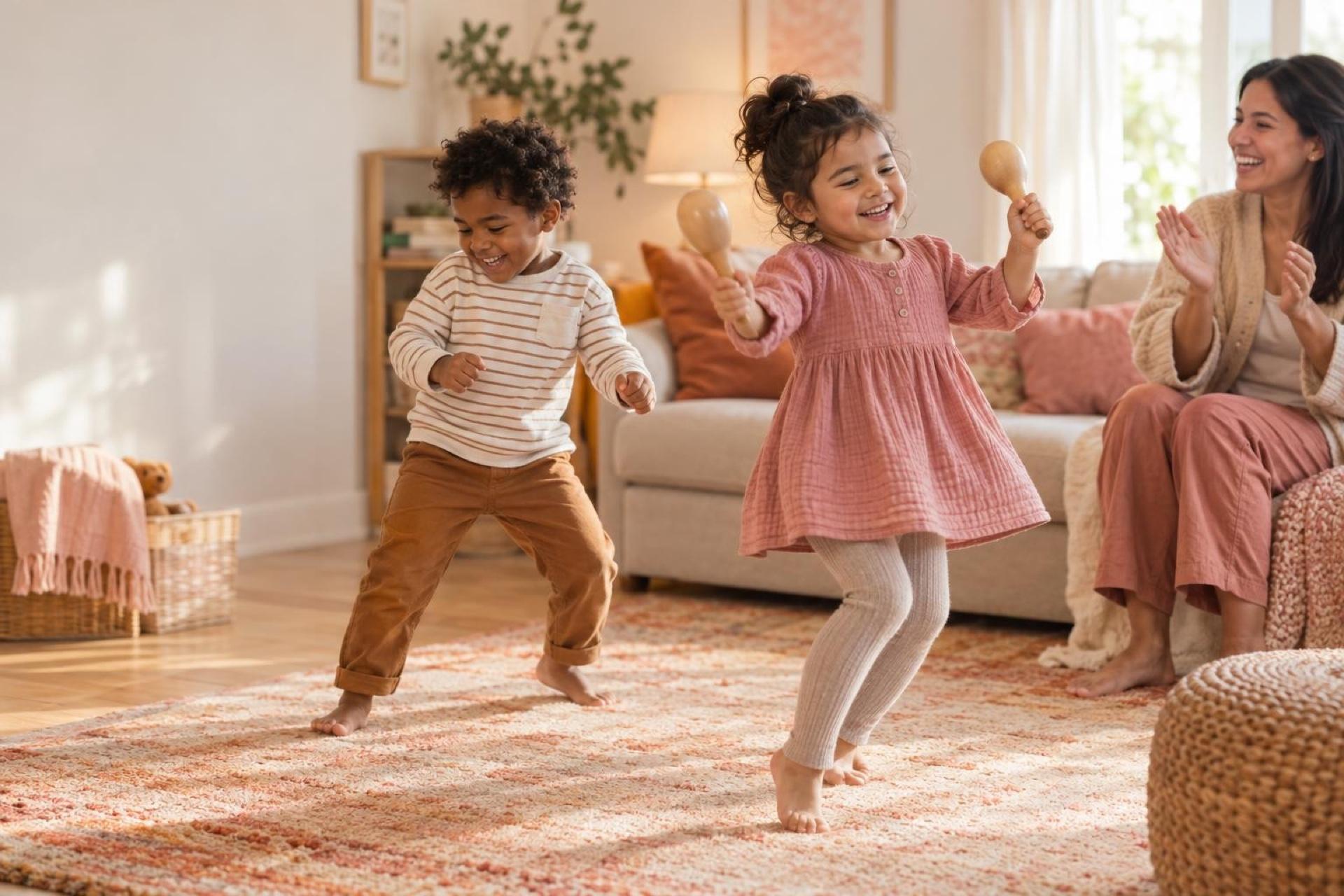
Preschoolers are built to move and make noise. Put the two together with a beat and you have one of the easiest ways to build listening, coordination and early language, with no instrument required.
For ages 3 to 5, music is something to do with the whole body. Sing, clap, march, freeze and shake every day for a few minutes. Formal instrument lessons can wait.
Why music and movement matter at this age
When a child claps along to a song, they are listening closely, keeping a steady beat and controlling their hands, all at once. Action songs add following instructions and remembering what comes next.
Singing also stretches language. Songs slow words down and repeat them, which gives young children a chance to hear and practise sounds. And moving together is simply a good way to burn energy indoors.
Rhythm games
Copy my clap
Clap a short pattern and ask your child to copy it. Start with two or three claps, then add a pause or a knee tap. Swap roles so your child leads.
Kitchen band
A wooden spoon on a plastic bowl, a sealed tub of rice to shake, two lids as cymbals. Play along to a favourite track, first loudly, then as quietly as you can.
Walk the beat
Put on music with a clear beat and march around the room in time. Try tiptoes for quiet parts and big stomps for loud ones.
 A live class on thisAmerican History Through Patriotic SongsAges 3–7
Movement games
Freeze dance
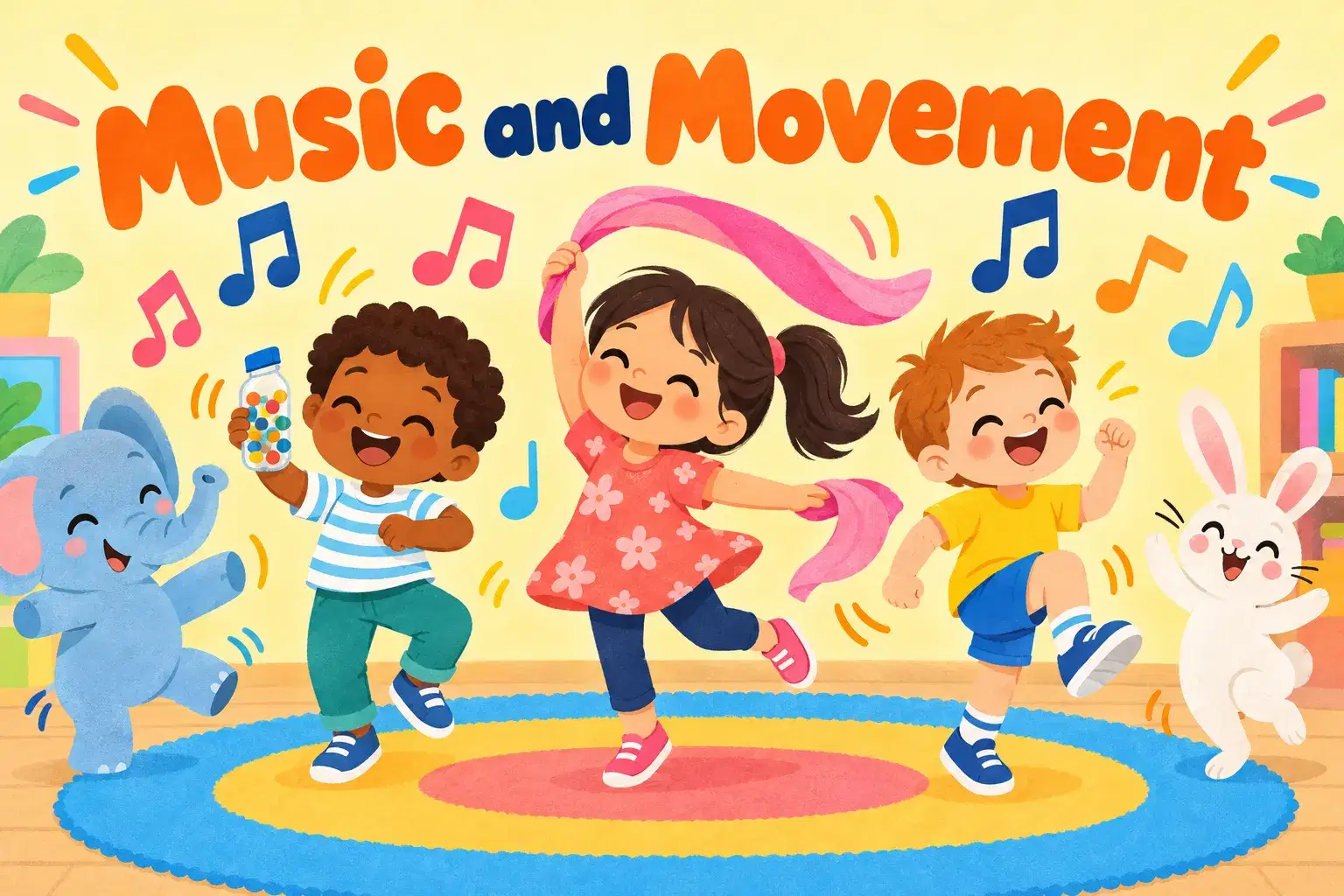
Dance while the music plays and freeze when it stops. This simple game practises listening and self-control, and children rarely tire of it.
Animal moves
Play different kinds of music and ask how an elephant, a mouse or a bird would move to it. Slow, heavy music and quick, light music invite very different moves.
Scarf dancing
Give your child a light scarf or a ribbon to wave. Make big circles, zigzags and floating movements to match the music.
Join in. Children copy what they see, and a parent who sings and dances badly but happily is the best teacher at this age.
Singing together
You do not need a good voice. Sing nursery rhymes and action songs you already know, and sing them often. Repetition is how young children learn the words and the tune.
Try leaving out the last word of a line for your child to fill in, or changing one word to make a silly version. Both show you how closely they are listening.
| Time of day | Music idea | What it builds |
|---|---|---|
| Morning | A getting-dressed song you make up together | Routine and sequencing |
| Tidy-up | The same short song every time | Transitions without a fight |
| Afternoon | Freeze dance or kitchen band | Listening and self-control |
| Bedtime | A slow, quiet lullaby | Winding down |
When to think about lessons
Most children under six do best with group music and movement rather than one-on-one instrument lessons. Look for classes built around singing, rhythm and play, with short sessions.
When your child is older and asking for an instrument, our guide on choosing a first musical instrument walks through the options.
Keep the volume comfortable, especially with headphones or loud toys, and check homemade shakers are sealed so small items cannot spill out.
What parents can do next
- Choose one song to sing every day this week.
- Play freeze dance for five minutes after lunch or before dinner.
- Make one homemade shaker together.
- Notice whether your child prefers singing, dancing or making sounds, and offer more of that.
Frequently asked questions
Is my child too young for music lessons?
Not for music. Under six, singing, drumming and movement at home or in a group class are a great start. Formal instrument lessons tend to suit somewhat older children.
Do I need to buy instruments?
No. Pots, spoons and homemade shakers work well. A small drum or a set of bells is a nice extra if your child loves it.
My child won't join in at group classes. What should I do?
Many young children watch for a few sessions before taking part. Stay close, join in yourself and let them come to it in their own time.
Can online music classes work for preschoolers?
Short, active ones can, especially with a parent nearby. Our guide on online classes for children under 6 explains what to look for.
Find a music class for your child
Browse live music classes by age, from first songs and rhythm games to beginner instruments.