Art, music & makingAges 3–55 min read
By Amelia ·
First Art Supplies for Ages 3–5: What to Buy and What to Skip
A short shopping list of washable, safe art supplies for preschoolers, what to skip, and easy first projects to try together.
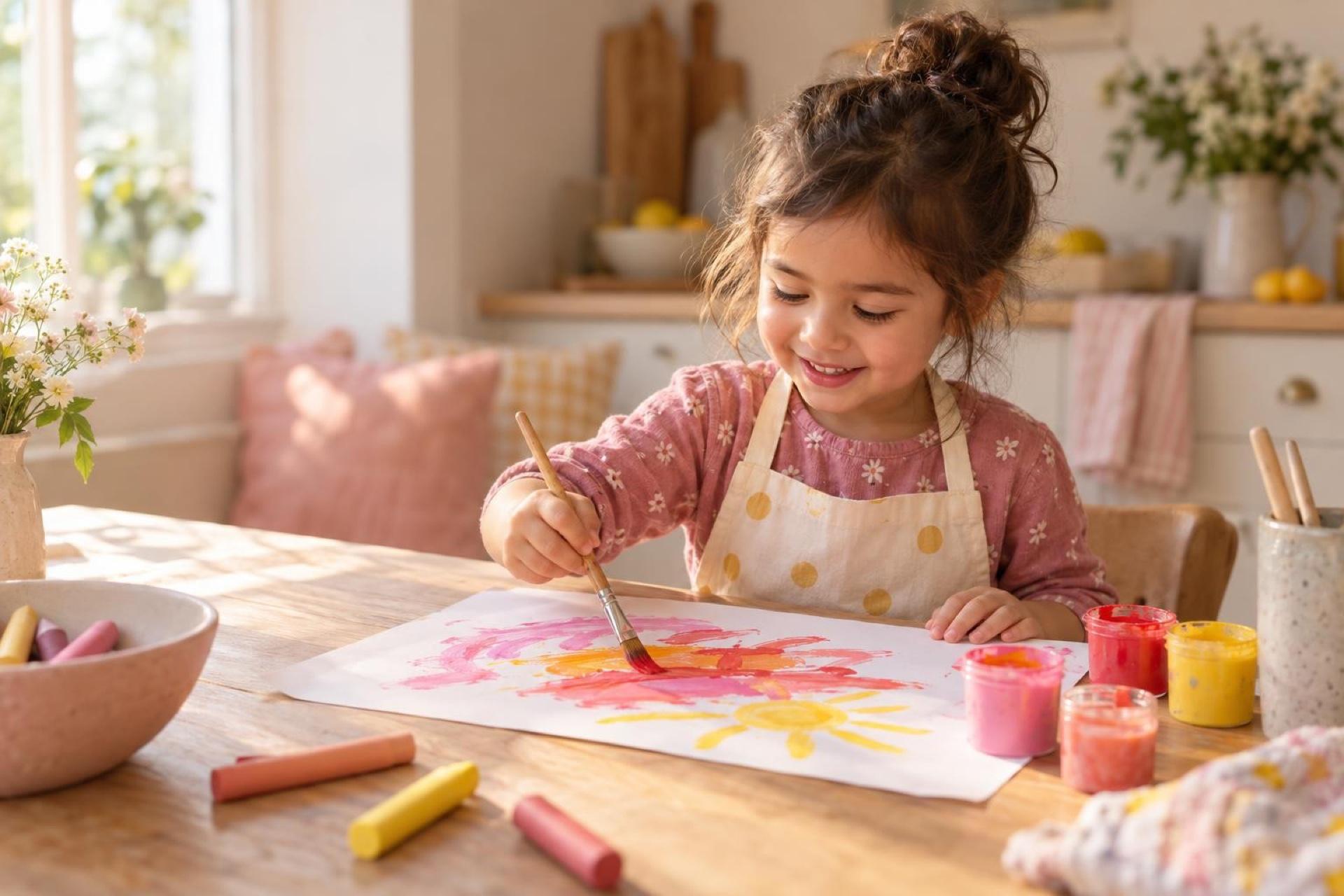
The art aisle is full of things a three-year-old does not need. A small set of sturdy, washable basics will keep a preschooler busy for months, and it costs far less than a kit.
For ages 3 to 5, buy a few chunky, washable supplies with a non-toxic label and plenty of paper. Skip anything tiny, permanent or fiddly. At this age the making matters more than the result.
What preschoolers need from art
Young children are exploring what materials do. What happens when blue meets yellow? How hard do I press? Can I cover the whole page? That exploring builds hand control, colour knowledge and confidence.
So the best supplies for this age are ones a child can use independently, that survive rough handling and that wash out of clothes.
The short shopping list
| Supply | What to look for | Why it earns its place |
|---|---|---|
| Crayons | Chunky or triangular, washable | Easy to grip and hard to break |
| Washable markers | Broad tips, ventilated caps | Bright colour with little pressure |
| Washable paint | Three or four colours to start | Mixing colours is a lesson in itself |
| Brushes | Short, thick handles | Easier for small hands to control |
| Paper | Large sheets, nothing fancy | Big paper suits big arm movements |
| Glue stick and child-safe scissors | Blunt tips on the scissors | Collage builds hand skills |
| Playdough | Shop-bought or homemade | Sculpting without any mess to dry |
That is enough. You can add things later once you see what your child reaches for most.
 A live class on thisAnimal Drawing Step-by-Step — Beginner Art ClubAges 5–10
What to skip for now
- Permanent markers and inks. They stain clothes, tables and hands.
- Small beads, sequins and googly eyes. They are a choking risk for young children and any younger siblings.
- Large boxed art sets. Many are full of thin pencils and hard pastels that suit older children.
- Fine-tipped pens and thin brushes. They need more control than most preschoolers have yet.
- Colouring books as the main activity. They are fine now and then, but blank paper invites more thinking.
Check for a non-toxic label on anything your child will use, and follow the age guidance on the pack. Young children still put things in their mouths.
Setting up a small art spot
You do not need a craft room. A wipe-clean mat or old tablecloth on the kitchen table works well. Keep supplies in one low box or tray so your child can get them out and help put them away.
An old adult T-shirt makes a good apron. Keep a damp cloth nearby and decide in advance where wet paintings will dry.
Put out two or three materials at a time rather than everything. Fewer choices usually leads to longer, calmer play.
Easy first projects
Two-colour mixing
Put a blob of yellow and a blob of blue paint on a plate and let your child mix them with a brush or fingers. Ask what they notice, then try a new pair tomorrow.
Torn-paper collage
Tear coloured paper or old magazines into pieces and glue them onto a sheet. There is no right picture to make, which is the point.
Crayon rubbings
Put a leaf or a coin under thin paper and rub over it with the side of a crayon. Children love watching the shape appear.
Talking about their art
Instead of asking what it is, try saying what you see: you used a lot of red here, or these lines go all the way across. Then ask your child to tell you about it. This keeps the focus on their ideas and effort.
If your child is heading into a first class, our guide to art supplies for a first art class covers what older beginners need.
What parents can do next
- Buy the short list above and nothing else for now.
- Set up one wipe-clean spot and one box for supplies.
- Offer art two or three times a week for as long as your child stays interested.
- Display one piece on the fridge and swap it each week.
Frequently asked questions
Are washable paints really washable?
Most come out of skin and many fabrics, but results vary. Use old clothes or an apron and rinse stains soon rather than letting them dry.
When can my child start using scissors?
Many children can begin snipping with child-safe scissors around age three, with an adult sitting beside them.
My child just mixes everything into brown. Is that okay?
Yes. Mixing is how young children learn what colours do. Offer just two colours at a time if you would like clearer results.
How long should a preschooler spend on art?
As long as they are interested. For some that is five minutes, for others half an hour. Both are fine.
Find a drawing or painting class
When your child is ready to make art with a teacher and a small group, browse live classes by age.