Art, music & makingAges 5–126 min read
By Nicole Long ·
Is Drama Good for Shy Kids?
How drama and acting classes can help shy kids, how to tell shyness from selective mutism, and what to look for in a gentle first class.
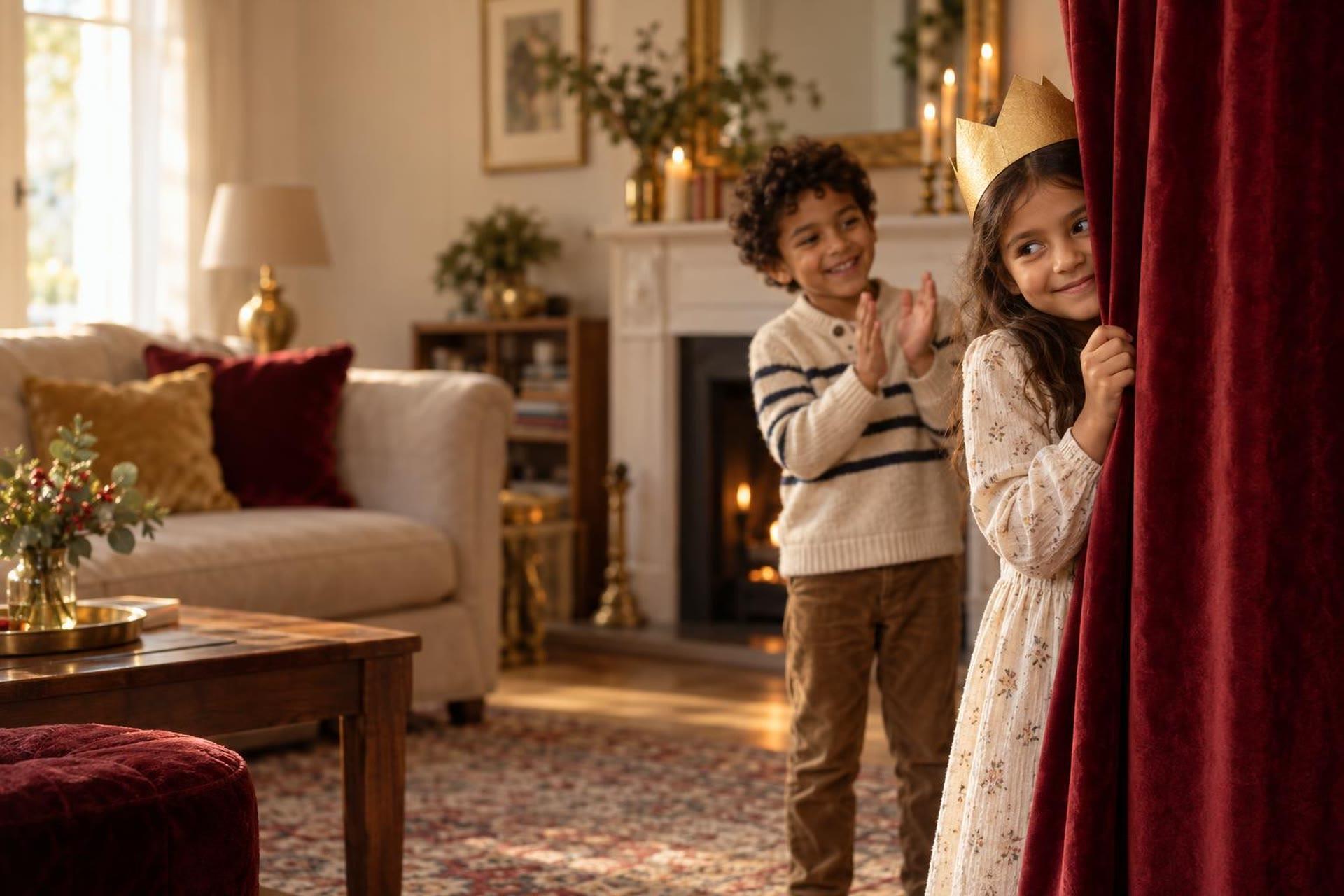
Drama can be very good for shy kids, as long as the class lets them warm up at their own pace. Pretending to be someone else gives a quiet child a safe way to practice speaking, making eye contact and working in a group. A pushy setting can backfire, so the type of class and teacher matter as much as the activity.
Look for small, game-based drama classes where kids can watch first and join when ready. Skip big auditions and solo spotlights at the start. Shyness is a temperament and does not need fixing. If your child cannot speak at all in school or other settings, talk to your pediatrician before signing up for anything.
Why drama can help a shy child
Shy kids often know exactly what they want to say. The hard part is saying it with people watching. Drama lowers that pressure in a few ways:
- A character to hide behind. It feels safer to speak as a grumpy troll or a talking cat than as yourself.
- A script or a game structure. Kids know what comes next, so there is less guessing about what to say.
- Group work. Most drama games are done in pairs or groups, so no one is alone in front of the room.
- Lots of small repetitions. Each game is a tiny chance to speak up, and those chances add up over weeks.
Research on drama and children's social skills is still growing. One 2023 study in Frontiers in Psychology followed primary-school children in Portugal through a year of music or drama programs. Teachers rated children in the drama group as improving in cooperation, along with gains in assertion and self-control. One study cannot prove drama works for every child, but it fits what many drama teachers see.
Shy, or something more? Know the difference
Shyness is common, especially around strangers. The Mount Sinai Parenting Center describes typical shy kids as children who warm up after a short time and then join in or talk to new adults.
Some children are not able to warm up. Selective mutism is an anxiety disorder in which a child talks freely at home but becomes mostly or completely silent at school or with strangers. The Child Mind Institute explains that these children are frozen by anxiety and truly unable to speak, and that parents often notice signs around age 3 or 4.
- Speaks at home but rarely or never at school, even after months
- Seems frozen, panicked or "shut down" in social settings
- Avoids birthday parties, playdates or school because of fear
- Has worries that interfere with sleep, eating or daily life
A drama class can still be part of the plan later, ideally with guidance from your child's care team.
 A live class on this1-on-1 Advanced Ballet CoachingAges 12–17
How to pick a drama class for a shy child
- Choose small groups. Fewer kids means less noise, more turns and an easier first day.
- Ask about "watch first" rules. A good teacher lets new kids observe a game or two before joining.
- Favor games over performances. Improv games, storytelling and movement work feel lighter than a big show at the end.
- Check the teacher's style. Ask how they handle a child who does not want to speak yet, and listen for a patient answer.
- Look at the format. A class that meets every week with the same group lets your child build comfort with familiar faces.
- Consider online first. Some shy kids find it easier to start from home, where they can turn their camera off for a minute if they need a break.
How many children are in the class? Will my child have to perform alone? What does a typical session look like? Can we try one session first?
Warm up at home before the first class
A little practice at home can make the first class feel familiar. Try a few low-pressure games as a family:
- Puppet talk. Let your child speak through a puppet or stuffed animal.
- Freeze frame. Everyone strikes a pose to show an emotion, and others guess it. No words needed.
- Story circle. Each person adds one sentence to a silly story.
- Mirror game. Copy each other's movements slowly, face to face.
For more ideas, try these easy drama games for kids at home. Keep sessions short and stop while everyone is still laughing.
What to expect in the first few weeks
Progress for a shy child often looks small. That is normal. In the first weeks, success might mean:
- Staying in the room or on the call the whole time
- Joining a group game without speaking
- Saying one line or one word in character
- Talking about the class at home afterward
Praise effort over performance. Saying "you tried the new game even though it felt hard" means more than "you were great." Give it a few weeks before deciding whether the class is a fit, unless your child is clearly distressed.
The goal is comfort and confidence. Your child does not need to become the loudest kid in the room. Many thoughtful, quiet actors do their best work in small roles and group scenes.
What to watch for
- Dread that grows. Some nerves are normal, but tears, stomachaches or refusal before every class are a signal to pause.
- Forced spotlight. A teacher who regularly singles out your child to perform alone may not be the right match.
- No time to warm up. Fast-paced classes with constant new faces can overwhelm quiet kids.
- Your child stops talking about it. If enthusiasm fades, ask gently what feels hard.
Frequently asked questions
What age is good for a shy child to start drama?
Many kids can enjoy simple drama games from around age 5 or 6. For shy children, the right class matters more than the age. Look for small, playful groups.
Will drama make my shy child outgoing?
Drama will not change your child's personality, and it does not need to. It can give them tools and practice for speaking up when they want to.
Are online drama classes good for shy kids?
They can be. Starting from a familiar room at home lowers the stakes, and small online groups give each child time to speak.
Should I make my child stay if they want to quit?
Ask what feels hard first. If it is first-day nerves, encourage a few more sessions. If your child is truly distressed, step back and try something gentler.
Find a drama class that lets your child warm up
Live theater and acting classes in small groups give quiet kids a playful place to try new voices, characters and stories.