Art, music & makingAges 4–66 min read
By Nadia Rahman ·
Is 5 Too Young for Piano Lessons?
Is 5 too young for piano? A readiness checklist, age-by-age guide, what good lessons look like for a 5-year-old, and how to help at home.

No, 5 is not too young for piano lessons, as long as your child is ready and the lessons fit their age. Many 5-year-olds do well with short, playful lessons and a parent who helps at home. Readiness depends more on interest, attention span and hand size than on a birthday.
Look for genuine interest, the ability to focus for a short lesson, and a hand that can rest on five white keys. If those are in place, start with short, game-like lessons and a few minutes of daily practice together. If not, keep music playful at home for a few months and try again.
Is 5 a good age to start piano?
For many kids, yes. The music exam board RSL Awards names ages 5 to 8 as a sweet spot, when children have started school and are open to structured learning. It also stresses that a child's own interest is the most important factor.
Teachers and programs vary. DePaul University's Suzuki piano program, for example, starts children at age 6, so ask each teacher what age they take beginners. In the end, the better question is whether your child is ready, and whether the teacher knows how to teach a 5-year-old.
A readiness checklist for 5-year-olds
RSL Awards lists several signs. Here's how to check each one at home:
- Interest. Your child asks to play, hums tunes or heads to the keyboard on their own.
- Hand size. Their hand can stretch across five white keys, thumb to little finger.
- Finger independence. They can lift one finger without the others moving much. This improves with practice.
- Focus. They can stay with one activity for a short stretch. RSL mentions about 30 minutes, which many 5-year-olds aren't ready for, so ask about shorter lessons.
- Willingness to repeat. They don't mind playing something a few times to get it right.
- Basic number and letter sense. Counting to five and knowing a few letters helps with finger numbers and note names.
RSL notes that children don't need to read fluently before starting. Reading music is introduced over time.
 A live class on thisAmerican History Through Patriotic SongsAges 3–7
Age-by-age: what piano can look like
| Age | What usually fits | Parent role |
|---|---|---|
| 3 to 4 | Music play: singing, rhythm games, exploring the keys. RSL suggests informal exploring and preschool music programs | Play along, no pressure |
| 5 | Short, playful lessons with finger numbers, rhythm and simple songs by ear or from pictures | Sit in on lessons, guide short daily practice |
| 6 to 7 | Structured lessons with early note reading as reading skills grow | Set a practice routine, check in often |
| 8 and up | Longer lessons, faster reading, more independent practice | Encourage, ask your child to play for you |
These ages are rough guides. A focused 5-year-old may be ready for more, and a busy 7-year-old may need a gentler start.
What good lessons look like for a 5-year-old
Lessons for young children should feel like play with a purpose. Look for:
- Short segments. Lots of quick activities instead of one long task.
- Movement and games. Clapping rhythms, finding "high" and "low" notes, and moving to music.
- Listening first. The Suzuki approach, as Meredith College's Suzuki program describes it, has children listen to music every day and learn to read notes later, much like learning to talk before reading.
- Lots of praise. Small wins, like playing a song with the right fingers, build confidence.
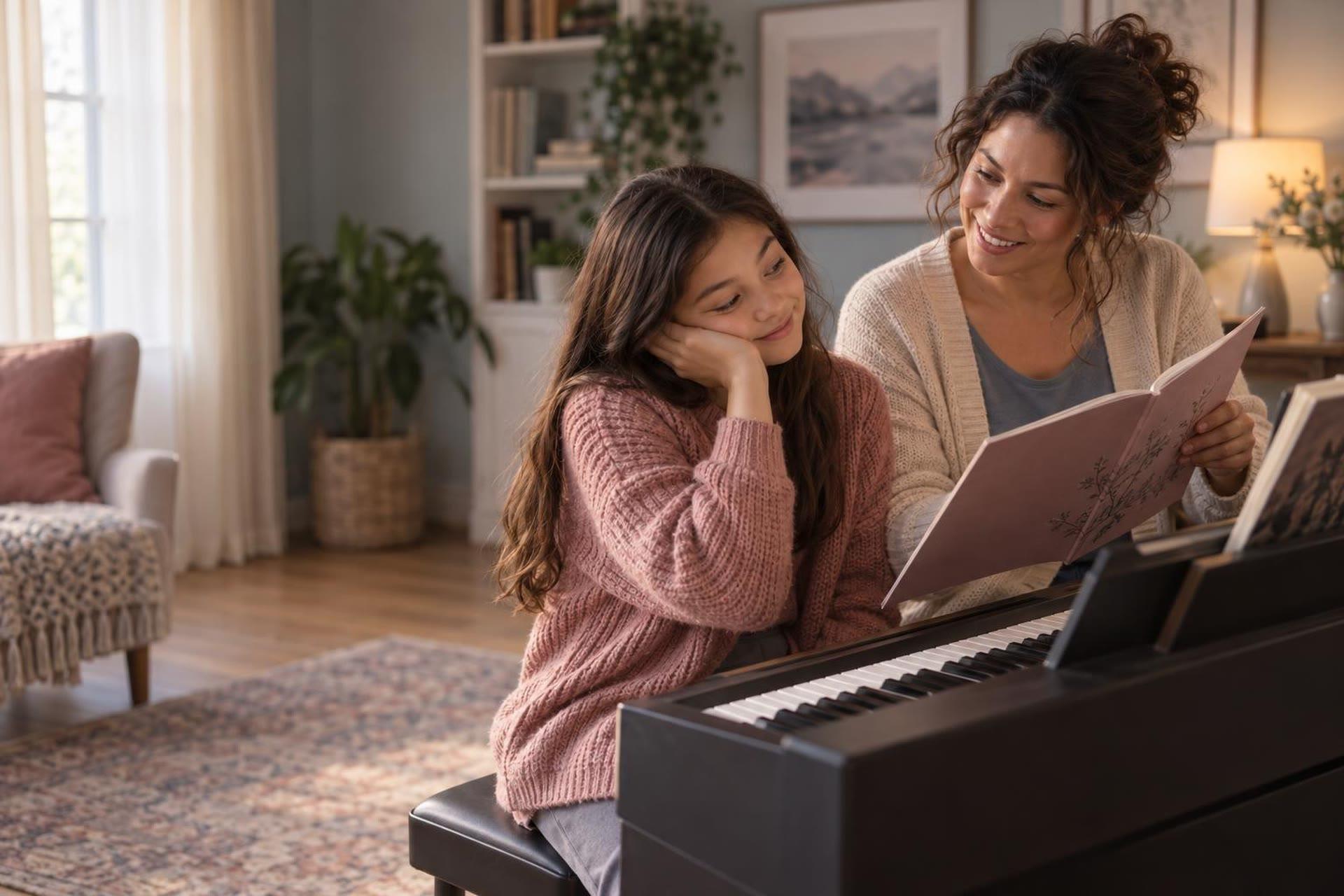
- Parent involvement. Many teachers ask a parent to sit in so you can help at home.
If you're still weighing piano against other instruments, our guide on choosing a first instrument for kids covers the options.
Questions to ask a teacher before you start
A teacher who is wonderful with teenagers may not be the best match for a 5-year-old. A short conversation or trial lesson tells you a lot. Ask:
- What age do you usually start beginners? Some teachers prefer to wait, and that's useful to know.
- How long are lessons for young children? Look for a length your child can handle with energy left over.
- How do you keep lessons playful? Listen for games, movement and songs.
- Should a parent sit in? Many teachers of young children want you there.
- What does practice look like at this age? The answer should sound short and doable.
- When do you start note reading? Approaches differ, so pick one that fits your child.
Watch your child during the first lesson. Smiles, questions and wanting to show you what they learned are good signs.
How to help your 5-year-old at home
Your involvement matters a lot at this age. Research summarized in The Conversation points to parental involvement as an important part of successful music learning.
- Practice at the same time each day. After breakfast or before dinner works well for many families.
- Keep it short. A few focused minutes beats a long, teary session.
- Make it a game. Use stickers, dice or "play it like a mouse, now like an elephant."
- Be the audience. Ask for a mini concert for a grandparent or a stuffed animal.
- Play music at home. Listening to all kinds of music builds the ear.
What to watch for
- Tears at every lesson. Frustration week after week suggests waiting a few months.
- Interest that's yours, not theirs. RSL notes that forced lessons often lead to conflict.
- Lessons that are too long. Ask the teacher for a shorter format.
- A poor match. Some teachers specialize in older beginners. Look for someone experienced with young children, and use a trial lesson to check the fit.
Starting at 6 or 7 is not "late." Children who spend a year singing, clapping and exploring sounds often start lessons with a head start in rhythm and listening.
Frequently asked questions
How long should piano lessons be for a 5-year-old?
Shorter is usually better at this age. Ask teachers what length they use for young beginners and whether they break the lesson into small activities.
Does my 5-year-old need to read before starting piano?
No. RSL Awards says children don't need to read fluently first. Many programs start with listening, rhythm and finger numbers before note reading.
Can a 5-year-old take online piano lessons?
Yes, with a parent nearby. You'll help with the camera, hand position and following directions. Short, interactive classes work best.
Is a keyboard okay for a 5-year-old?
A keyboard is a common way to start. Ask the teacher what size and key type they suggest as your child progresses.
Start piano with a playful first class
Browse live music classes designed for young beginners, with short sessions, games and teachers who know how to keep little musicians engaged.