Art, music & makingAges 6–146 min read
By Priya Shah ·
My Child Wants to Quit Piano: What to Try First
Child wants to quit piano? Find the real reason, match the fix to the problem, ease practice battles, and know when quitting is the right call.
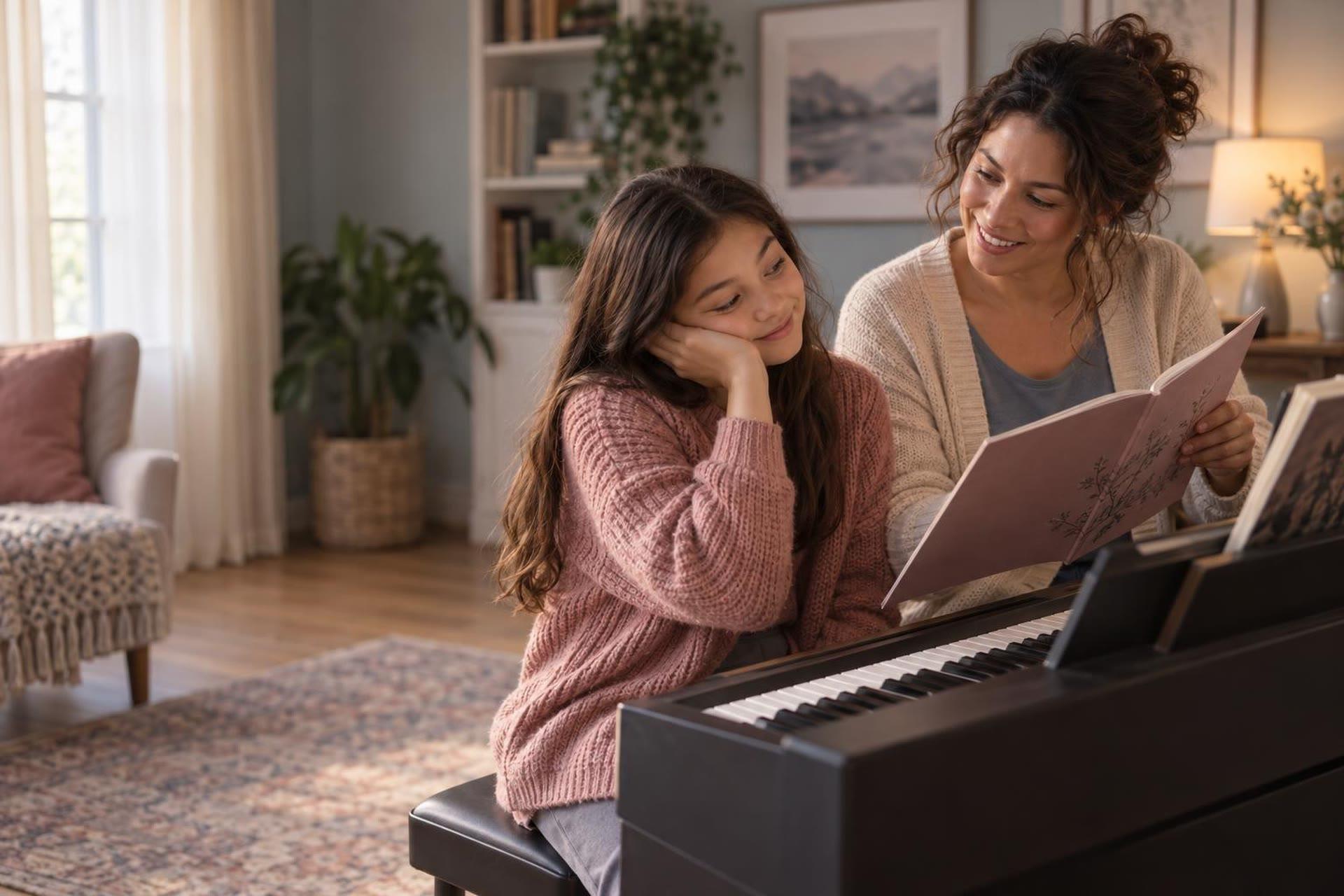
When your child wants to quit piano, start by finding out why. Boredom, slow progress, practice battles and a crowded schedule are common reasons, and most can be fixed with new music, a different practice routine, a new teacher or a break. If you've tried the fixes and your child still wants to stop, plan a positive ending instead of a sudden one.
Don't decide in the heat of a bad practice. Ask what's wrong, change one thing at a time (music, routine, teacher or format), and give it a set period. If your child still wants to quit, finish at a natural point like a recital or the end of a term, and celebrate what they learned.
Find the real reason first
"I hate piano" can mean many things. An article in The Conversation cites UK research naming the main reasons children stop music lessons: boredom, frustration at slow progress, disliking practice and competing activities. It also notes that stage fright, exam stress and feeling behind peers can be managed and are not reasons to quit on their own.
Talk privately and calmly. Psychologists quoted by Children's Mercy Kansas City advise hearing your child out and acknowledging their feelings, even if you disagree.
- "What part of piano feels worst right now?"
- "Is there anything you still like about it?"
- "If you could change one thing about lessons, what would it be?"
- "What would you do with that time instead?"
Pay attention to timing as well. A complaint after one hard week means something different from months of the same unhappiness. Children's Mercy's experts suggest waiting out impulsive comments and looking at the context before deciding. A quick chat with the teacher can also help, since they often notice whether the problem is the music, the practice or something else going on.
Match the fix to the problem
| What your child says | Likely cause | What to try first |
|---|---|---|
| "It's boring." | Music doesn't excite them | Ask the teacher for songs they love: pop, film or game music, or simple composing |
| "I'm not getting better." | Slow progress, unclear goals | Set a small goal, record them now and in a month, and compare |
| "I hate practicing." | Practice feels like a chore | Short daily sessions at a set time, with one fun piece at the end |
| "I don't have time." | Too many activities | Trim the schedule or agree on a break of one term |
| "I don't like my teacher." | Poor fit | Try a lesson with a different teacher or style |
| "I'm scared of recitals." | Performance nerves | Ask about skipping recitals for now or playing for family first |
 A live class on this20th‑Century Music History for KidsAges 10–14
Make practice less of a battle
The Conversation article notes that about 70% of 5- to 14-year-olds who play or sing spend two hours or less a week on it, so you don't need marathon sessions. It suggests a household routine, regular short practice instead of cramming, flexibility and praise for small improvements.
- Pick a fixed time. Practice after a snack or before screens become automatic.
- Know the goal. Ask the teacher what to work on this week so practice has a clear focus.
- Start and end with something easy. A favorite piece at each end makes the hard part feel smaller.
- Notice effort. "That left hand is much smoother than Monday" beats "Practice more."
- Let them perform. Short concerts for family give practice a purpose.
Give your child more control
Ownership matters, especially for tweens and teens. The Conversation article suggests letting kids choose some of their music, try composing, and decide where, when and with whom they play.
Identity matters too. A long-term study by Paul Evans and Gary McPherson, described in Pacific Standard, followed 157 children who started instruments at ages 7 to 9. Children who saw themselves as musicians for the long run kept playing longer and played better, even compared with peers who practiced as much. Home also mattered: parents who played or listened to music helped children see why it was worth doing.
- Let your child pick one piece each month.
- Try a new format, like a group music club, a songwriting class or a short camp.
- Play music they love at home and go to live performances together.
- Ask them to teach you a few notes.
When quitting is the right call
Sometimes stopping is the right choice. Children's Mercy's experts suggest deciding after careful thought, not in a moment of frustration, and solving the problem together with your child. They also recommend finishing the season or recital where possible and talking to the teacher before stopping.
The Conversation suggests framing it as "moving on" or "graduating," agreeing on an endpoint like a concert, and celebrating what your child achieved. A break of one term, with the teacher in the loop, is another option if your child is simply overloaded.
For a wider look at this question across sports and clubs, see our guide on whether a child should be allowed to quit an activity.
Rhythm, reading music and practice habits carry over to other instruments and to singing. Some kids come back to piano later, or move to guitar, drums or production with a head start.
What to watch for
- Strong anxiety before lessons or recitals. Ongoing dread, stomachaches or tears may need more support. Talk to your pediatrician if worry affects daily life.
- Losing interest in everything. If your child is pulling back from many activities at once, check in with your pediatrician.
- An uncomfortable teacher relationship. If your child feels belittled or unsafe, change teachers.
- Burnout from a packed week. Downtime is healthy, and a lighter schedule may revive interest.
Frequently asked questions
Should I make my child keep playing piano?
Try fixes first and agree on a set trial period. If your child still wants to stop, plan a positive ending. Forcing years of lessons often hurts their relationship with music.
What age do kids usually quit music lessons?
UK research cited in The Conversation links a drop in lessons after age 11 to starting high school, when schedules and interests change.
Would a different teacher help?
Often, yes. A teacher with a different style, repertoire or format, such as group classes, can bring back interest.
Is taking a break okay?
Yes. A planned break of a term, agreed with the teacher, can help an overloaded child return refreshed or make a clearer decision.
Help your child fall back in love with music
Live music classes, clubs and camps let kids try new styles, play with peers and explore songwriting, often just the change a reluctant pianist needs.