By Melissa Sullivan ·
How to Choose Your Child's First Musical Instrument
How to choose a first instrument for your child by age, hand size, home and budget, with a simple age guide and hearing safety tips.
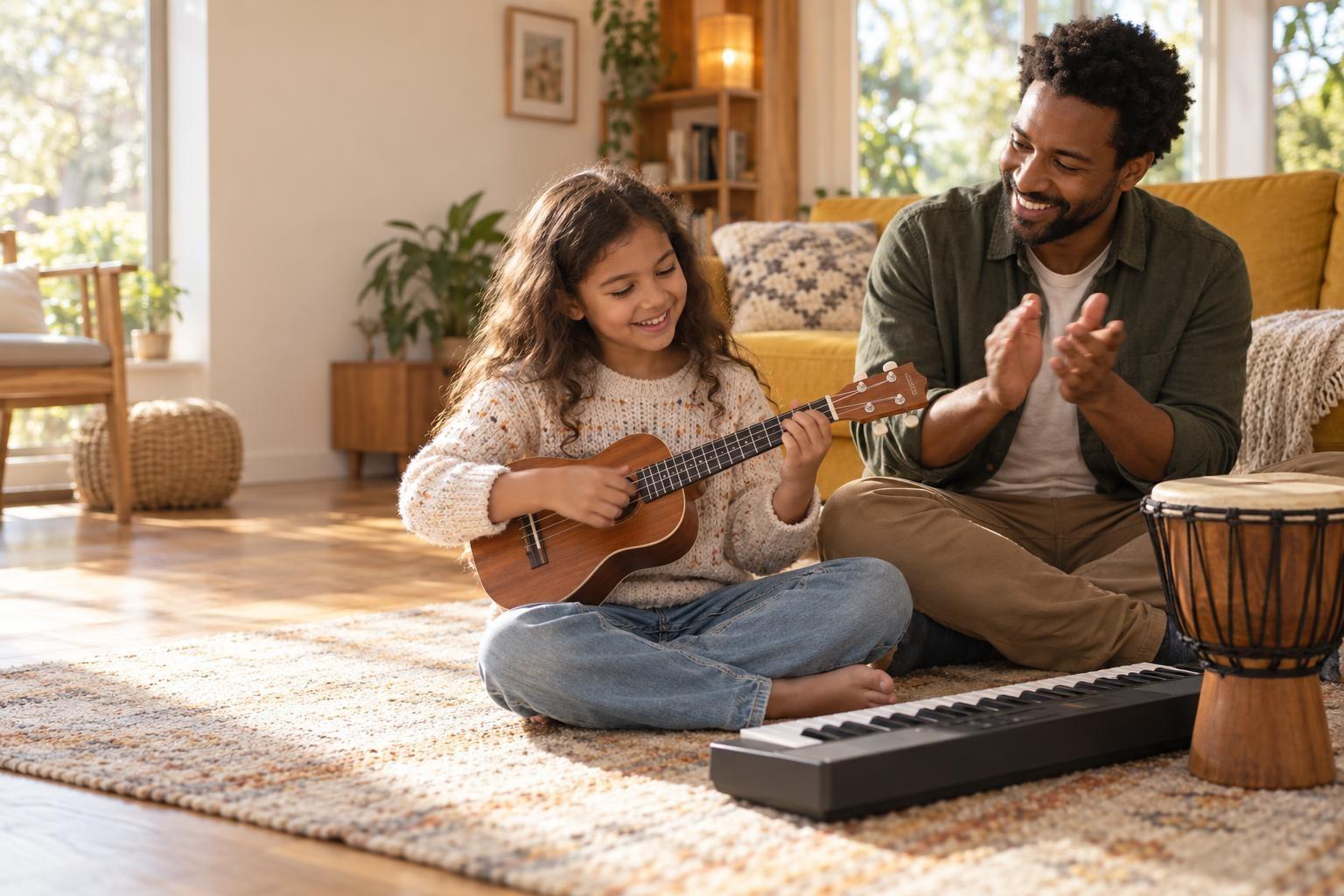
The best first instrument for a child is one that fits their age, hands and size, that they are genuinely curious about, and that your family can live with at home. For many young children that means piano or keyboard, ukulele, or simple percussion, while older kids can start almost anything.
Start with what your child is already drawn to, then check physical fit, noise at home, cost and access. Let your child try a few options before you buy, and rent or borrow before you invest. Protect hearing with loud instruments and headphones, and remember that switching instruments is normal: rhythm, reading music and practice habits carry over.
Start with your child's curiosity
Motivation carries a beginner through the hard early weeks, so start with what your child already loves. Do they tap rhythms on the table, sing along to everything or stop to watch a guitarist? Those clues matter more than any ranking of "best" instruments.
Very young children learn music through play. The National Association for Music Education (NAfME) describes how young kids learn by exploring sound freely with simple, hands-on instruments, and how structured lessons tend to suit somewhat older children. If your child is under six, singing, drumming and shakers at home can be a great first step before formal lessons.
How to choose: step by step
- List the instruments your child is drawn to. Ask them, and notice what they react to in songs, videos and concerts.
- Check physical fit. Consider hand size, reach and strength. Some instruments, like violin and guitar, come in smaller sizes for children.
- Think about your home. Drums and brass are loud. A keyboard with headphones or a ukulele is easier in an apartment.
- Look at cost and access. Check whether you can rent, borrow from family or use a school instrument before buying.
- Let your child try a few. A music store visit, a school demo day or a short beginner class can show you quickly which instrument feels right.
- Talk to a teacher. A music teacher can check readiness and suggest the right size and first steps.
Common first instruments by age
These are general starting points, not strict rules. Children develop at different rates, and interest matters most.
| Instrument | Often started around | Why it works | Things to consider |
|---|---|---|---|
| Voice and simple percussion | Preschool and up | No equipment needed, builds rhythm and pitch | Keep it playful for young kids |
| Piano or keyboard | 5 to 7 and up | Easy to make a sound, shows how music is built | A full-size keyboard helps long term |
| Ukulele | 5 to 7 and up | Small, light, soft nylon strings | Needs regular tuning |
| Recorder | 6 to 8 and up | Inexpensive, common in schools | Can be shrill while learning |
| Violin | Can start young in a small size | Builds fine motor skill and listening | Early sound is tricky, needs a fitted size |
| Guitar | 7 to 9 and up | Popular songs keep kids motivated | Strings can hurt fingers at first |
| Drums | 7 and up | Great for active kids who love rhythm | Loud, practice pads help |
| Band instruments (flute, clarinet, trumpet) | Often 9 to 11 and up | Fits school band programs | Needs breath control and adult teeth for some |
Safety and what to watch for
Loud instruments and headphones both affect hearing. The NIDCD Noisy Planet program notes that long exposure to sound at or above 85 dBA can damage hearing, and that some volume-limiting headphones can still exceed that level. A simple check is whether your child can hear you speak from an arm's length away while wearing them. For drums, ask a teacher about practice pads and hearing protection.
Also watch for signs that the instrument is a poor fit:
- Pain in hands, wrists, neck or jaw that does not ease with rest.
- An instrument size that forces awkward stretching.
- Frustration that lasts for weeks, not just a few hard days.
- Your child wants a different instrument and keeps asking about it.
Switching instruments is normal. Skills like reading music, rhythm and practice habits carry over to the next one.
Lessons: in person or online?
Both can work. In-person lessons make it easy for a teacher to adjust posture and hand position. Online lessons save travel and widen your choice of teachers.
A live online class such as those on Undoschool can be a low-pressure way to see how your child handles a new instrument before you commit to a year of private lessons, especially for keyboard, ukulele, voice or music theory.
Whichever route you choose, ask the teacher how they handle beginners, what your child needs at home and how much practice they expect each week.
Frequently asked questions
Should my child start with piano before another instrument?
It is not required. Piano gives a clear view of how notes and chords work, which helps later, but a child who is excited about guitar or drums will often practice more on that instrument.
Should we buy or rent the first instrument?
Renting or borrowing is usually wise at first, especially for instruments that come in sizes. Once your child has stuck with it for a few months, buying makes more sense.
What if my child wants to quit after a few weeks?
Early weeks are often the hardest. Talk about what feels difficult, adjust practice goals and check in with the teacher. If the dislike lasts, a different instrument may be a better fit.
Is my child too young for music lessons?
Not for music. Under six, singing, drumming and shakers at home are a great start; structured lessons tend to suit somewhat older children.
Try an instrument with a live teacher
Live online music classes let your child explore keyboard, ukulele, voice and more with a teacher, before you commit to an instrument or a year of lessons.