

Noticing Stress and Calm

Learners explore how stress shows up in the body and try a first guided body scan. The group sets simple agreements for a calm, respectful space.
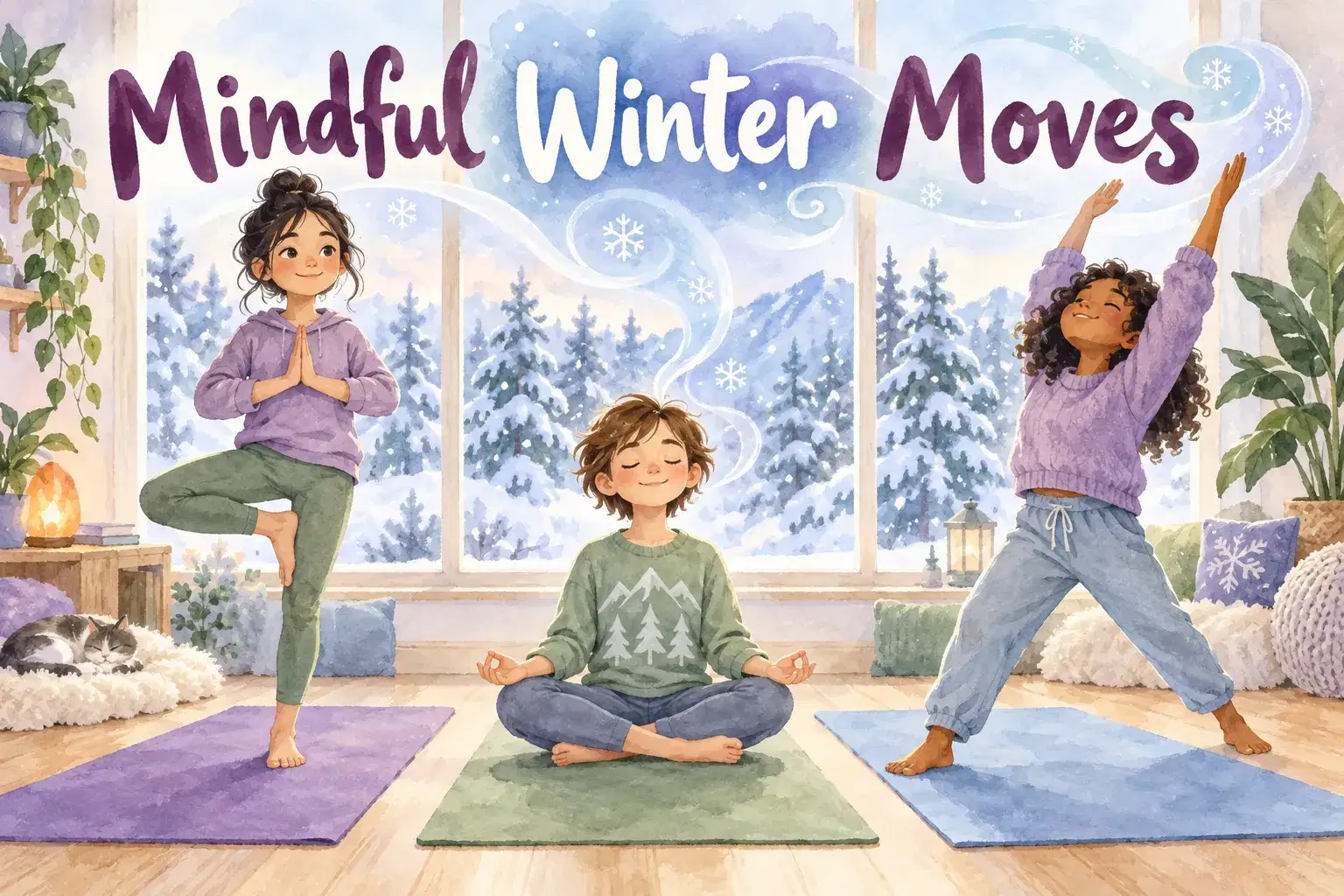
A six-week winter wellness term that teaches tweens and young teens practical tools for calm, focus and energy. Each 75-minute class blends breathwork, gentle yoga, mindful movement and open discussion about stress, emotions and healthy routines.
Paid once.
Short winter days, busy school schedules and less time outdoors can leave kids feeling tired, tense or scattered. This six-week winter term gives tweens and young teens a steady weekly space to slow down, move their bodies and learn simple tools they can use whenever they feel stressed.
Each class follows a calm, predictable rhythm. Learners begin with a check-in and a short breathing practice, then move through a gentle yoga or stretching sequence suited to small spaces at home. The middle of the class is a guided discussion on that week's theme, such as noticing stress signals in the body, naming emotions or building better sleep habits.
Over the term learners build a personal toolkit: box breathing and balloon breath for quick calm, a short yoga flow for focus before homework, body scans for winding down at night and mindful journaling prompts for busy minds. Every tool is practised in class so learners know exactly how it feels and when to use it.
In the final week each learner puts together a simple Calm Plan, choosing the practices that worked best for them and when they will use them. This is a discussion and practice course, so there is no project to submit, only skills to carry into the rest of winter and beyond.
Sharing is always optional, cameras can be turned away during quiet practices, and every movement has an easier option, so learners of any fitness level can take part comfortably.
Each 75-minute class opens with a check-in and breathwork, moves into a gentle yoga or movement sequence, continues with a guided discussion on the weekly theme and closes with a short relaxation practice.
Week 1: Noticing Stress and Calm – Learn how stress shows up in the body and try a first body scan.
Week 2: Breathwork Toolkit – Practise box breathing, balloon breath and 4-7-8 breathing for quick calm.
Week 3: Gentle Yoga Flow for Focus – Learn a short yoga sequence to reset before homework or tests.
Week 4: Thoughts and Feelings – Name emotions, discuss healthy coping and try mindful journaling prompts.
Week 5: Movement for Energy and Sleep – Explore stretches for winter energy and a wind-down routine for better sleep.
Week 6: Building My Calm Plan – Choose favourite tools and create a personal plan for everyday calm.

Recognize early signs of stress and tension in their body
Use at least three breathing techniques to calm down quickly
Follow a short yoga flow to improve focus and energy
Name and talk about emotions using clear, kind language
Create a personal Calm Plan for school days and evenings
Calm, predictable routines, camera-optional quiet practices and no forced sharing help anxious learners practise coping tools at their own pace.
No experience with yoga or meditation is needed. Learners need a small clear space to stretch and should wear comfortable clothes.
Yoga mat or a folded towel; comfortable clothes; water bottle; notebook and pen for journaling prompts and the Calm Plan.
A step-by-step plan of what your child learns, class by class. · 6 Weeks
Learners explore how stress shows up in the body and try a first guided body scan. The group sets simple agreements for a calm, respectful space.
Learners practise box breathing, balloon breath and 4-7-8 breathing and discuss when each tool helps most.
Learners follow a short yoga sequence designed to reset the mind before homework or tests, with easier options for every pose.
Learners name common emotions, discuss healthy ways to cope and try mindful journaling prompts.
Learners try energising stretches for dark winter days and a wind-down routine that supports better sleep.
Learners choose their favourite tools from the term and create a personal Calm Plan for school days and evenings.
Next 7 days, US Eastern Time
It is for tweens and young teens aged 9 to 14 who want simple ways to feel calmer, more focused and more energized during the winter months. No yoga or meditation experience is needed.
A yoga mat or folded towel, comfortable clothes, a water bottle and a small clear space to stretch. A notebook and pen are useful for journaling prompts and the final Calm Plan.
No. Sharing is always optional, cameras can be turned away during quiet practices and every movement has an easier option. Many anxious learners start by simply listening and join in when ready.
Each learner builds a personal Calm Plan listing the breathing, movement and mindfulness tools that work best for them. This is a discussion and practice course, so there is no project to submit.
Each class covers its own theme, so learners can rejoin easily. The teacher can share that week's breathing or stretching sequence so your child can try it at home.
This educator holds a Master's in Education, K–6 certification in multiple subjects, and a Bachelor of Science in Biology, and has taught Kids Yoga, Family Yoga, and Baby-Toddler Me Yoga since 2012. Certification as a 200-hour yoga teacher and specialized kids-yoga training suppo…
Charu I.
Ages 6–10 · 90 min · 1 / Week
$30.00per classSee schedule
Shekhar S.
Tutoring · Ages 10–15 · 30 min · 1 / Week
$22.00per classSee schedule
Ritika G.4.8
Ages 10–15 · 45 min · 1 / Week
$17.50per classSee schedule
Radhika T.
Ages 5–7 · 45 min · 1 / Week
$17.00per classSee schedule
Radhika T.4.8
Ages 8–13 · 55 min · 1 / Week
$22.50per classSee schedule
Sudesh O.4.0
Ages 3–6 · 55 min · 1 / Week
$18.00per classSee schedule

Moji R.5.0
Ages 12–17 · 30 min · 5 / Week
$17.00per classSee schedule
Charu I.
Beginner
Level
6–10
Ages
90 min
Duration
1 / Week
Classes
1
Weeks
Shekhar S.
Beginner
Level
10–15
Ages
30 min
Duration
1 / Week
Classes
Flexible
Weeks
Urmila V.
Beginner
Level
13–17
Ages
45 min
Duration
1 / Week
Classes
Ongoing
Weeks
Ritika G.
All Levels
Level
10–15
Ages
45 min
Duration
1 / Week
Classes
12
Weeks
Radhika T.
Beginner
Level
5–7
Ages
45 min
Duration
1 / Week
Classes
12
Weeks
Radhika T.
Beginner
Level
8–13
Ages
55 min
Duration
1 / Week
Classes
10
Weeks
Sudesh O.
All Levels
Level
3–6
Ages
55 min
Duration
1 / Week
Classes
1
Weeks
Moji R.
Beginner
Level
12–17
Ages
30 min
Duration
5 / Week
Classes
1
Weeks