Reading & writingAges 3–55 min read
By Charlotte ·
Fine Motor Activities for Preschoolers Before Handwriting
Playdough, tongs, threading and scissor activities that build the hand strength ages 3–5 need before they learn to write.
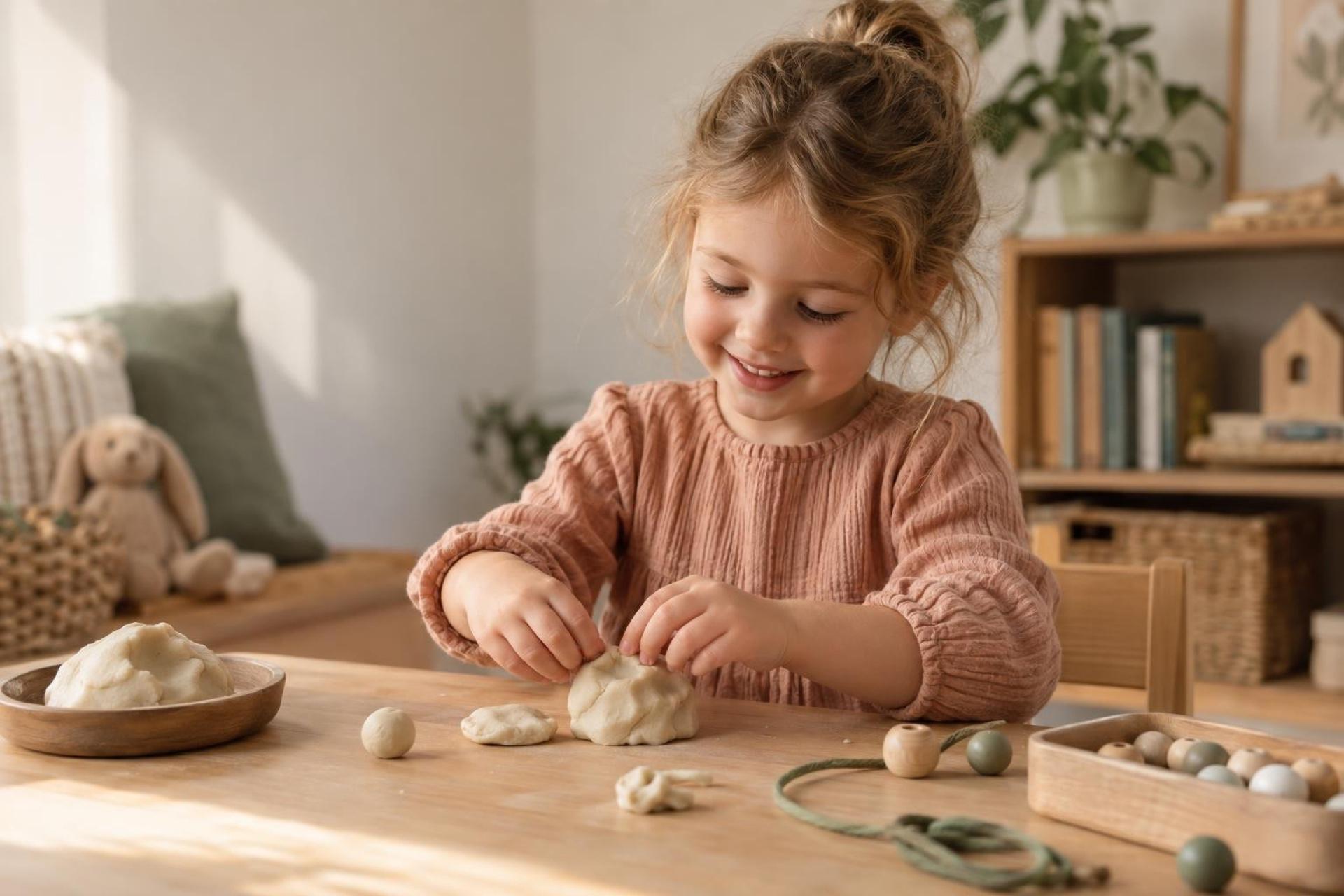
Before a child can write letters comfortably, the small muscles in their hands need strength and control. The good news is that the best preparation looks like play: squeezing, pinching, threading and snipping.
For ages 3 to 5, focus on building hand strength and finger control through play before worrying about neat letters. Playdough, tongs, threading and scissors do more for early writing than tracing sheets.
Why fine motor skills come first
Writing asks a lot of a small hand. A child has to hold a pencil steady, press with the right amount of force and move it in small, controlled strokes. If the hand tires quickly, writing becomes frustrating before it has really begun.
Fine motor play builds three things: strength in the hand, control of individual fingers and the ability to use both hands together, with one holding and the other working.
Activities that build hand strength
Playdough
Rolling, squashing, pinching and poking dough works the whole hand. Ask your child to roll snakes, pinch off small pieces and roll them into balls, or hide a few large buttons in the dough to dig out.
Squeezing and spraying
A spray bottle of water for the plants, a sponge to squeeze in the bath or a turkey baster in a bowl of water all strengthen the grip your child will later use on a pencil.
Tearing and scrunching paper
Tear old magazines into strips and scrunch them into balls for a collage. Tearing uses both hands in opposite directions, which is harder than it looks.
 A live class on this1st Grade Full Curriculum — Part 2Ages 5–7
Activities that build finger control
Tongs and tweezers
Move pom-poms, cotton balls or large pasta shapes from one bowl to another with kitchen tongs. Once that is easy, switch to child-sized tweezers and smaller objects.
Threading
Thread large beads or tube pasta onto a shoelace. Threading needs one hand to hold still while the other aims, which is the same teamwork writing uses.
Stickers and pegs
Peeling stickers and clipping clothes pegs onto the edge of a box both use the thumb and first two fingers, the same three that hold a pencil.
Beads, buttons and other small parts are a choking risk. Stay with your child during these activities and put small pieces away afterwards, especially if younger siblings are around.
Starting with scissors
Cutting is one of the best pre-writing activities, and most children love it. Use child-safe scissors and start with snipping: short single cuts along the edge of a strip of paper. Move on to cutting along a straight line, then gentle curves.
Show your child the thumbs-up position, with the thumb in the top hole, and remind them to turn the paper with their helper hand. Always sit with them while they cut.
From play to pencil
When your child starts showing interest in drawing and making marks, offer short, chunky crayons or broken pieces of chalk. Short tools naturally encourage a fingertip grip.
| Stage | What you might see | How to help |
|---|---|---|
| Scribbling | Big movements from the whole arm | Offer large paper, an easel or chalk outside |
| Lines and circles | Copying a line, then a circle | Draw roads, rain and balloons together |
| Simple shapes | Crosses, squares and first people | Ask them to tell you about the drawing |
| First letters | Letters from their own name | Write their name for them to copy when they ask |
Children move through these stages at their own pace. When your child is ready for letters, our guide on teaching letters and sounds to preschoolers picks up from here.
Let your child draw and write on a vertical surface sometimes, such as paper taped to a wall. It builds shoulder and wrist strength as well as hand control.
When to ask for advice
Children develop hand skills at different rates, and a wide range is normal. It is worth mentioning to your pediatrician or your child's teacher if your child avoids all hand activities, seems much weaker in one hand, or finds everyday tasks like using a spoon very hard compared with other children their age.
What parents can do next
- Set out playdough or tongs for ten minutes a few times a week.
- Add one cutting activity, sitting with your child while they snip.
- Swap long crayons for short ones.
- Let your child do small jobs by hand: opening lids, peeling a mandarin, zipping a coat.
Frequently asked questions
When should my child hold a pencil correctly?
Grip changes gradually through the preschool years. Many children settle into a fingertip grip somewhere around four to six. Short crayons and hand play help it along.
Should I correct my child's grip?
Gentle showing is fine, but avoid making it a battle. Building hand strength through play usually improves grip more than repeated reminders.
My child isn't interested in drawing. What can I do?
Start with what they enjoy. Building, threading, cooking and playdough all build the same muscles. Drawing often follows once the hand feels stronger.
Is tracing letters useful at this age?
A little is fine if your child likes it, but it should not replace hands-on play. Strong hands make letter formation much easier later.
Try a hands-on early learning class
Live classes for young children mix songs, crafts and early skills in short sessions with a small group.