By Claire Sawyer ·
How to Teach Letters and Sounds to Preschoolers
Teach letters and sounds at home with a simple weekly plan, sound games, and everyday activities that keep preschoolers learning through play.
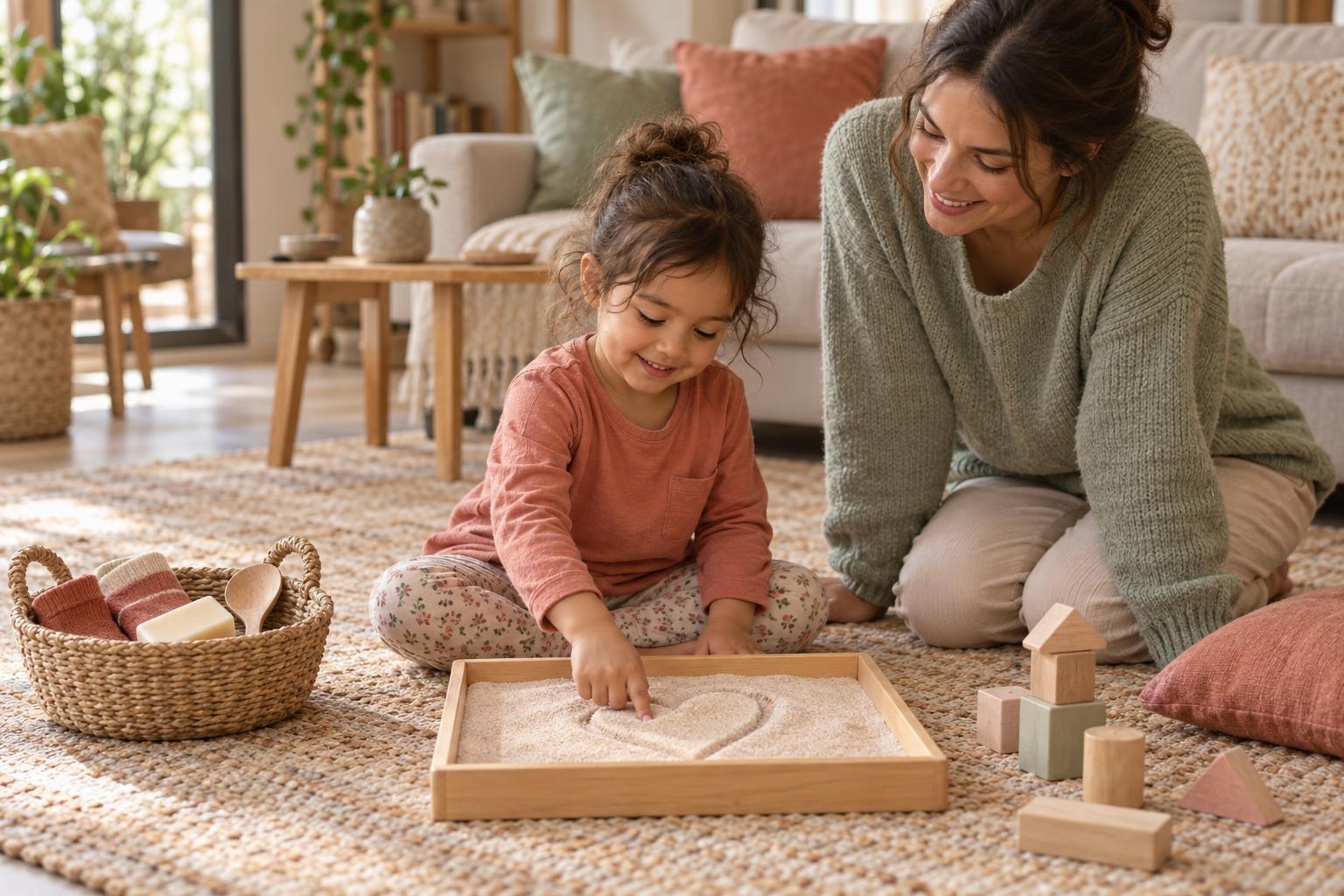
The simplest way to teach letters and sounds is to focus on a few letters each week. Link each letter to its sound and to real things around the house. Short, playful moments with songs, games and everyday objects work better for preschoolers than long worksheet sessions.
Pick two or three letters a week, say both the name and the short, clean sound ("B says /b/"), and practice in five-to-ten-minute bursts with sound hunts, hands-on tracing and games like I Spy. Review old letters, stop while it's still fun, and remember that every child learns letters at their own pace.
Letter names vs. letter sounds
Every letter has a name ("bee") and a sound ("b"). Both matter, but sounds are what kids use to read words. When you talk about a letter, say both: "This is B. B says /b/, like ball."
Keep the sound short and clean. Say /b/, not "buh." Stretching an extra "uh" onto sounds makes blending harder later.
A simple weekly plan
You do not need a curriculum to get started. This plan takes about 10 minutes a day, spread across the day.
- Pick two or three letters for the week. Many families start with the letters in their child's name, or with common letters like s, a, t, m, p and i.
- Introduce each letter with a picture and a sound. Show the letter, say its name and sound, and name an object that starts with it.
- Go on a sound hunt. Walk around the house finding things that start with that sound. Put them in a basket or take photos.
- Make the letter with hands. Trace it in sand, shape it with play dough, or draw it in shaving cream on a tray.
- Sing and rhyme. Alphabet songs, silly rhymes and tongue twisters help kids hear sounds clearly.
- Review old letters. Mix in letters from earlier weeks so they stick.
- Stop while it is still fun. End before your child gets bored or frustrated.
A sample week with the letter S
Here is how one letter might fit into a normal week. Each activity takes just a few minutes.
| Day | Activity |
|---|---|
| Monday | Show the letter S and say "S says /s/, like sun." Hiss like a snake together. |
| Tuesday | Hunt for /s/ things at home, such as socks, a spoon and soap. |
| Wednesday | Draw an S in a tray of salt or sand with a finger. |
| Thursday | Read a picture book and pause to spot words that start with /s/. |
| Friday | Play I Spy with /s/ and one letter from an earlier week. |
Games that build sound skills
Hearing sounds in words, called phonemic awareness, comes before reading. These games need no materials.
I Spy with sounds
Say "I spy something that starts with /m/." Your child looks around and guesses. Let them take a turn giving the clue.
Sound sorting
Gather a few toys or pictures. Sort them into piles by first sound, like /s/ things and /m/ things.
Robot talk
Say a short word in separate sounds, like "c-a-t." Your child blends the sounds and says the word. This is an early step toward reading.
Rhyme time
Say two words and ask if they rhyme. Then try making up nonsense rhymes together, like "cat, bat, zat."
Bring letters into everyday life
The best practice often happens outside of "lesson time."
- Point out letters on cereal boxes, street signs and store fronts.
- Read picture books every day and run your finger under the words now and then.
- Put magnetic letters on the fridge and build your child's name.
- Label a few items at home, such as "door" or "bed."
- Let your child "write" shopping lists and cards, even if it is just scribbles and a few letters.
What to watch for
Every child learns letters at their own pace. Some preschoolers know most letters by age four, and others take longer. Both are common.
- Keep screen time limited. Letter apps and videos can help, but they work best alongside talking, reading and playing together.
- Avoid pressure. Drills and corrections can make kids dislike letters. Praise effort and keep it light.
- Notice hearing and speech. If your child struggles to hear sounds or is hard to understand, mention it to your pediatrician.
- Watch for interest, not perfection. Mixing up b and d is normal at this age.
When a class can help
Some kids enjoy learning letters with other children. A short, live small-group class can add songs, puppets and a teacher who models sounds clearly.
Look for classes with short sessions, lots of movement, and a teacher who calls on each child. When your child is ready to blend sounds into words, our guide on how to teach phonics at home covers the next step. If your child is a bit older, see our guide on how to choose classes for 6-8 year olds for what to look for as they grow.
Frequently asked questions
Should I teach uppercase or lowercase letters first?
Many teachers introduce both together, since most text kids see is lowercase. Uppercase is often easier to write first, so tracing capitals is fine.
What order should I teach the letters in?
There is no single right order. Starting with letters in your child's name, or a few common sounds that build simple words, keeps it meaningful.
How long should practice last each day?
Short bursts of five to ten minutes work well for preschoolers. Several small moments across the day beat one long session.
Is it a problem if my child mixes up b and d?
No. Mixing up b and d is normal at this age. Keep practicing gently and praise effort rather than correcting every slip.
Find playful, guided letter practice
Live small-group early learning classes add songs, games and a teacher who models each sound clearly.