HomeschoolingAges 5–176 min read
By Clara Mendes ·
Homeschool or Online School: How to Decide
Homeschool or online school? Compare control, schedule, parent role, testing and cost side by side, with questions to help your family decide.
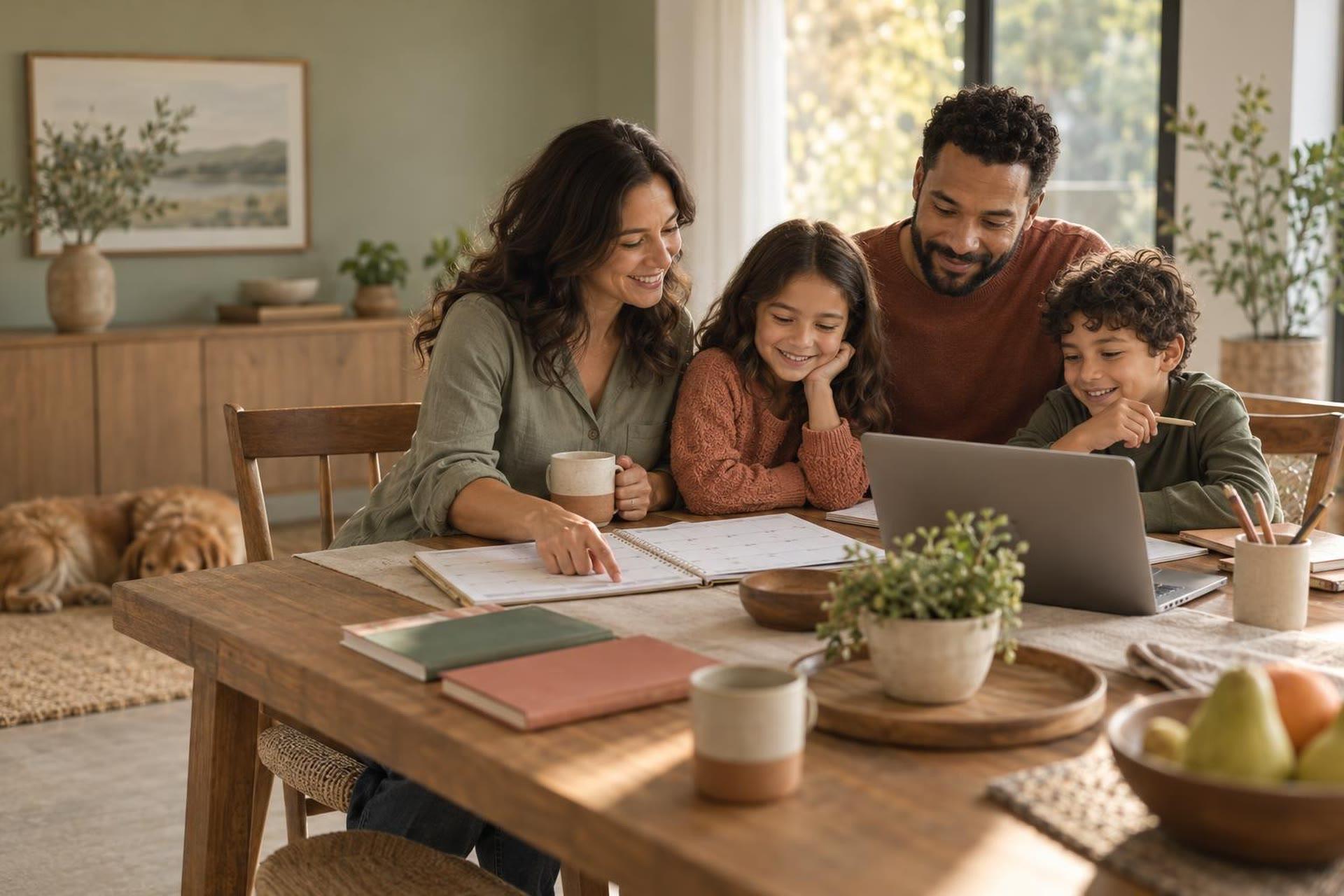
Homeschooling puts you in charge of what, when and how your child learns. Online school keeps your child enrolled in a school, with teachers, a set curriculum and state tests, while they learn from home. The right choice depends on how much control you want, how much time you have and how much structure your child needs.
Choose homeschooling if you want full control over curriculum and schedule and can lead your child's learning. Choose an online school if you want certified teachers, a ready-made curriculum, grades and transcripts handled for you, and you can support your child as a learning coach. Laws for homeschooling vary by state, so check your state's rules before you decide.
The key difference in one sentence
With homeschooling, you are the school. With online school, your child attends a school that happens to be online.
That difference shapes everything else. An online public school is still public school. One large provider, Connections Academy, says plainly in its family FAQ that it "is not homeschooling" and that its schools are public school programs. Homeschooling, by contrast, is defined and regulated by each state. A Penn State military families resource notes there is no single federal definition of homeschooling, and rules range from no notice required in some states to high regulation in others.
How online school usually works
Online schools come in several types: tuition-free public virtual schools and charters, district-run online programs and tuition-based private online schools. Details vary by school, so use Connections Academy as one example rather than a rule.
According to its how it works page, Connections Academy is a tuition-free online public school for grades K to 12 where it is available. Teachers are certified in the student's state, and curricula are aligned to state standards. A parent acts as the "Learning Coach," helping with assignments, schedules and motivation. The page lists about 30 hours per week of schoolwork, with the mix of screen and offline work varying by grade.
Its FAQ adds that students need to be available for live teacher-led sessions, all required books and materials are provided, and all online public school students must take the standardized tests their state or district requires.
 A live class on this1-on-1 AP Chemistry TutoringAges 15–18
How homeschooling usually works
When you homeschool, you choose the curriculum, set the schedule and decide how to measure progress. You might use a boxed curriculum, mix resources by subject, follow your child's interests or combine all three. You can also bring in outside help: co-ops, tutors, library programs and live online classes.
You are also responsible for meeting your state's legal requirements. Depending on where you live, that might include filing a notice, teaching certain subjects, keeping records or arranging assessments. The Home School Legal Defense Association keeps an interactive legal map covering every state and US territory. If you are starting from scratch, our guide on how to start homeschooling walks through the first steps.
Homeschool vs online school side by side
| Homeschool | Online school | |
|---|---|---|
| Who is in charge | You, within your state's rules | The school and its teachers |
| Curriculum | You choose and can change it anytime | Set by the school, usually aligned to state standards |
| Schedule | Fully flexible | Some flexibility, with set live sessions and deadlines |
| Parent role | Teacher, planner and record-keeper | Learning coach who supports and supervises |
| Testing and grades | Depends on state law and your choices | School grades work; state tests usually required |
| Cost | You pay for materials and activities | Public online schools are often tuition-free; private ones charge tuition |
| Legal status | Homeschool under state law | Enrolled student of a public or private school |
Which one fits your family?
Homeschooling may fit if:
- You want to shape the curriculum around your child's interests, pace or values.
- Your child is far ahead or behind in some subjects and needs a custom mix.
- You want to travel, follow an unusual schedule or learn through projects.
- You have the time and energy to plan and lead lessons, or to organize outside help.
Online school may fit if:
- You want certified teachers to teach and grade the work.
- You want an official transcript and a clear path back to traditional school.
- Your child does well with deadlines and outside accountability.
- You can be home to coach and supervise, but do not want to design lessons.
Many homeschool families add live online classes for subjects they do not want to teach, like advanced math or a world language. Some online school families add enrichment classes for interests the school does not cover.
Questions to ask before you decide
- What does my state require? Look up homeschool rules and which online schools are available to residents.
- How many hours can I give each day? Both options need a parent nearby, especially for younger kids.
- How does my child learn best? Some kids thrive with structure and deadlines. Others need room to explore.
- What are the plans for high school and beyond? Ask how credits, transcripts and diplomas work.
- What does my child think? Ask them. Kids who help choose tend to engage more.
- What happens if it does not work? Find out how to switch back to local school mid-year.
- Screen hours: Online school can mean many hours at a computer. Ask how much of the day is live, how much is self-paced and how much is offline.
- Burnout: Leading a homeschool full time is a big job. Plan breaks and outside support for yourself too.
- Isolation: Both options need a plan for friends, clubs, sports or group activities.
- Special education needs: If your child has an IEP or 504 plan, ask exactly what support each option provides before you switch.
Frequently asked questions
Is online school the same as homeschooling?
No. A child in an online public school is a public school student who learns from home. Homeschooling is a separate legal option where parents direct the education under state law.
Is online school free?
Many online public schools and charters are tuition-free for residents of the states they serve. Private online schools charge tuition. Check what is available where you live.
Do online school students take state tests?
Usually, yes. Online public school students are generally required to take the same standardized tests as other public school students in their state.
Can I switch between homeschool and online school?
Usually, yes. Follow your state's homeschool rules and the school's enrollment process, and keep records of your child's work to make the move smoother.
Build a learning plan that fits your family
Whether you homeschool or use an online school, live classes can fill gaps, spark new interests and connect your child with other learners.