
How Machine Learning Works
Learners explore data, features, labels and models and run a first quick machine learning experiment in Google Colab.
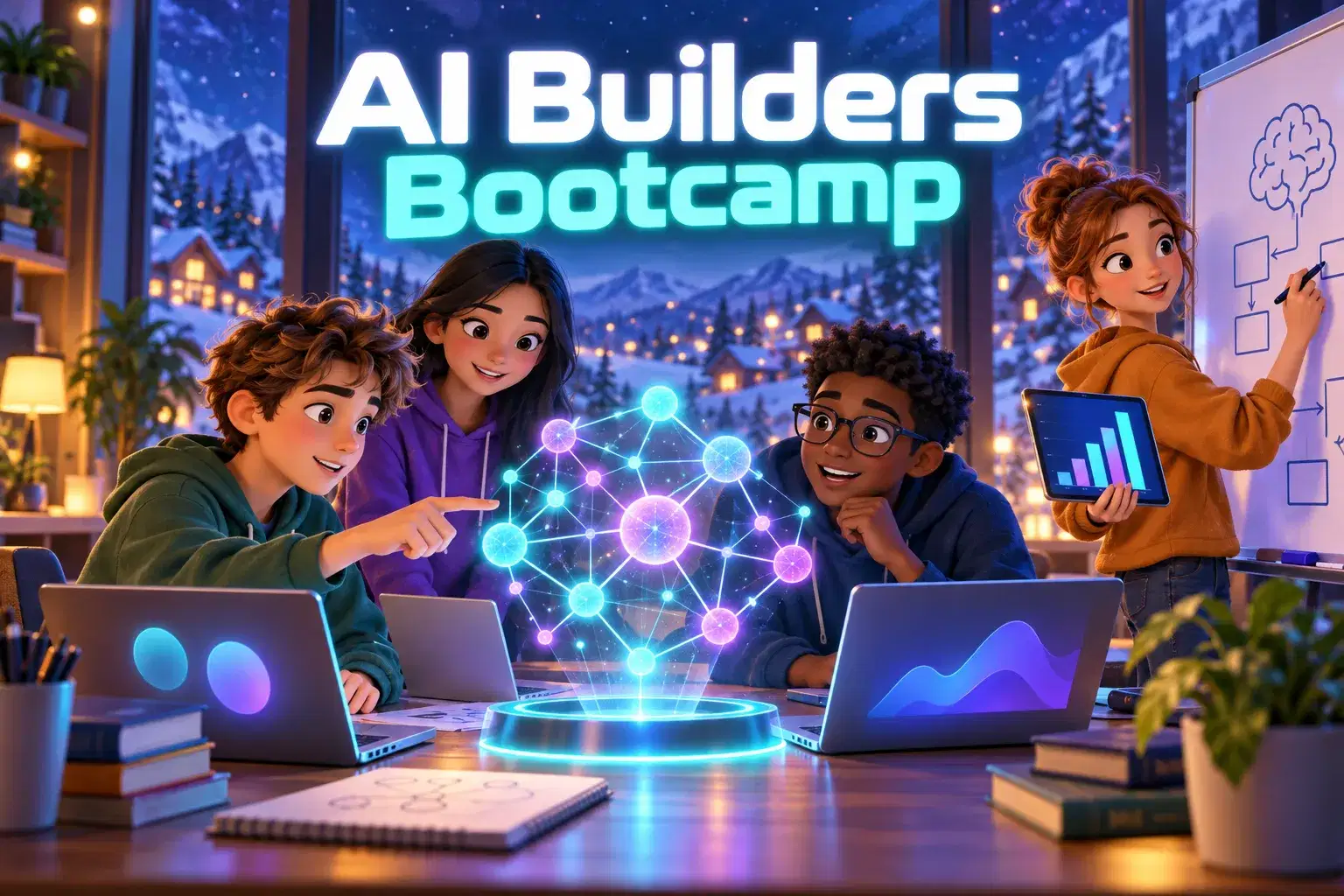
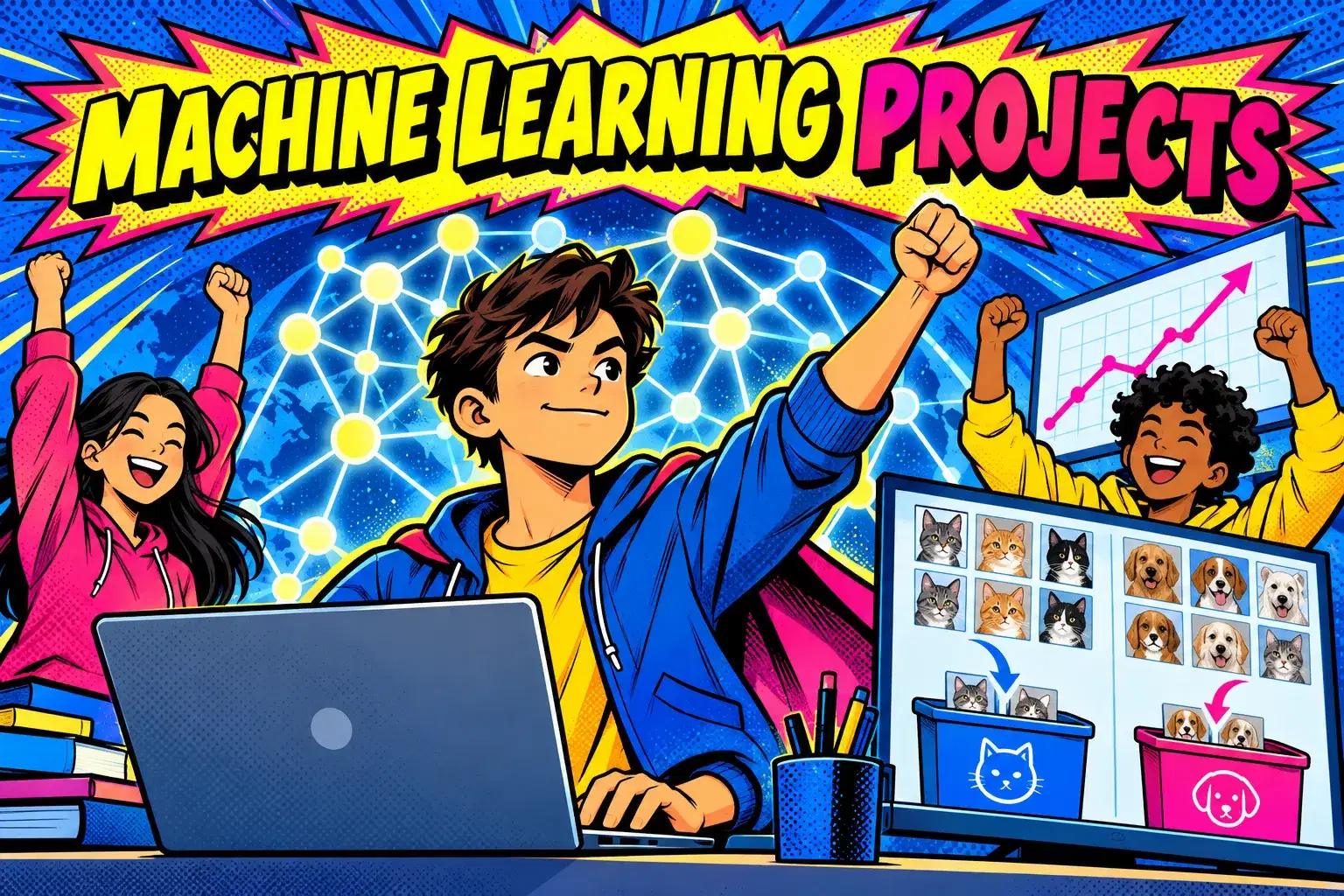
A ten-week advanced bootcamp where teens build real machine learning projects in Python, from data cleaning to neural networks and language-model apps. The term ends with small teams designing, training and demoing their own AI project.
Paid once.
This ten-week winter bootcamp is for teens who already code in Python and want to go beyond using AI tools to actually building them. Across the term, learners work through the full machine learning workflow and finish by shipping a team project they can show to schools, clubs or competitions.
The first half is a fast, hands-on tour of core techniques. Learners clean and explore real datasets with pandas, train classification models with scikit-learn and learn how to judge a model honestly using accuracy, confusion matrices and test sets. They then build a small neural network for image recognition and connect a language model to their own Python code through an API.
The second half runs like a tech team sprint. Learners form small teams, choose a real problem and dataset, split roles such as data lead, model lead and presenter, and build their project over three weeks with code reviews and check-ins. A dedicated responsible AI session asks teams to test their project for bias, privacy issues and failure cases before launch.
The bootcamp ends with Demo Day, where each team presents its problem, approach, results and lessons learned to classmates and families. The teacher gives detailed feedback on both the code and the presentation.
Every class uses Google Colab notebooks, so nothing needs to be installed and all work is saved for learners to keep building after the term.
Each 75-minute session opens with a short concept talk and live-coded demo, followed by guided notebook exercises. From week seven, most of the time is team build time with teacher check-ins and code review.
Week 1: How Machine Learning Works – Understand data, features, labels and models through a first quick experiment.
Week 2: Python and Data Wrangling with pandas – Clean, explore and visualize a real dataset.
Week 3: Classification Models with scikit-learn – Train and compare decision trees and other classifiers.
Week 4: Evaluating Models – Use accuracy, confusion matrices and test sets to spot overfitting and bias.
Week 5: Neural Networks and Image Recognition – Build a small neural network that classifies images.
Week 6: Working with Language Models and APIs – Connect a language model to Python code and design reliable prompts.
Week 7: Team Project Kickoff – Form teams, choose a problem and dataset, and assign roles.
Week 8: Build Sprint – Train, test and improve the team model with code reviews.
Week 9: Responsible AI Review and Testing – Check projects for bias, privacy and failure cases.
Week 10: Demo Day – Present the finished AI project and receive feedback.

Clean, explore and visualize datasets with pandas
Train and evaluate classification models with scikit-learn
Build a simple neural network for image recognition
Connect a language model to Python code through an API
Assess an AI project for bias, privacy and reliability
Plan, build and present a team AI project
Learners should be comfortable writing Python with variables, loops, functions and lists. Some algebra is helpful. No prior machine learning experience is required.
Computer (Windows, Mac or Chromebook) with Chrome; free Google account for Google Colab; notebook for planning the team project.
A step-by-step plan of what your child learns, class by class. · 10 Weeks
Learners explore data, features, labels and models and run a first quick machine learning experiment in Google Colab.
Learners load, clean, explore and visualize a real dataset using pandas.
Learners train and compare decision trees and other classifiers on a real dataset.
Teams train, test and improve their models with code reviews and teacher check-ins.
Teams test their projects for bias, privacy issues and failure cases and make improvements before launch.
Teams present their finished AI projects, explain their approach and results, and receive detailed feedback.
Next 7 days, US Eastern Time
Learners should be comfortable writing Python with variables, loops, functions and lists. Prior machine learning experience is not required, but this is an advanced and fast-paced track for ages 13 to 17.
Nothing needs to be installed. All work happens in Google Colab in a Chrome browser, so learners only need a computer and a free Google account.
All notebooks are shared, so learners can work through a missed lesson on their own and ask questions at the start of the next class. During the team project weeks, teammates and the teacher help them catch up on progress.
Each learner keeps all their Colab notebooks and contributes to a working team AI project that is presented on Demo Day. They can continue improving the project or use it as a portfolio piece.
From week seven, learners work in small teams of two to four, grouped by interests and experience. Each member takes a clear role, and the teacher runs check-ins so everyone contributes.
A credentialed secondary educator and EdTech instructor with ten years of classroom and technology integration experience. Holds a master’s degree in secondary education with emphasis in life sciences and health, plus endorsements in biology, health and fitness. Professional back…
Vinita T.
Ages 14–17 · 75 min · 1 / Week
$28.00per classSee schedule
Shreya R.
Club · Ages 6–9 · 30 min · 1 / Week
$15.00per classSee schedule
Dr. B.
Club · Ages 13–17 · 75 min · 1 / Week
$27.00per classSee schedule
Krishna K.
Club · Ages 8–11 · 45 min · 1 / Week
$16.00per classSee schedule
Hemchandra G.
Ages 13–17 · 90 min · 1 / Week
$30.00per classSee schedule

Krishna K.
Ages 8–12 · 75 min · 1 / Week
$27.00per classSee schedule
Geeta T.
Ages 9–13 · 55 min · 1 / Week
$20.50per classSee schedule
Sakshi S.5.0
Club · Ages 7–12 · 55 min · 1 / Week
$18.00per classSee schedule
Vinita T.
Advanced
Level
14–17
Ages
75 min
Duration
1 / Week
Classes
8
Weeks
Shreya R.
Beginner
Level
6–9
Ages
30 min
Duration
1 / Week
Classes
Ongoing
Weeks
Dr. B.
Advanced
Level
13–17
Ages
75 min
Duration
1 / Week
Classes
Ongoing
Weeks
Krishna K.
Beginner
Level
8–11
Ages
45 min
Duration
1 / Week
Classes
Ongoing
Weeks
Hemchandra G.
Advanced
Level
13–17
Ages
90 min
Duration
1 / Week
Classes
1
Weeks
Krishna K.
Beginner
Level
8–12
Ages
75 min
Duration
1 / Week
Classes
1
Weeks
Geeta T.
Beginner
Level
9–13
Ages
55 min
Duration
1 / Week
Classes
4
Weeks
Sakshi S.
Beginner
Level
7–12
Ages
55 min
Duration
1 / Week
Classes
Ongoing
Weeks