By Charlotte ·
Halloween Reading Activities for Kids Ages 6–8
Use gentle Halloween stories, discussion, rereading, and simple games to make reading practice more engaging for kids ages 6–8.
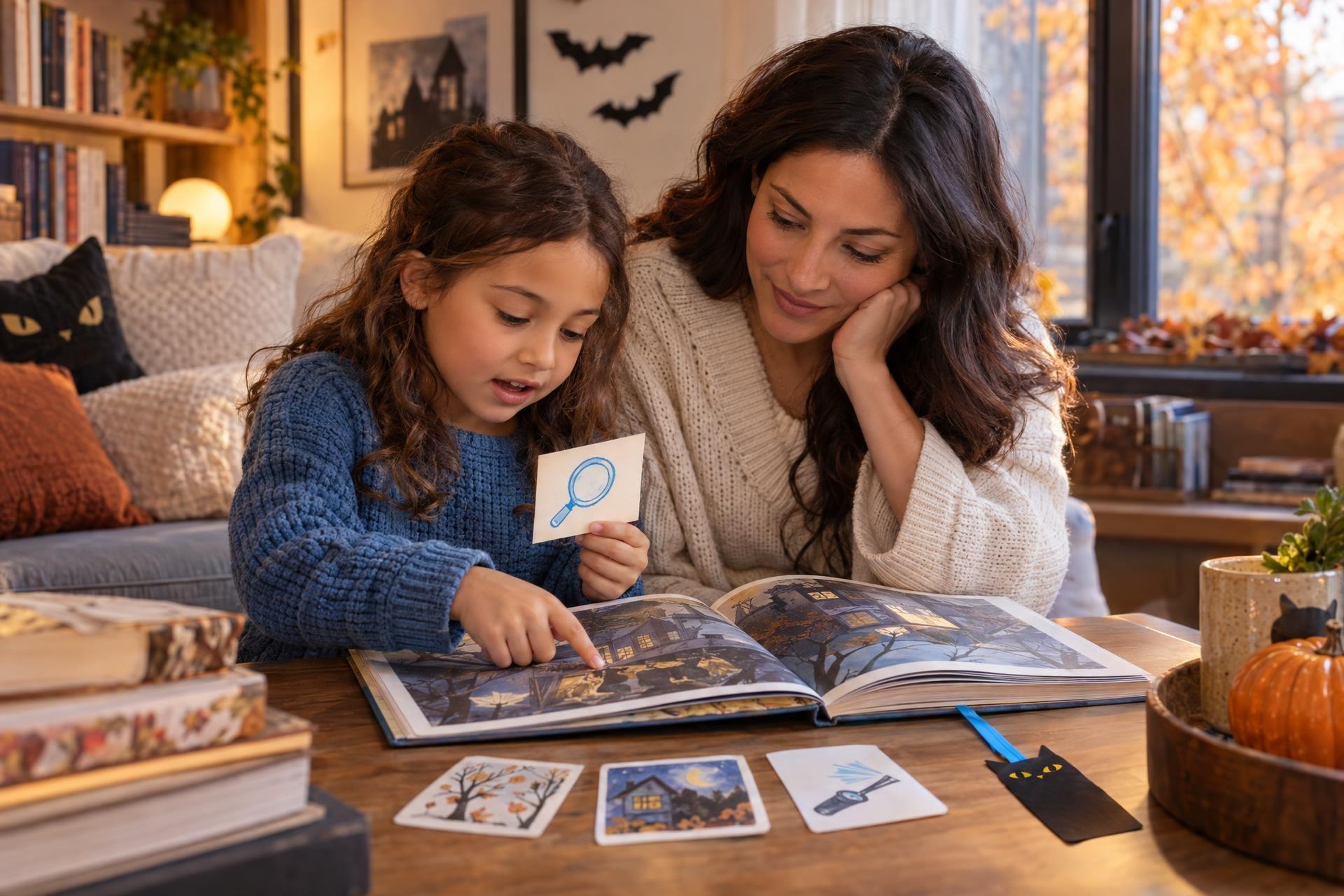
A friendly ghost, a missing black cat, or a mysterious noise in the pumpkin patch can give an early reader a compelling reason to turn the page. That does not make a Halloween story a shortcut to stronger reading. But when a child already likes imaginative or mildly mysterious stories, the right book can make reading practice feel less like an assignment and more like something they want to revisit.
Halloween-themed stories can create inviting opportunities for children ages 6–8 to practice reading, especially when the story matches both their reading comfort and their comfort with spooky content. Keep the focus on the text: make one prediction, notice an interesting word, look for a clue in the words or pictures, or reread a favorite bit of dialogue with expression. A few minutes of playful, text-connected talk is usually more useful than turning every story into a worksheet.
Why a seasonal story can be a useful reading doorway
Interest is not the same thing as skill, but it can be a powerful invitation. A child who is curious about a creaky old house, a costume parade, or a silly monster mix-up may be more willing to settle in with a book, listen closely, and talk about what happened afterward.
That matters because early elementary reading involves more than getting through the words. Children are also building the habit of making meaning: noticing details, following a sequence, learning new vocabulary, and explaining their ideas. Guidance for K–3 reading comprehension emphasizes selecting texts purposefully, creating an engaging context for comprehension, and discussing a text’s meaning with children. A Halloween story can provide that context without needing to become a lesson plan.
The seasonal theme also gives you a natural range of choices. “Halloween reading” does not have to mean scary books. It might mean an autumn mystery, a humorous pumpkin problem, a magical adventure, a costume-day story, or a tale about a very polite monster.
Silly monsters, mixed-up costumes, talking pumpkins, and comic misunderstandings.
Lost pets, hidden clues, secret paths, or a small problem for a young detective to solve.
Witches, friendly ghosts, enchanted gardens, and make-believe adventures with a reassuring tone.
Choose the right kind of spooky
The best seasonal book is not necessarily the one with the most Halloween decorations on its cover. It is the one your child can enjoy with a manageable amount of challenge. For a 6-year-old, that may mean listening to a longer picture-book read-aloud and joining the discussion. For a confident 8-year-old, it may mean independently reading a short mystery and keeping track of clues.
Preview unfamiliar books when you can. Consider both the emotional tone and the reading demands: Is the story playful or intense? Are the illustrations reassuring? Is the vocabulary likely to interrupt the story too often? A book can be a little suspenseful without being upsetting.
| Look for | Why it helps | A simple parent move |
|---|---|---|
| A tone your child enjoys | Children differ widely in what feels exciting, funny, or unsettling. | Offer two parent-approved choices: one humorous and one mildly mysterious. |
| Enough picture or story support | Illustrations and familiar story patterns can help a child follow meaning. | Before reading, take a quick picture walk and wonder what may happen. |
| A manageable amount of text | A child needs room to think about the story, not only work through every word. | Read together, alternate pages, or let your child read just the dialogue. |
| A clear problem or mystery | A concrete question gives discussion a natural purpose. | Ask, “What clue should we keep an eye on?” |
If your child becomes worried, has trouble settling after the book, or asks to stop, treat that as useful information—not something to push through. Switch to a lighter title, read it together in daytime, or choose a different seasonal theme altogether.
Turn one story into five minutes of meaningful reading talk
You do not need to pause on every page. In fact, frequent quizzing can pull a child out of a story they are enjoying. Try one short routine before, during, and after reading instead. It gives children a chance to practice comprehension while keeping the story in charge.
1. Preview the cover
Ask one inviting question: “What kind of story do you think this will be?” or “Which detail on the cover makes you curious?” A child might notice a flashlight, a trail of paw prints, or a funny-looking witch hat. There is no need to correct a prediction; the point is to give the child a reason to look for evidence as the story unfolds.
2. Pause once for a prediction
Choose a real moment of uncertainty. For a lost-black-cat story, you might ask, “Where do you think the cat will look next?” For a short mystery, try, “Who seems to know more than they are saying?” Then keep reading to find out.
3. Notice one word worth keeping
Pick a word that adds to the story, such as shadowy, rustle, discovered, or cautious. Ask what the word seems to mean from the sentence and picture. You can act it out, use it in a silly new sentence, or listen for it when you reread. One interesting word is plenty.
4. Retell the important parts
Afterward, ask for the beginning, the problem, what the character tried, and the ending. If “I don’t know” is the response, offer a choice: “Did the ghost hide first, or did the children find the map first?” This kind of gentle prompt can help a child organize the story without making the conversation feel like a test.
5. Choose one playful follow-up
Use a small activity that sends the child back to the story details. The goal is not to add a craft to every book; it is to give the child another reason to recall, explain, or reread what they encountered.
Make comprehension a family detective game
“What happened in the story?” can be a hard question for a young child to answer on the spot. A detective frame is often more concrete. Instead of asking for a broad summary, invite your child to hunt for clues and explain their thinking.
An 8-year-old reading a short mystery might keep a tiny detective clue list with three words, objects, or details from the story. A younger child listening to a read-aloud can point to an illustration: “I think the cat went outside because I see the open window.” Both are practicing the important habit of supporting an idea with something from the text or pictures.
Good story talk is less about getting the “right” answer and more about helping a child say, “This is what I think—and here is the clue I noticed.”
The three-clue case file
Fold a sheet of paper into three boxes. As you read, have your child draw or write one clue in each box: something a character said, an object that seems important, or a picture detail that may matter. At the end, ask which clue was most useful and why. Keep it to three clues so the activity stays quick and story-centered.
Helpful follow-up prompts include:
- “What makes you think that?”
- “Can you show me the word or picture that gave you that idea?”
- “Did anything change your mind?”
- “What do you think the character will do next?”
These prompts align with the kind of focused discussion recommended in K–3 comprehension resources from the What Works Clearinghouse and the Regional Educational Laboratory Program. You do not need to use them all. One well-timed question can be enough.
Make rereading feel like a performance, not a repeat
Rereading is common in early reading practice, but “Read it again” can sound like a correction when it is disconnected from a purpose. Give the repeat a reason: the family needs to hear the ghost’s whisper, the brave explorer’s announcement, or the detective’s big discovery.
Choose just one or two short lines of dialogue. First, you can read the line naturally. Then invite your child to try it as the character might say it. A 7-year-old might read a friendly ghost’s words in a whisper voice, then try them again in a brave-explorer voice. Talk briefly about which version fits the character and why.
Keep performance playful, not perfect. If a word causes a snag, offer the word and return to the meaning of the sentence. The aim is for the child to experience how punctuation, dialogue, and phrasing help a story sound alive.
Two-minute dramatic read-aloud
Mark a favorite page with a black-cat bookmark. Assign simple roles—narrator, ghost, detective, or sound-effects helper—and read the page for another family member. On a second try, change one thing: pause at an ellipsis, make a question sound curious, or give a character a different voice. The page stays the same; the purpose for rereading changes.
Keep the practice low-pressure and connected to the book
It is tempting to use a theme as a reason to add spelling lists, comprehension pages, and extra tasks. Sometimes a child enjoys those things. But a seasonal story does not need a stack of activities to be worthwhile. A better test is simple: does the follow-up bring your child back to the story’s words, details, sequence, or characters?
After a Halloween picture book, try placing four simple event cards in order: beginning, problem, attempt, ending. Or draw a new setting for the story and label three details that would help the character solve the problem. A clue scavenger hunt can work, too: hide three paper clues around the room, each one referring to a detail from the plot.
These games can create opportunities to practice vocabulary, retelling, and close attention. They are not a substitute for individualized support if a child is having persistent difficulty with reading. If you have ongoing concerns, it is sensible to talk with your child’s teacher or another qualified school professional about the right next step.
For more ideas on making shared reading memorable and responsive to a child’s interests, Reading Rockets’ parent reading tips offer a helpful starting point.
What parents can do next
- Choose two age-appropriate seasonal books with different tones—perhaps one funny and one gently mysterious—and let your child pick.
- Before reading, take a one-minute picture walk and ask what detail makes your child curious.
- During or after the story, use one clue question: “What makes you think that?”
- Reread one favorite line or page as a mini performance, with no expectation of perfection.
- End while the story still feels fun. Save another clue hunt, retell, or chapter for tomorrow.
Frequently asked questions
Are spooky stories appropriate for every 6–8-year-old?
No. Children have different comfort levels, even within the same family. Let your child’s response guide you, preview new books when possible, and remember that funny, magical, or autumn-themed stories can offer the same seasonal appeal without a spooky tone.
Should my child read the book alone or with me?
Either can work. Read aloud together when the book is above your child’s independent reading comfort, when the story has richer vocabulary, or when shared discussion will add to the experience. For independent readers, stay nearby for a quick clue conversation afterward.
What if my child wants to reread the same Halloween book many times?
That can be a great opportunity. Familiarity frees up attention for expression, story details, and new vocabulary. Give the reread a fresh purpose: perform the dialogue, hunt for clues, or retell the plot from a different character’s point of view.
Do I need to correct every missed word?
No. If the meaning still makes sense, let the story move. If a missed word changes the meaning or leaves your child stuck, offer a calm prompt or supply the word, then return to the story. The goal is a successful reading experience, not an interruption on every page.
Find a seasonal learning experience your child can join
If your child is excited by Halloween mysteries, storytelling, or imaginative read-alouds, interest-led seasonal classes can offer another welcoming way to participate, discuss, and create.