Art, music & makingAges 5–126 min read
By Morgan Hayes ·
Online vs In-Person Piano Lessons for Kids
Online vs in-person piano lessons for kids compared: hand position, sound, travel, teacher choice and ages, plus how to set up online lessons well.
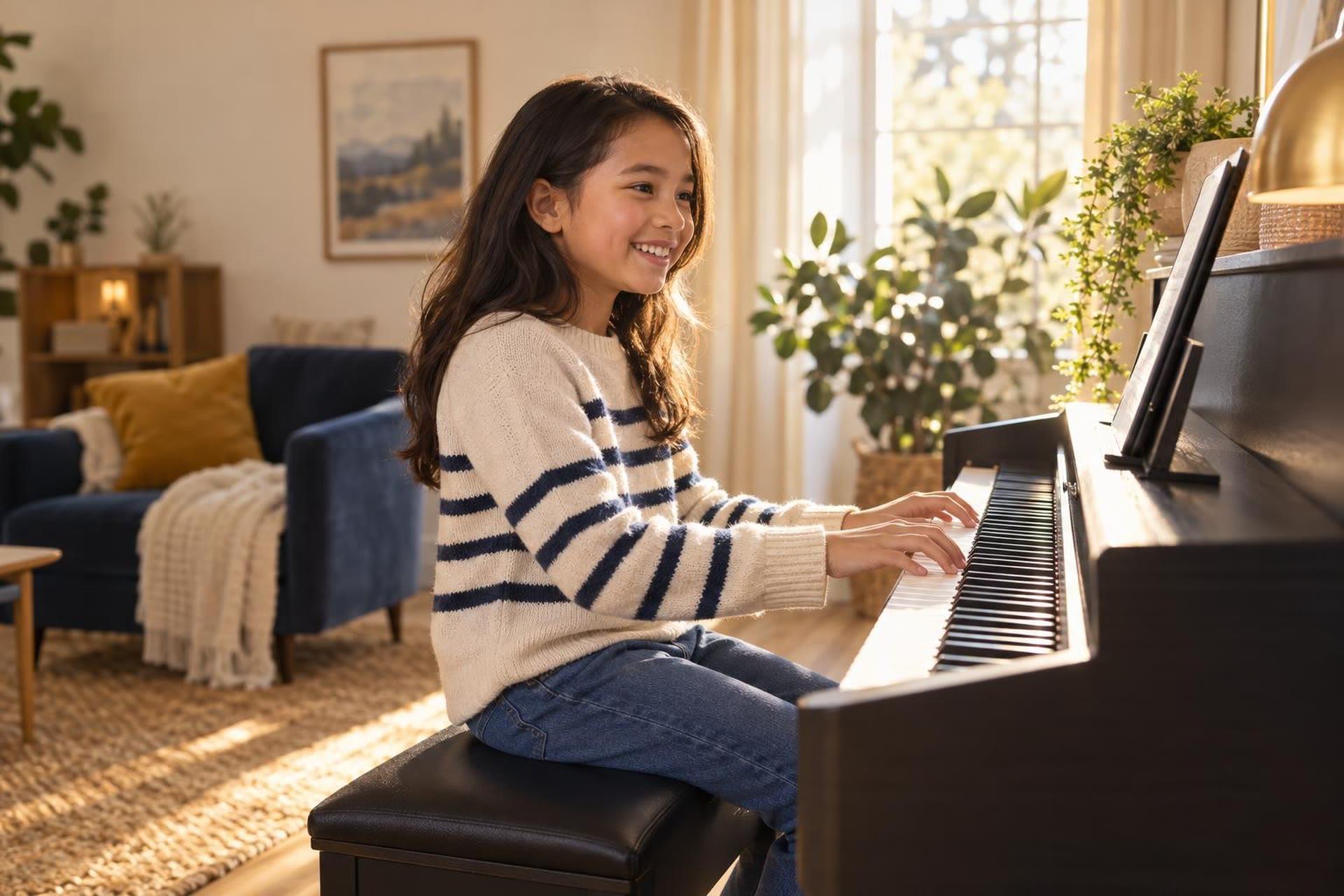
Both online and in-person piano lessons can teach kids to play well. In-person lessons make it easier for a teacher to adjust hand position and posture, which helps very young beginners. Online lessons save travel time, open up a much wider choice of teachers, and work well for kids who can follow spoken directions, especially once you get the camera and sound set up right.
Choose in-person if your child is under about 6, easily distracted on screens, or needs a lot of hands-on correction. Choose online if travel is hard, you want a specific style or teacher, or your child is comfortable on video. Either way, the teacher's fit and your support with practice matter more than the format.
Online vs in-person piano lessons at a glance
| Factor | In-person | Online |
|---|---|---|
| Hand position and posture | Teacher can see every angle and guide hands directly | Teacher relies on camera angles and clear verbal cues |
| Sound quality | Teacher hears the real tone and dynamics | Depends on microphone, internet and settings |
| Travel | Driving or walking to a studio, or a teacher who comes to you | None; lessons happen on your child's own piano |
| Teacher choice | Limited to teachers nearby | Teachers from anywhere, including niche styles |
| Playing together | Easy to play duets in real time | Video lag makes playing in sync hard |
| Best ages | All ages, especially very young beginners | Often easiest from around 6 or 7 and up, with a parent helping younger kids |
| Practice instrument | The lesson piano may differ from the one at home | Child learns on the exact instrument they practice on |
Where in-person lessons shine
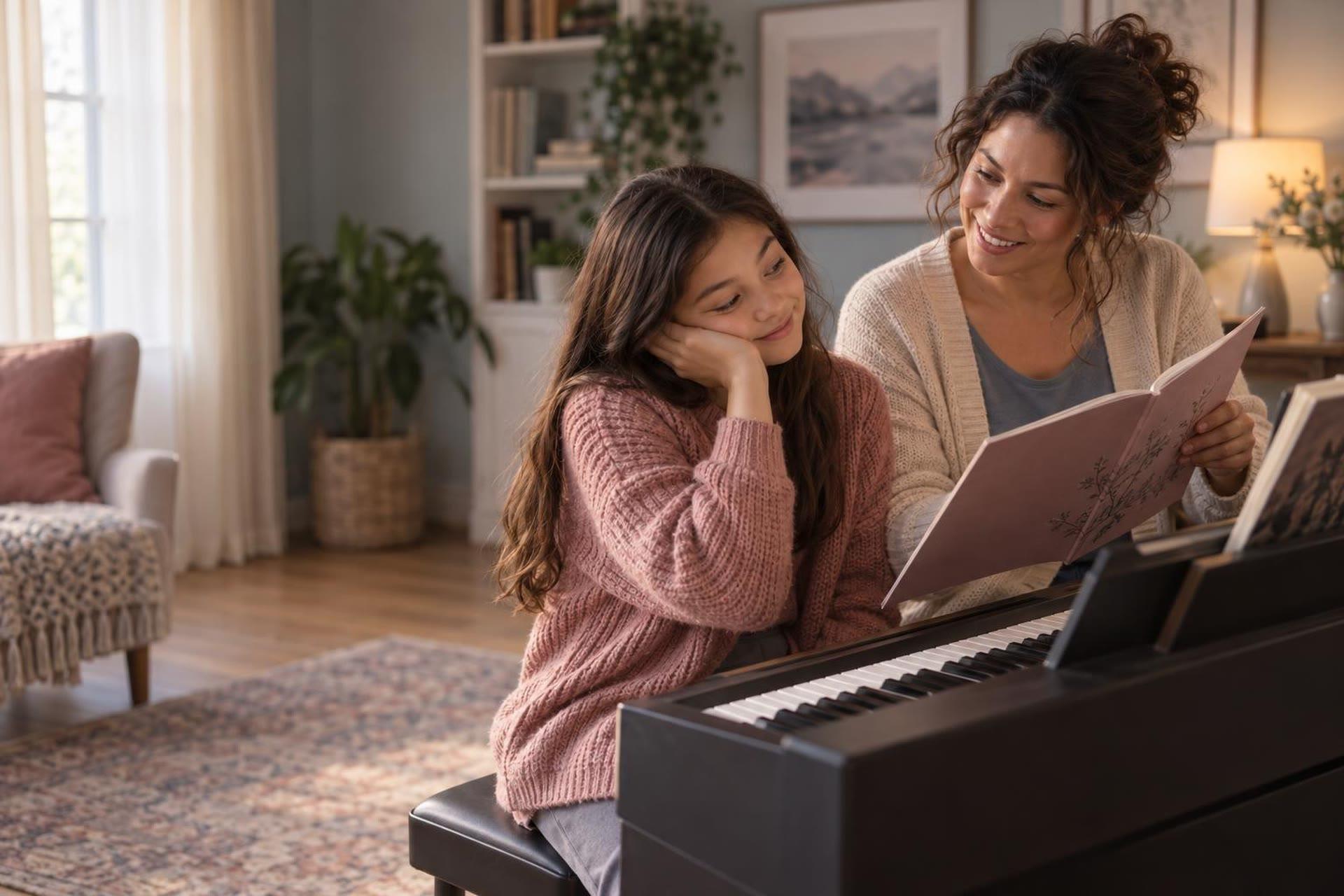
Piano is a physical skill. A teacher in the room can see a collapsed wrist, tense shoulders or a slouching back from any angle and fix it in seconds. For a 5- or 6-year-old who can't yet follow "curve your fourth finger more," a gentle hand on the hand is often faster than words.
- Real sound. The teacher hears soft and loud playing exactly as it is, which helps with tone and dynamics.
- Duets and accompaniment. Playing together in time is simple when you share a room.
- A different setting. Some kids focus better in a studio away from home distractions.
- Recitals and community. Local studios often hold recitals and group events where kids meet other students.
 A live class on this20th‑Century Music History for KidsAges 10–14
Where online lessons shine
Online lessons remove the drive, which can free up an evening for busy families. They also let you choose from teachers well beyond your area, which matters if you want jazz, pop chords, composing or a teacher who's great with beginners.
- Learning on their own piano. Your child practices on the same keys the teacher sees.
- Easier scheduling. No commute means shorter gaps between school and lessons.
- More independence. Kids often learn to describe what they hear and see, which builds listening skills.
- Consistency. Bad weather, a sibling's cold or a long week rarely cancel an online lesson.
Group formats work online too. Some families mix private lessons with a weekly online club or a short camp, where kids play for peers and try new styles.
How to set up online piano lessons well
A good setup makes a big difference. Advice from Pianist magazine and video-call settings guides points to a few simple steps:
- Use a laptop or tablet, not a small phone. Your child needs to see the teacher's hands clearly.
- Angle the camera from the side. Pianist magazine suggests placing the camera at roughly 90 degrees to the player, tilted down so both hands show.
- Improve the sound. An external microphone aimed toward the higher keys helps soft notes come through.
- Turn on music settings in Zoom. Zoom's "Original sound for musicians" mode sends your microphone's sound without Zoom's usual echo cancellation and audio enhancement. The University of Michigan's Zoom guide shows how to switch it on before or during a meeting.
- Use a wired connection if you can. An ethernet cable can make the call more stable than Wi-Fi.
- Keep the area quiet. Close the door, silence notifications and keep siblings busy for the lesson.
Which is right for your child?
In-person may fit better if:
- Your child is under about 6 and needs lots of physical guidance.
- They find it hard to focus on a screen.
- You have a well-matched teacher close by.
Online may fit better if:
- Travel is hard or your evenings are packed.
- You want a style or teacher you can't find locally.
- Your child follows spoken directions well and enjoys video calls.
Questions to ask any piano teacher
- How do you teach beginners of my child's age?
- For online lessons, how do you check hand position and posture?
- What should practice look like at home each week?
- How do you share progress and goals with parents?
- Can we try a first lesson before committing?
Whatever you pick, your involvement counts. Research summarized in The Conversation found that the more interested the parent, the better the learning for the child. If you're still choosing an instrument, our guide on how to choose a first instrument for kids can help.
What to watch for
- Posture habits online. Ask the teacher to check your child's wrists, seat height and back from the side camera every few lessons.
- Keyboard size. If your child learns on a keyboard, ask the teacher how many keys and what kind of key feel they recommend.
- Long lessons for little kids. Young beginners often do better with short, focused lessons.
- Teacher fit. Trial a lesson first. On Undoschool, the first class is on us, so you can see how your child responds to a teacher before committing.
Frequently asked questions
Can a child really learn piano online?
Yes. With a clear camera angle, decent sound and a teacher experienced in online teaching, many kids progress well. Very young beginners may need a parent nearby to help.
Do we need an acoustic piano for online lessons?
No. Many kids start on a digital piano or keyboard. Ask the teacher what they recommend for your child's age and goals.
Can we switch between formats?
Yes. Some families start in person to learn the basics, then move online. Others use online lessons in between local ones or over the summer.
How long should a piano lesson be for kids?
It depends on age and focus. Ask the teacher; young beginners often do best with shorter lessons and older students can handle longer ones.
Try a live piano class from home
Browse live music classes for kids, from first piano lessons to music theory and songwriting, and find a teacher that fits your child.