Life skills & languagesAges 9–176 min read
By Grace Kimura ·
Debate for Kids: What It Teaches and When to Start
What debate teaches kids, when to start by age, common formats like Public Forum explained simply, and easy ways to practice debate at home.
Debate teaches kids to research a topic, build an argument, listen closely and speak with confidence under time pressure. Many children can start simple debate games around age 8 or 9, and formal team debate usually begins in middle school, around grades 6 to 8. The best time to start is when your child enjoys arguing a point and can handle hearing the other side.
Ages 6 to 8: play opinion games at home. Ages 8 to 10: try a beginner class with short, fun rounds. Ages 11 and up: join a team or club and learn a format like Public Forum. At every age, the real wins are clear thinking, careful listening and the courage to speak up.
What debate teaches kids
Debate packs a lot of skills into one activity. A single round asks your child to:
- Research: find facts and examples that support a position.
- Organize ideas: make a claim, give reasons and back them up.
- Listen: track what the other side said so they can respond to it.
- Think on their feet: answer questions they did not prepare for.
- Speak clearly: stay within a time limit and keep the audience with them.
- See both sides: many formats assign sides, so kids often argue a view they do not hold.
The National Speech & Debate Association (NSDA) describes its middle school program as a way for students in grades 6 to 8 to become more articulate communicators, with increased confidence and social awareness.
When to start: a guide by age
Ages 6 to 8: opinion games
Young kids love having opinions. Keep it playful: "Which is better, cats or dogs? Give me two reasons." The goal is learning that an opinion needs a reason, and that other people can have different reasons.
Ages 8 to 10: beginner rounds
By now most kids can prepare a few points, speak for a minute and respond to one question. Beginner classes at this age often use silly or kid-friendly topics, such as whether homework should be banned, so the focus stays on structure and confidence.
Ages 11 to 14: formal formats
Middle school is when many students first join a school team or club. The NSDA's middle school program covers speech, Congress and debate events. Kids learn to research real issues, work with a partner and compete in timed rounds.
Ages 14 and up: going deeper
High school debaters can specialize in a format, compete in tournaments and take on complex policy and ethics questions. Starting earlier is helpful, but many students begin in high school and do very well.
 A live class on thisAdvanced Public SpeakingAges 13–18
Common debate formats, explained simply
You will hear these names when looking at clubs and classes. Here are a few your child may meet.
| Format | How it works | Good fit for |
|---|---|---|
| Public Forum | Two teams of two debate a current-events topic; topics change often | Beginners, kids who like current events and teamwork |
| Lincoln-Douglas | One-on-one debate centered on values and ethics | Kids who love "what is fair?" questions |
| Congressional Debate | Students act as legislators, giving speeches on bills in a large group | Kids who enjoy role play and public speaking |
| Classroom or club style | Simple team rounds with short speeches and kid-friendly topics | Ages 8 to 11 trying debate for the first time |
Public Forum is a common starting point. An NSDA description of Public Forum notes that it requires no prior debate experience and that judges are often community members, so debaters learn to persuade a general audience. Speeches are short and timed, with constructive speeches lasting four minutes.
Signs your child is ready for debate
- They argue a point at dinner and back it up with reasons.
- They ask "why?" and "how do you know?" a lot.
- They enjoy reading about animals, history or news.
- They can lose a game without a meltdown, at least most of the time.
- They want to get better at speaking in front of people, even if it makes them nervous.
What age and experience level is the class for? Which format does it teach? How much speaking time does each child get per session? Are topics chosen with my child's age in mind? Is there homework or research between sessions, and roughly how long does it take? Will my child get individual feedback on their speeches?
Shy kids can thrive in debate too. A prepared speech gives them something solid to hold on to. For more on how speaking and debate skills build on each other, read our guide to debate and public speaking for kids.
Easy ways to practice debate at home
- Two-reason rule. When your child wants something, ask for two reasons. Keep it light.
- Switch sides. After your child argues one side, have them argue the other. This builds empathy and sharper thinking.
- One-minute speeches. Use a kitchen timer. Pick a topic, think for one minute, speak for one minute.
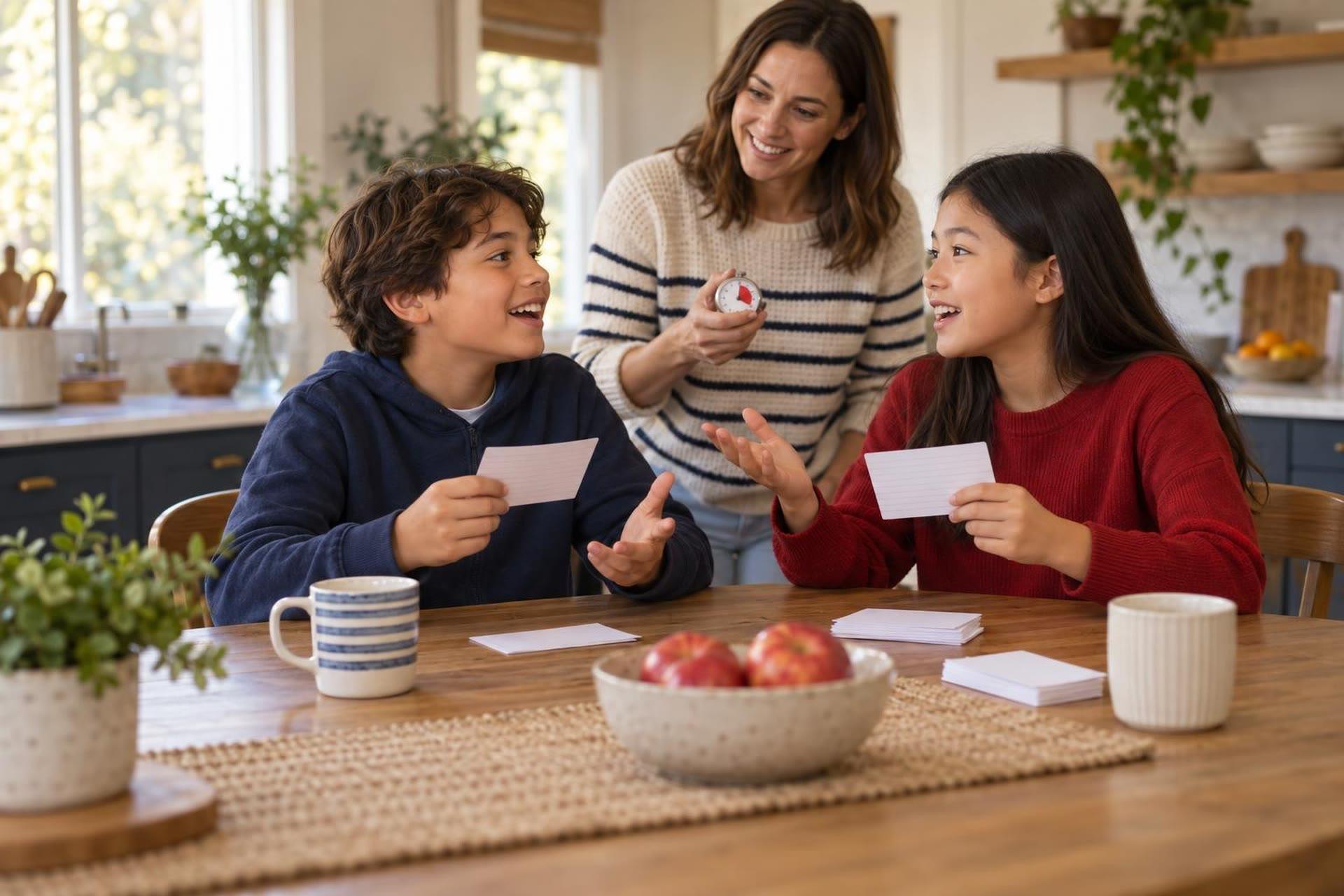
- Family mini-debate. Two people per side, a parent as timekeeper, and a fun topic like "Summer is better than winter."
- News of the week. Pick a kid-friendly news story and ask, "What are the two sides here?"
Model calm disagreement. Say "I see your point, and here is mine." Kids learn as much from how you argue as from what you argue.
What to watch for
- Winning over learning. If your child cares only about winning, steer the conversation toward what they learned in each round.
- Heavy topics. Some formats use serious current events. Check that topics suit your child's age and maturity.
- Arguing everything at home. Set a family rule that debate happens at debate time.
- Tournament overload. Competitions can mean long weekends. Start with a class or club before committing to travel.
Frequently asked questions
Is 8 too young for debate?
No. Many 8-year-olds enjoy simple debate games with short speeches and fun topics. Formal formats and tournaments usually make more sense from middle school.
What is the difference between debate and public speaking?
Public speaking focuses on delivering a speech to an audience. Debate adds an opponent, so kids must listen, respond and defend their ideas in real time.
Does my child need to be outgoing to do debate?
No. Preparation and practice matter more than personality. Many quiet kids find that a well-prepared argument helps them speak with confidence.
Can kids learn debate online?
Yes. Live online classes work well for debate, since kids can speak, listen and take turns on video while a teacher keeps time and gives feedback.
Help your child speak up and argue well
Live public speaking and debate classes give kids a teacher, a timer and a group to practice with, at a level that fits their age.