By Hannah Ruiz ·
Organize Writing Ideas
What to do when a child has great ideas but cannot organize writing—simple structures that turn thoughts into clear drafts.
My Child Has Great Ideas but Cannot Organize Writing
A child may know a great deal yet produce a page that jumps between ideas. Organization is a teachable decision process, not a personality trait.
A child may know a great deal yet produce a page that jumps between ideas. Organization is a teachable decision process, not a personality trait. Help children organize writing using oral rehearsal, sorting, graphic organizers, paragraph frames and revision strategies—matched to the stage of writing, then faded as control grows.
Begin with the purpose
Ask what the reader should understand, believe or experience. Without a destination, every interesting idea competes for inclusion. Purpose is the first filter: ideas that do not serve it can wait for another piece. Children who repeat ideas often lack a structure, sufficient evidence or a way to see what each paragraph contributes. Naming the audience—“another child,” “a coach,” “someone who disagrees”—makes purpose concrete enough to guide sorting.
Ask what the reader should understand, believe or experience. Without a destination, every interesting idea competes for inclusion.
Capture ideas before ordering them
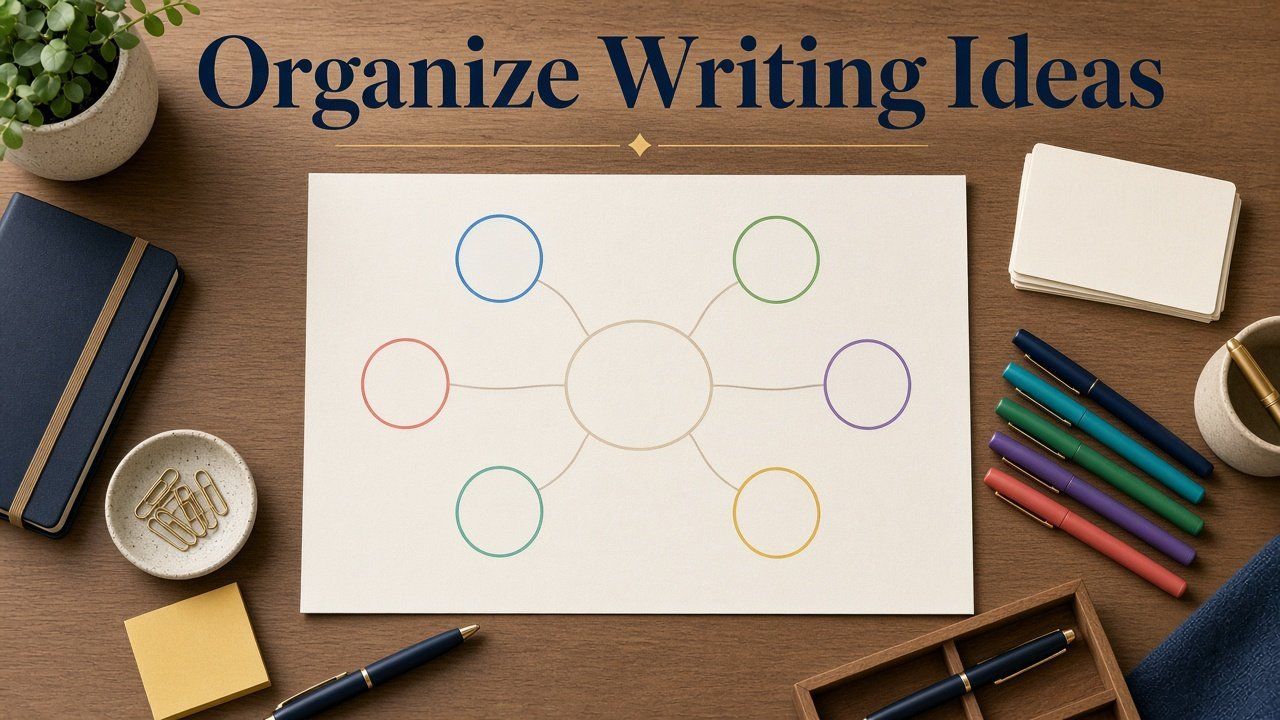
Use sticky notes, index cards or a simple digital list. One idea per card allows the child to move, group and remove thoughts without rewriting. Capture first; order second. Mixing both jobs on a blank page often creates the jumpy draft parents see. Sorting is organization practice; rewriting the same messy paragraph is often not. When the draft jumps, return to cards before polishing sentences.
Choose a structure
Narratives often use time and cause; explanations may use sequence, comparison or categories; arguments use claims, reasons and evidence. Name the structure explicitly. A flexible outline reduces memory load and can be changed as ideas develop—it need not limit creativity when treated as a working map rather than a cage. Oral rehearsal before writing helps: if the child can say the path aloud, the page has a better chance of following it.
Build a paragraph spine
Topic or claim, evidence or example, explanation and connection. This is a support, not a permanent formula. Fade it as the child gains control. Graphic organizers are helpful when matched to the writing structure and gradually faded rather than completed mechanically. Use the spine as a check during revision: if a paragraph has a claim but no evidence, or evidence with no explanation, the next move is clear.
Use headings for longer work
Temporary headings reveal missing or misplaced sections. They can remain in informational writing or be removed after revision. Reading only the first sentence of each paragraph is a fast check: do those lines form a logical path? Move whole sections before polishing individual words. Idea-level revision comes before spelling and punctuation so the child practices organization as a decision process, not as a personality trait.
Revise at the idea level first
Revise at the idea level before spelling. Teach self-checking: ask the child to highlight claim, evidence and explanation in different colors. Missing colors make the next revision visible. Depth comes from better decisions, not simply more words. Ask the child to replace a vague claim with a precise one, add evidence the reader actually needs, explain why the evidence matters or remove a sentence that does not serve the purpose. One paragraph revised thoughtfully can teach more than three additional pages written on autopilot.
Match support to the stage of writing
| Stage | Parent’s useful role | Common mistake |
|---|---|---|
| Ideas | Ask open questions and listen | Supplying the “best” idea |
| Planning | Help group and order | Creating the outline for the child |
| Drafting | Protect momentum | Correcting every line |
| Revision | Respond as a reader | Focusing only on spelling |
| Editing | Teach a short checklist | Marking every possible error |
When parents create the outline, correct every line or mark every error, ownership shrinks and the child never practices the decision process that organization requires. Protect the stage you intend to teach.
Create a feedback agreement
Before reading the draft, agree on the kind of feedback being requested. Does the child want to know whether the story makes sense, whether the argument is convincing or whether punctuation is correct? Limiting the feedback target protects ownership and makes revision achievable. Afterward, the child should restate the suggestion and decide what change to make.
Review progress every month
Select one unassisted sample and compare it with an earlier piece using the same categories: ideas, organization, evidence, sentences, conventions and independence. Note one strength and one next priority. This prevents the family from changing programs based on a single bad evening and keeps attention on growth rather than personality labels.
Look for clearer purpose, cleaner paragraph paths, less repetition and more independence starting the plan. Those signs matter more than a suddenly perfect essay written with heavy adult scaffolding. If repetition continues, check whether the child still lacks a named structure, enough evidence or a way to see what each paragraph contributes—then return to cards, headings or color-coding rather than asking for “more writing.”
Frequently asked questions
Yes, when matched to the writing structure and gradually faded rather than completed mechanically.
They may lack a structure, sufficient evidence or a way to see what each paragraph contributes.
A flexible outline reduces memory load and can be changed as ideas develop.
Review note
Educational needs vary. Programs, prices and policies can change. Persistent reading or writing difficulties should be discussed with qualified educators or clinicians familiar with your child.