




Opening Principles
Learners discover how to control the center, develop their pieces quickly and castle early. They practise strong first moves in guided games.
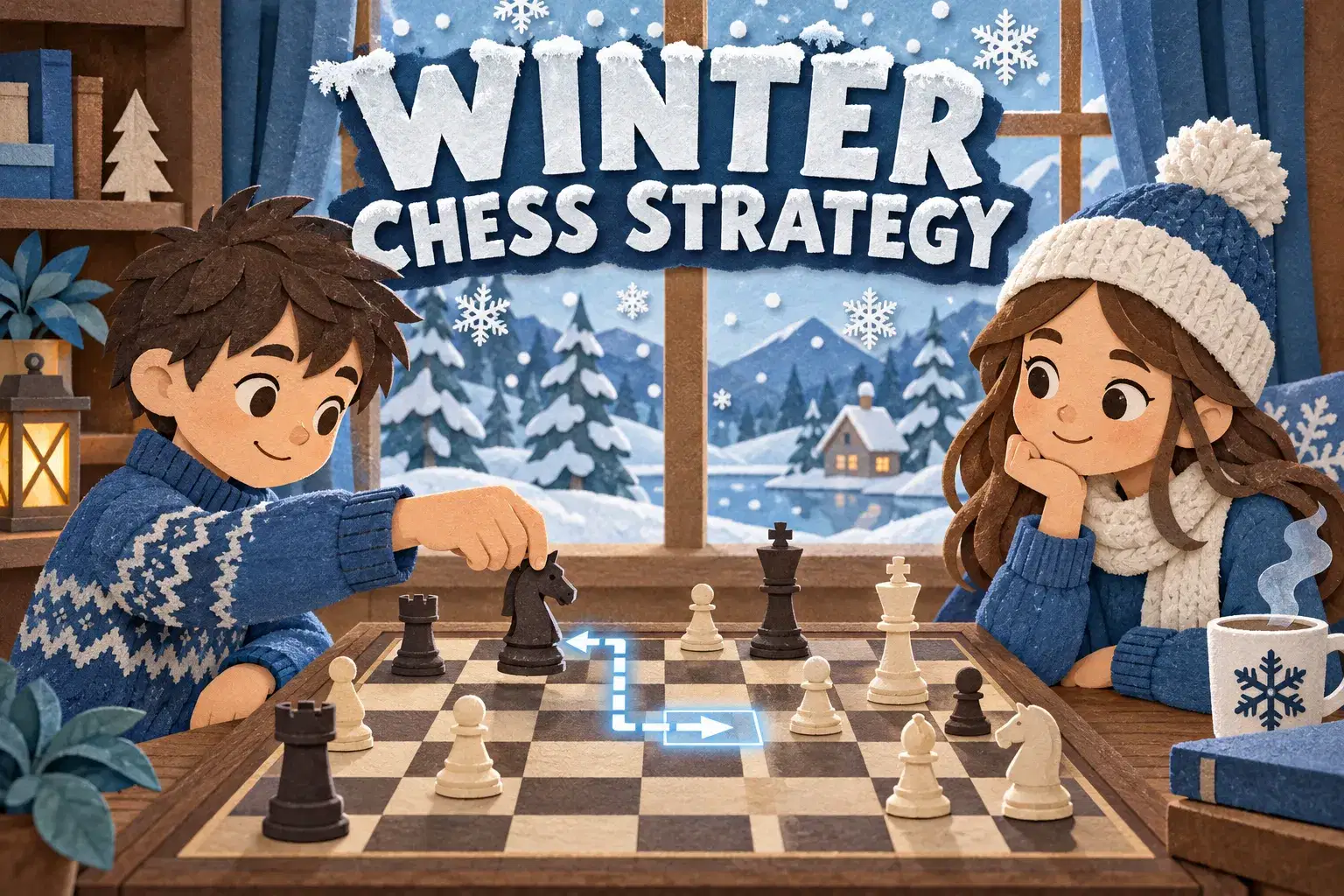
A six-week winter term chess course where young players learn the opening principles, tactics and endgames that win games. Each class mixes a short lesson, guided puzzles and friendly practice games, finishing with a mini tournament and game review.
Paid once.
Winter is the perfect season to sit down at the chessboard, and this six-week term gives young players a clear path from knowing how the pieces move to actually playing with a plan. The course is built for kids who know the rules but often lose track of what to do after the first few moves.
Each week focuses on one big idea. Learners start with opening principles such as controlling the center, developing pieces and castling early. They then spend two weeks on tactics, spotting forks, pins, skewers and discovered attacks in short puzzles before using them in real games. Week four turns to middlegame planning, and week five covers the endgame skills that convert an advantage into checkmate.
The teacher explains every idea on a shared digital board, thinking out loud so learners hear how a strong player weighs each move. Learners then solve guided puzzles together and play short practice games against classmates, with the teacher pausing to discuss key moments.
The term ends with a friendly winter mini tournament and a group game review, where learners talk through their best moves and the turning points of their games. This is a discussion and practice course, so there is no project to hand in, just better chess and sharper thinking.
Each 50-minute class opens with a quick warm-up puzzle, followed by a short lesson on the shared board. Learners then solve themed puzzles together and play practice games on Lichess, finishing with a brief review of what they noticed.
Week 1: Opening Principles – Control the center, develop pieces quickly and castle early.
Week 2: Tactics: Forks and Pins – Spot double attacks and pinned pieces in puzzles and games.
Week 3: Tactics: Skewers and Discovered Attacks – Find hidden attacks and line up winning combinations.
Week 4: Planning in the Middlegame – Find weak squares, activate pieces and choose a plan.
Week 5: Endgame Essentials – Use the king, promote pawns and deliver basic checkmates.
Week 6: Winter Tournament and Game Review – Play a friendly mini tournament and review the key moments together.

Apply opening principles to start games with a solid position
Recognize and use forks, pins, skewers and discovered attacks
Make a simple plan in the middlegame instead of moving at random
Win basic endgames and deliver common checkmates
Review their own games to find turning points and mistakes
Learners should know how all the pieces move and the basic rules of check and checkmate. No tournament experience is needed.
Computer or tablet with a free Lichess account; optional physical chess set for replaying games; notebook and pencil for puzzle notes.
A step-by-step plan of what your child learns, class by class. · 6 Weeks
Learners discover how to control the center, develop their pieces quickly and castle early. They practise strong first moves in guided games.
Learners spot double attacks and pinned pieces in themed puzzles, then hunt for them in short practice games.
Learners find hidden attacks and line up winning combinations, solving puzzles together before trying them in play.
Learners look for weak squares and inactive pieces and learn to choose a simple plan instead of moving at random.
Learners activate the king, push passed pawns to promotion and practise basic checkmates with queen and rook.
Learners play a friendly mini tournament, then review key moments from their games together and celebrate their progress.
Next 7 days, US Eastern Time
It suits kids aged 7 to 12 who know how the pieces move but are not sure what to do after the first few moves. Players who want to stop losing pieces and start playing with a plan will get the most from it.
A computer or tablet with a web browser and a free Lichess account for practice games and puzzles. A physical chess set is optional but nice for replaying games at home.
Each week focuses on one idea, so learners can catch up easily. The teacher shares the week's key positions and puzzles so your child can review them before the next class.
No, this is a practice and discussion course with no project to hand in. Learners leave with stronger openings, sharper tactics and the habit of reviewing their own games.
Yes. The course is beginner level and the final mini tournament is friendly and low-pressure. Practice games are paired by level so younger players are matched fairly.
An experienced STEM and technology educator with a background in IT and creative tech instruction, this educator specializes in teaching coding, game-based learning, and 3D design. Courses emphasize playful, project-driven learning that connects STEM concepts to real-world applic…
Bhavya M.
Ages 9–12 · 45 min · 1 / Week
$19.00per classSee schedule
Avni K.
Ages 12–16 · 50 min · 4 / Week
$20.00per classSee schedule
Harshita R.
Club · Ages 13–17 · 50 min · 1 / Week
$18.00per classSee schedule
Nandini K.4.5
Ages 6–15 · 30 min · 1 / Week
$17.00per classSee schedule
Avni K.4.0
Club · Ages 7–12 · 45 min · 1 / Week
$16.00per classSee schedule
Avni K.4.5
Ages 6–11 · 55 min · 1 / Week
$20.00per classSee schedule
Avni K.4.8
Club · Ages 6–11 · 55 min · 1 / Week
$17.00per classSee schedule
Bhavya M.4.7
Club · Ages 7–12 · 55 min · 1 / Week
$16.50per classSee schedule
Bhavya M.
Beginner
Level
9–12
Ages
45 min
Duration
1 / Week
Classes
1
Weeks
Avni K.
Beginner
Level
12–16
Ages
50 min
Duration
4 / Week
Classes
1
Weeks
Harshita R.
Beginner
Level
13–17
Ages
50 min
Duration
1 / Week
Classes
Ongoing
Weeks
Nandini K.
Beginner
Level
6–15
Ages
30 min
Duration
1 / Week
Classes
1
Weeks
Avni K.
Intermediate
Level
7–12
Ages
45 min
Duration
1 / Week
Classes
Ongoing
Weeks
Avni K.
Beginner
Level
6–11
Ages
55 min
Duration
1 / Week
Classes
10
Weeks
Avni K.
Intermediate
Level
6–11
Ages
55 min
Duration
1 / Week
Classes
Ongoing
Weeks
Bhavya M.
Mixed Level
Level
7–12
Ages
55 min
Duration
1 / Week
Classes
Ongoing
Weeks