Life skills & languagesAges 5–174 min read
By Olivia ·
Spanish, French, Mandarin, Japanese, Korean or German: Choosing a Second Language for Your Child
How to choose a second language for your child: six common options compared by difficulty, usefulness and motivation, plus what matters more than the choice.
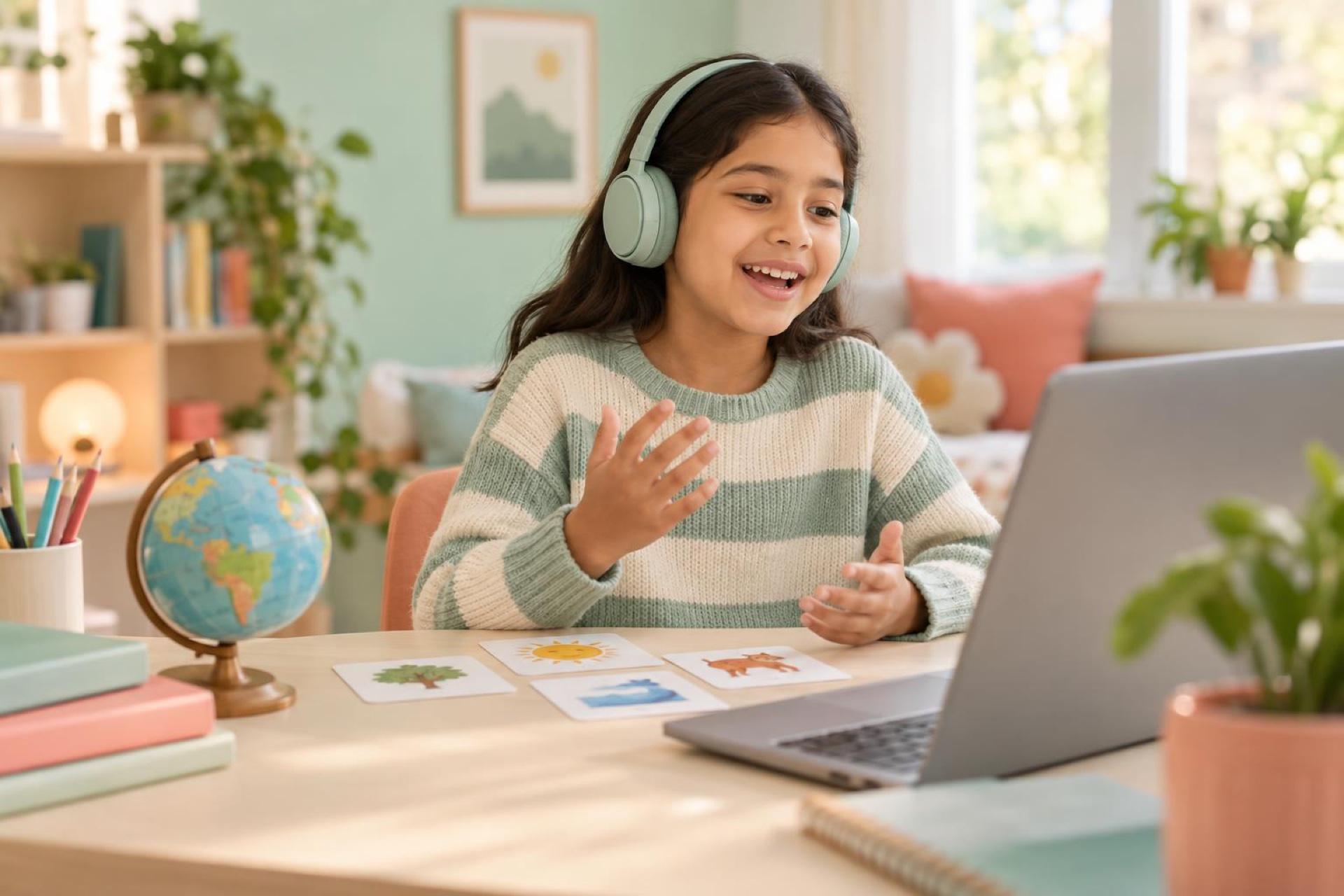
Your child wants to learn a language, or the school is asking them to choose one. Spanish seems sensible, Mandarin seems ambitious, and your child has announced that it must be Japanese because of a favourite show. Who is right?
The best second language is the one your child will keep practising. Motivation and regular use matter more than which language looks most useful. Spanish, French and German are quicker for English speakers; Mandarin, Japanese and Korean take longer but are very achievable with steady lessons, especially when a child is keen.
What matters most: motivation and use
Children who choose a language because they love the music, the food, the shows or a grandparent's stories tend to stick with it. Children who are told it will be useful one day often do not.
- Does your child have a reason to care about this language?
- Is there anyone to speak it with: family, friends, a community?
- Will school offer it later, so progress carries on?
- Are good teachers available at a time that works?
Six languages compared
| Language | For English speakers | Good to know |
|---|---|---|
| Spanish | Among the quickest to learn | Widely spoken in the US and across Latin America and Spain; easy to find practice |
| French | Among the quickest | Spelling and pronunciation take work; shares many words with English |
| German | A little longer | Logical grammar with cases; many familiar words |
| Mandarin Chinese | Takes much longer | Tones and characters are new, but grammar is simple |
| Japanese | Takes much longer | Three writing systems; huge motivation for fans of anime and games |
| Korean | Takes much longer | The alphabet can be learned quickly; grammar differs a lot from English |
These rough groupings follow widely used estimates for English-speaking learners, such as those from the US Foreign Service Institute. They describe adults studying full time, so treat them as a guide to relative difficulty, not a timetable for a child.
 A live class on this1-on-1 Heritage Spanish TutoringAges 8–14
Does a harder language mean a worse choice?
No. A child who studies Japanese with enthusiasm for five years will get further than one who studies Spanish reluctantly for two. Harder languages simply need a longer view and patience with the writing system.
they copy sounds and tones easily. That makes early childhood a good time to start a tonal language or one with unfamiliar sounds, as long as lessons are playful.
If your family has a heritage language
If a parent or grandparent speaks another language, that is usually the best choice of all. There is a built-in reason to use it and people to practise with. Children who understand but do not speak a home language often progress very fast with a tutor.
How to keep it going
- Two short lessons a week beat one long one.
- Add five minutes a day of listening: songs, cartoons or stories.
- Label things around the house.
- Find a real use: a pen pal, a trip, a relative, a favourite show without subtitles.
More ideas are in our guide to practising a new language at home.
What parents can do next
- Ask your child which language they are curious about, and why.
- Check which languages their current or future school offers.
- Try a beginner lesson before committing.
- Plan a small daily habit to go with lessons.
Frequently asked questions
What is the best age to start?
Any age works. Younger children pick up pronunciation easily; older children learn grammar and reading faster.
Will learning a second language confuse my child?
No. Research consistently finds that learning more than one language does not cause confusion or delay.
Should my child learn the language their school teaches?
It helps, because lessons and tutoring support each other. But a strongly motivated child can do well in a different language with outside lessons.
Can my child learn two languages at once?
Yes, though progress in each will be slower. It works best when the two are quite different, or when one is a home language.
Find a 1-on-1 language tutor
Private online lessons in Spanish, French, Japanese, Mandarin Chinese, Korean and German, from first words to exam preparation.