Life skills & languagesAges 4–144 min read
By Isabella ·
How to Count to 30 in ASL: A Step-by-Step Guide for Kids
Learn to count from 1 to 30 in American Sign Language. Clear descriptions of each handshape, the tricky numbers and games to practise at home.
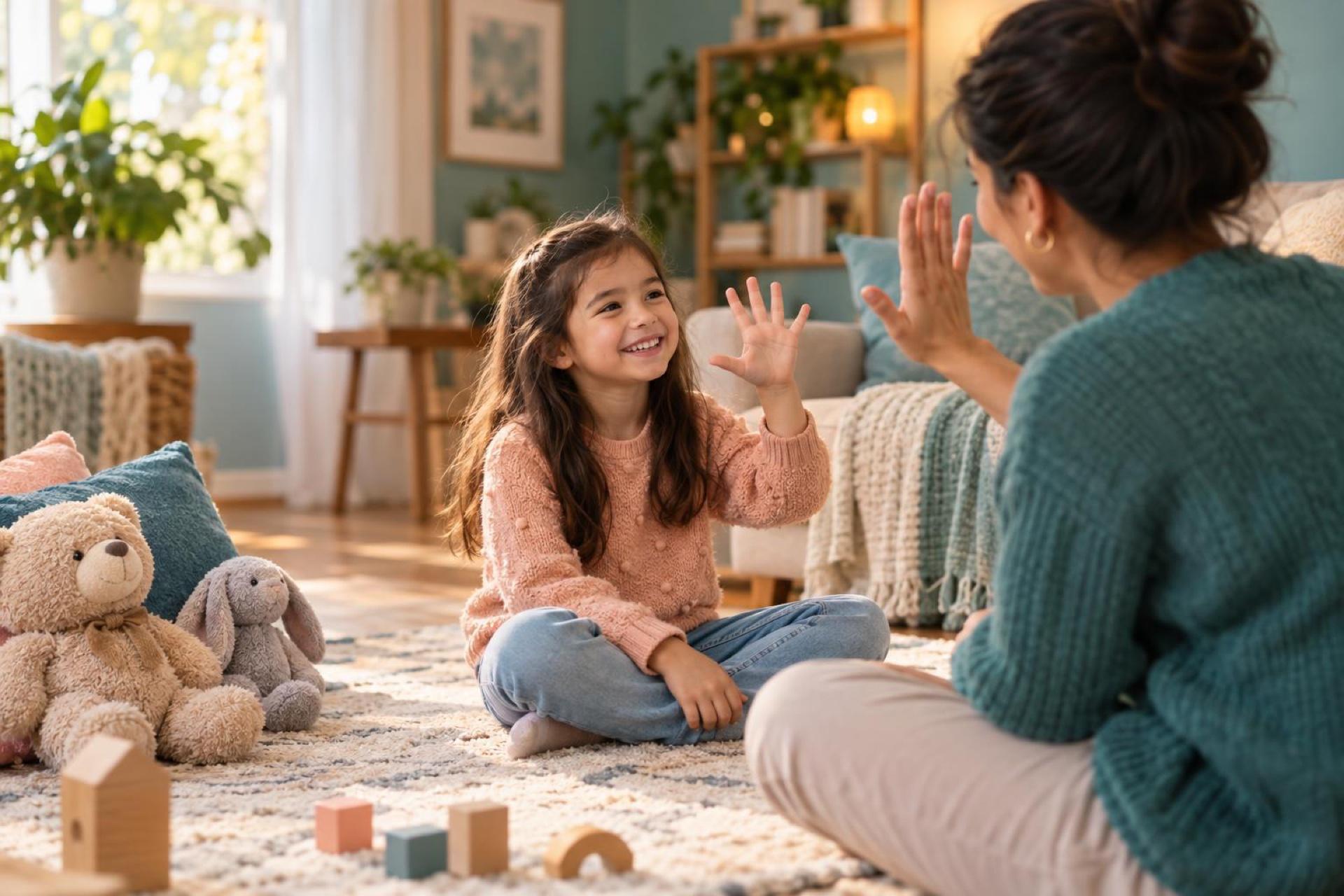
Numbers are one of the most satisfying things to learn first in American Sign Language. They use one hand, they follow patterns, and children can practise them anywhere. Here is how to sign 1 to 30, with the tricky ones explained.
ASL numbers 1 to 5 are shown with the palm facing you. Six to nine touch the thumb to a different finger. Ten to fifteen and sixteen to nineteen each have their own movement, and the twenties are built from an L shape or a repeated two. Written descriptions are a starting point; watching a signer, ideally a Deaf teacher, is the best way to get the movements right.
Numbers 1 to 5
Use your dominant hand, with the palm facing your own body.
Index finger up.
Index and middle fingers up, spread apart.
Thumb, index and middle fingers up. The thumb is what makes it a three.
Four fingers up, thumb tucked in.
All five fingers spread.
Holding up index, middle and ring fingers is how many hearing people show three, but in ASL that handshape is the number 6 or the letter W.
Numbers 6 to 9
Turn the palm to face outward. Touch the thumb to one fingertip and keep the other fingers up.
Thumb touches the little finger.
Thumb touches the ring finger.
Thumb touches the middle finger.
Thumb touches the index finger.
 A live class on this1-on-1 Advanced ASL Coaching: Classifiers, Storytelling and FluencyAges 12–18
Numbers 10 to 15
A thumbs-up, with a small shake of the hand.
Palm facing you, flick the index finger up off the thumb twice.
The same flick with index and middle fingers together.
Palm facing you with a three handshape; bend the index and middle fingers towards you twice.
Palm facing you with four fingers; bend them towards you twice.
Like fourteen, with the thumb held out.
Numbers 16 to 19
These combine ten with a second number. A common way is to start with the thumb-up shape for ten, then twist the hand into six, seven, eight or nine. Some signers instead make the six to nine handshape and rub the thumb against the fingertip. Both are widely understood, and a teacher will show which is used where you live.
Numbers 20 to 30
Index finger and thumb tap together twice, like a small beak.
An L shape with the thumb bending twice.
A two handshape, palm down, bounced once to the side.
A three handshape with the middle finger wiggling.
An L shape, then four.
A five handshape with the middle finger bending.
An L shape, then six, seven, eight or nine.
Three, then a closed O shape for zero.
Games to practise
- Count stairs, snacks or toy cars in sign.
- Sign your age, then everyone else's in the family.
- Play number bingo: one person signs, the others cover the number.
- Race from 1 to 30, then try counting backwards.
Ready for more? Our guide to getting started with ASL covers the alphabet and first signs.
What parents can do next
- Learn 1 to 10 first and practise for a few days.
- Add 11 to 20 once those are smooth.
- Watch a video of a fluent signer to check the movements.
- Join a live class so a teacher can correct handshapes.
Frequently asked questions
Which hand should my child use?
The hand they write with. Use the same hand every time.
Why do the palms face different ways?
It is part of how the numbers are formed: 1 to 5 face the signer when counting, and 6 to 9 face outward.
Are ASL numbers the same everywhere?
Mostly, though some numbers have regional variations. Other sign languages, such as British Sign Language, use different numbers.
Can young children learn these?
Yes. Children from about 4 can learn 1 to 10, and the higher numbers follow as their finger control develops.
Learn ASL with a teacher
Live online American Sign Language classes for kids, from first signs to conversation.