Life skills & languagesAges 3–164 min read
By Charlotte ·
ASL for Kids: How to Start Learning Sign Language as a Family
A beginner's guide to American Sign Language for families: first signs to learn, how to practise at home, common mistakes and respect for Deaf culture.
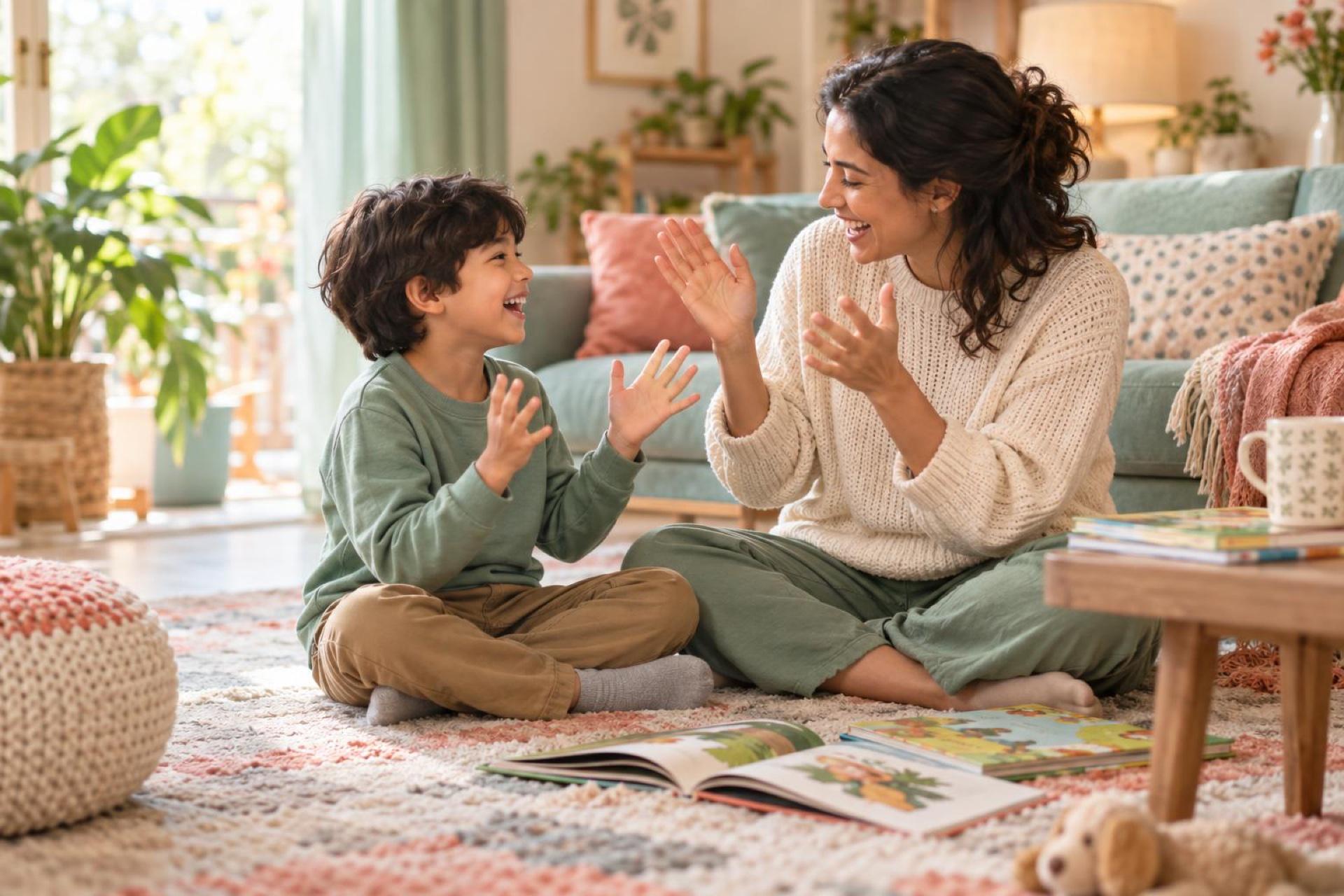
Your child has learned to fingerspell their name at school and wants more. Or a new classmate, cousin or neighbour is Deaf, and your family would like to say more than hello. American Sign Language is a wonderful language to learn together, and you can start today.
Start with the manual alphabet and a few everyday signs, use them daily at home, and learn from fluent signers rather than word lists alone. ASL is a complete language with its own grammar and a community behind it, so learning it well includes learning about Deaf culture.
What ASL is, and is not
American Sign Language is used in the United States and much of Canada. It is not English on the hands: it has its own grammar and word order, and facial expression and movement carry meaning in the way tone of voice does in speech.
It is also not universal. Britain, Australia and many other countries have their own sign languages, which are quite different.
First steps for a family
- Learn the manual alphabet together and fingerspell names.
- Add polite basics: hello, please, thank you, sorry, yes and no.
- Learn signs for your daily routine: eat, drink, more, finished, help, sleep.
- Add family members, feelings and favourite foods.
- Learn question signs: who, what, where, when and why.
Pick one meal a day to sign as much as you can. Regular real use beats long study sessions.
 A live class on this1-on-1 Advanced ASL Coaching: Classifiers, Storytelling and FluencyAges 12–18
How to practise at home
Check handshapes and palm direction.
Spell things in the room for each other to find.
Repetition makes vocabulary stick.
Five minutes of signing only, then build up.
Choose a dominant hand and keep to it. Signs are easier to read when they are consistent.
Common beginner mistakes
| Mistake | What to do instead |
|---|---|
| Signing every English word in English order | Learn ASL sentence patterns from fluent signers |
| A blank face | Use eyebrows and expression; they are part of the grammar |
| Learning from a single list or app | Add live teaching so someone can correct your hands |
| Speaking while signing all the time | Practise some voice-off signing |
Signs vary by region, and some online videos are inaccurate. Learn from fluent signers, and where possible from Deaf teachers and creators.
Respecting Deaf culture
- To get attention, wave, tap a shoulder lightly or flick a light. Do not shout.
- Keep eye contact while someone signs; looking away is like covering your ears.
- If there is an interpreter, look at and speak to the Deaf person.
- Do not make up signs. Fingerspell and ask.
Learning the language is also a chance to learn about the history, art and achievements of Deaf communities.
What parents can do next
- Learn the alphabet and fingerspell everyone's name this week.
- Choose five everyday signs and use them at one meal a day.
- Find a class with a fluent teacher who can see and correct your child's signing.
- Read or watch something by a Deaf author or creator together.
Frequently asked questions
Is ASL hard to learn?
The basics come quickly, and children often find it fun and physical. Fluency takes years, as with any language.
Can hearing children learn ASL?
Yes. Many do, to communicate with family, friends and classmates or simply out of interest.
Is baby sign the same as ASL?
Baby sign programmes usually borrow individual ASL signs for use alongside speech. They are a fun start but are not the full language.
Will schools accept ASL as a language credit?
Many US schools and colleges do, but policies differ. Check with your own school.
Find an ASL class
Live online American Sign Language classes for ages 3 to 18: alphabet, vocabulary, conversation, stories and songs, and Deaf culture.