Art, music & makingAges 4–174 min read
By Amelia ·
When Should a Child Start Singing Lessons? Voice Lessons by Age
When to start singing lessons, what suits each age from 4 to 17, how to keep a young voice healthy and what to look for in a teacher.
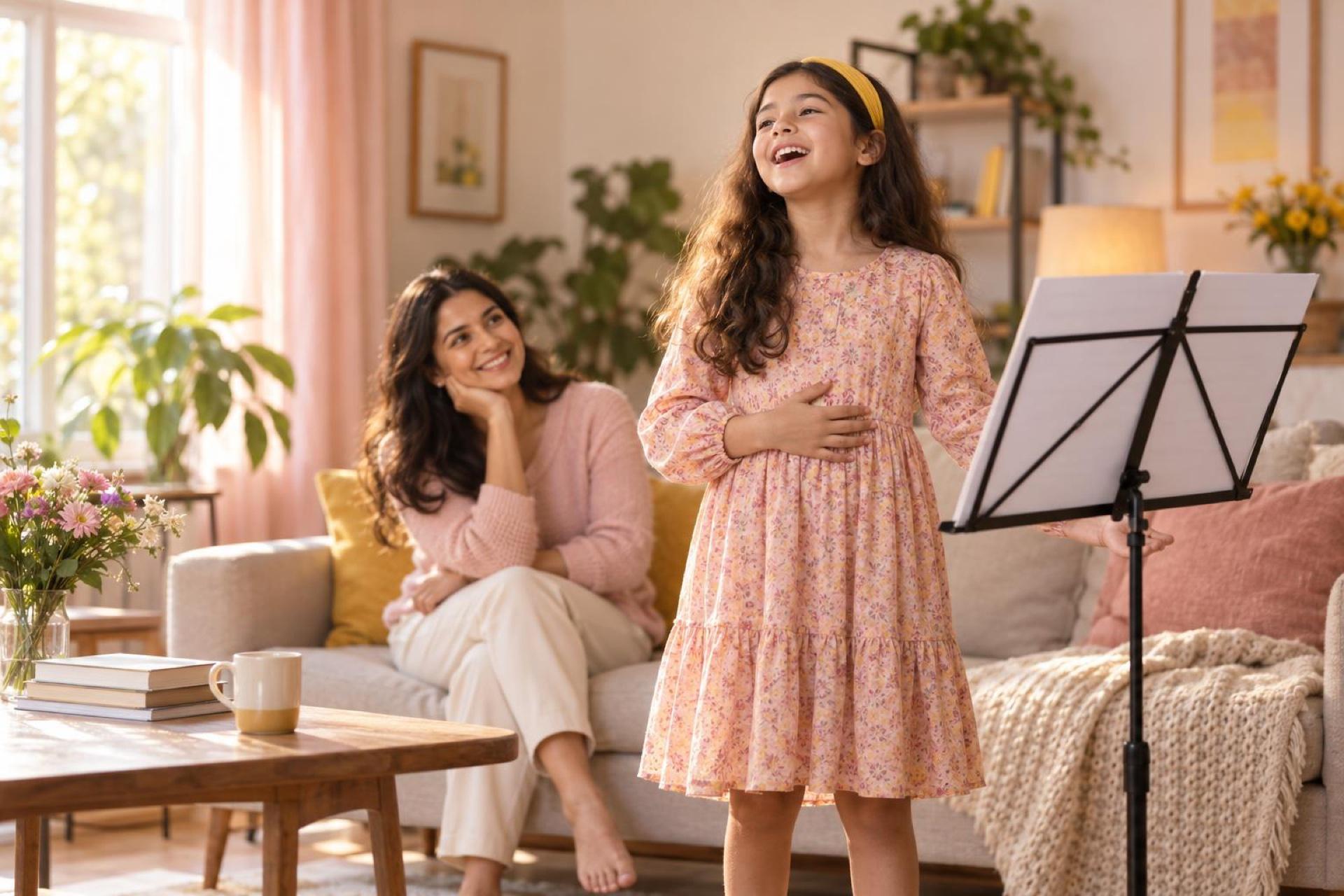
Your child sings all day: in the car, in the bath, to the cat. Friends say you should get lessons. But you have also heard that training a young voice too early can harm it. Both things have some truth in them.
Children can enjoy singing classes from about age 4, as long as they are playful and group based. One-to-one technique lessons suit most children from 8 or so. At every age, healthy singing means comfortable range, no shouting or straining, and songs that fit the voice.
What suits each age
| Age | What works |
|---|---|
| 4 to 7 | Group singing with games, actions and simple songs; pitch and rhythm through play |
| 8 to 11 | Short private or small-group lessons; breathing, pitch matching and clear tone |
| 12 to 14 | Technique, repertoire and harmony; patience during voice change |
| 15 to 17 | Range, style, performance and audition preparation |
These are guides, not rules. A focused 7 year old may enjoy private lessons, and a 10 year old may prefer a choir.
Is early training safe?
Singing itself is natural and good for children. The risk comes from pushing a young voice to sound like an adult's: belting loudly, forcing high or low notes, or singing for long periods without rest.
a physical warm-up, songs in a comfortable range, plenty of variety, and a teacher who stops if the voice sounds tired.
- Drink water before and during singing.
- Warm up gently for a few minutes before singing full out.
- Rest the voice after long rehearsals, shouting at a match or a cold.
- Choose keys that sit comfortably, even if the original recording is higher or lower.
your child's voice is hoarse, breathy or sore for more than two weeks, with or without lessons.
 A live class on this1-on-1 Advanced Vocal Coaching for Teens: Range, Tone and RepertoireAges 12–18
Singing through voice change
During puberty every voice changes, and boys' voices change dramatically. Cracks and a shrinking range are normal and temporary.
Lessons do not need to stop. A good teacher keeps songs within the notes that are comfortable that week and treats the wobbles with humour.
Private lessons, choir or musical theatre?
Fastest technical progress and personal song choice.
Listening, harmony and the fun of singing with others.
Singing combined with acting and movement.
For children who want to make their own music.
Many children do best with a mix, such as a weekly group for enjoyment and occasional private lessons for technique.
Choosing a teacher and practising
- Ask how they warm up young voices and choose songs.
- Check that lyrics and themes will be age appropriate.
- Look for specific, kind feedback rather than only praise.
- Ask what to practise and for how long.
Ten minutes on most days is enough for a young singer. Our guide to helping your child practise at home has tips that apply to voice as well.
What parents can do next
- Notice what your child loves: performing, harmony, making up songs or simply singing.
- Try a group class or a single lesson before committing.
- Set up a quiet practice spot where they can sing out.
- Keep water nearby and remind them that singing should never hurt.
Frequently asked questions
My child sings out of tune. Are lessons pointless?
No. Matching pitch is a skill that almost every child can learn with listening games and guided practice.
Do online singing lessons work?
One-to-one lessons work very well. In groups, the short sound delay means children often sing along muted and take turns unmuted.
How long should a lesson be?
Thirty minutes is plenty up to about age 11. Forty-five minutes suits teens.
Should my child enter competitions or auditions?
Only if they want to. Performing can build confidence, but enjoyment should come first.
Find a singing class or teacher
Live online singing for ages 4 to 18: technique, young singers, musical theatre, pop, choir and harmony, and songwriting.