By Avery Turner ·
How to Help Your Child Practice an Instrument at Home
Simple ways to help your child practice an instrument at home: set a routine, choose session lengths by age and keep it fun.
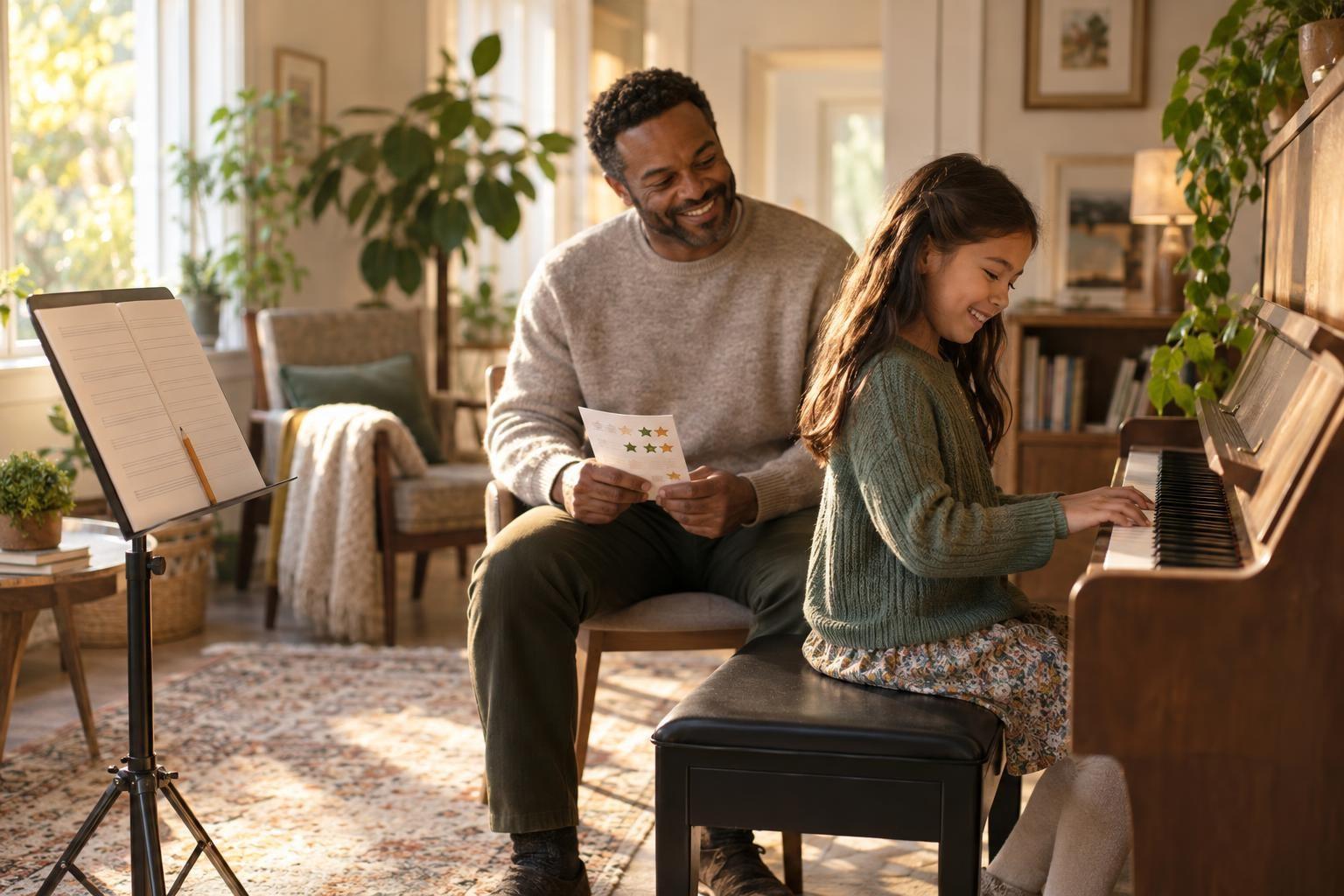
The most effective way to help your child practice an instrument at home is to make it short, regular and specific: a set time most days, a clear goal for each session, and a little attention from you. Your job is less about correcting notes and more about building a routine your child can own.
Consistency beats long sessions, especially for beginners. Attach practice to something that already happens every day, give each session one clear goal, and be an interested audience rather than a critic. If practice keeps turning into a fight, change the music, the time slot or the goal before giving up.
Why routine matters more than length
Playing an instrument relies on small physical skills that improve through repetition. Ten focused minutes most days usually does more than one long session on the weekend, because skills get reinforced before they fade.
A routine also removes the daily argument about whether practice will happen. When it is simply part of the day, like brushing teeth, kids push back less.
For young children, the National Association for Music Education (NAfME) notes that playful, repeated engagement is how they learn, and that revisiting a song to play with it is itself learning. Practice does not have to feel like a drill to work.
Set up a practice routine, step by step
- Pick a fixed time. Attach practice to something that already happens daily, such as right after a snack or before screen time.
- Create a practice spot. Keep the instrument out, tuned and ready, with a music stand or tablet, a pencil and good light.
- Agree on a goal for each session. "Play the first line three times without stopping" is clearer than "practice for 20 minutes."
- Start with something fun. Warm up with a favorite song, then tackle the hard part, then finish on something your child enjoys.
- Use a simple tracker. A calendar with stickers or check marks shows progress and makes streaks feel rewarding.
- Check in with the teacher. Ask what to focus on each week, and share what is going well or feels stuck.
How long should practice be?
There is no single right number. Teachers set goals based on level and age, so follow their advice first. These ranges are common starting points for beginners.
| Age | Typical beginner session | What helps most |
|---|---|---|
| 4 to 6 | 5 to 10 minutes | Sit with them, use games and songs |
| 7 to 9 | 10 to 20 minutes | Short goals, sticker charts, short breaks |
| 10 to 12 | 15 to 30 minutes | Written goals, some independence |
| 13 and up | 20 to 45 minutes | Self-set goals, recording and listening back |
If your child is losing focus, split the time into two shorter sessions rather than pushing through.
How to help without taking over
You do not need to read music to be useful. What helps most is interest and encouragement.
- Be an audience. Ask for a mini concert once a week. Playing for someone gives practice a purpose.
- Praise effort and specifics. "You kept going after that mistake" means more than "Great job."
- Ask questions instead of correcting. "Which part was tricky today?" helps your child think like a musician.
- Let them choose some music. A song they love, even a simple version, keeps motivation up.
- Record progress. A short video now and another in a month shows real improvement on hard days.
Safety and screen time
Many kids now practice with apps, videos or online lessons. Screens can help, but balance matters. The American Academy of Pediatrics offers a free Family Media Plan to help families set screen-free times and balance screens with sleep and play. Try to keep at least some practice off the screen entirely.
If your child practices a digital piano or electric guitar with headphones, keep the volume moderate. The NIDCD Noisy Planet program warns that long exposure to sound at or above 85 dBA can harm hearing, and suggests a simple arm's-length check: your child should still hear you speak from that distance. Watch too for sore wrists, fingers or shoulders, and remind your child to take short breaks and keep good posture.
When practice keeps turning into a fight
Every young musician hits a slump. If the struggle goes on for weeks, step back and look for the cause. The music may be too hard, the time slot may be bad, or your child may need a new goal, such as learning a favorite song or playing for grandparents.
A group class can also help, since playing alongside other kids adds a social reason to practice. Live online music classes can give a child that sense of a shared goal between private lessons.
Frequently asked questions
Should I reward my child for practicing?
Small rewards like stickers can help a routine get started. Over time, try to shift the focus to progress your child can hear and feel, so the music becomes the reward.
Is it okay to skip practice some days?
Yes. Aim for most days, not perfection. A day or two off each week is normal and can prevent burnout.
What if I can't tell whether my child is playing correctly?
That is fine. Focus on routine and encouragement, and ask the teacher for a short list of things to listen for. Recording practice and sharing it with the teacher can also help.
Do I need to sit with my child every time they practice?
Not always. Younger beginners usually do best with you nearby, while older children can practice more on their own once the routine is set. A quick check-in at the end of the session keeps you involved without taking over.
Give practice a shared purpose
If your child would enjoy playing alongside other kids or learning with a teacher who sets clear weekly goals, live online music classes can add structure and motivation between practice sessions.