Compare programs & platformsAges 6–126 min read
By Kai Nakamura ·
Simply Piano vs a Live Piano Teacher: What Kids Actually Learn
What Simply Piano does well for kids, what a live piano teacher adds, how pricing works, and how to use an app and lessons together.
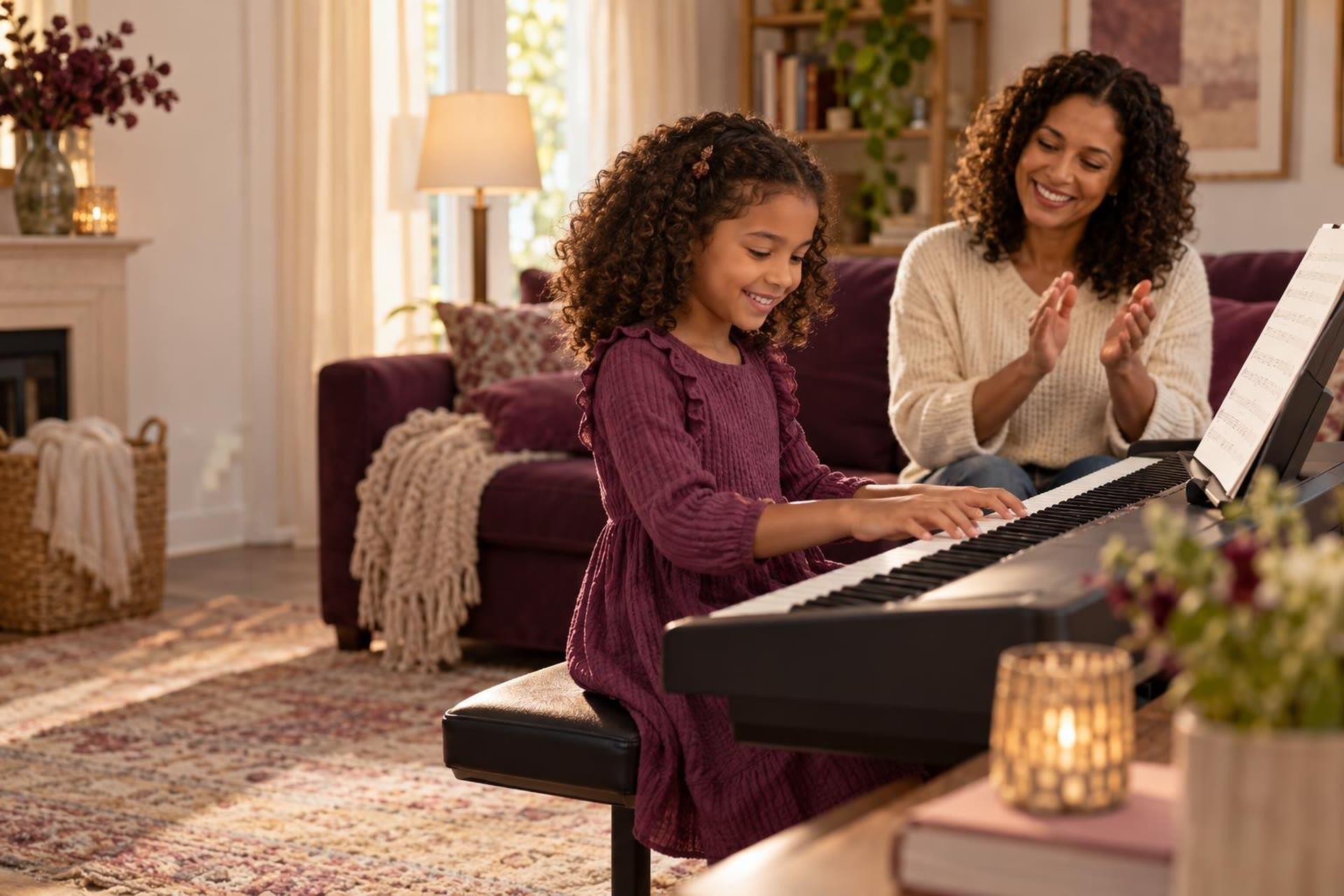
Simply Piano teaches kids to find notes, follow along with songs and start reading music, with instant feedback that makes practice feel like a game. A live piano teacher covers what an app can't see or hear well: hand position, posture, tone, expression and the habits that make playing comfortable for years. For many kids, the app is a fun start and a teacher is what turns early wins into real musicianship.
Simply Piano is good for motivation, note-finding, rhythm practice and learning familiar songs at your own pace. A teacher is worth adding when your child wants to play with both hands confidently, read music fluently, avoid tension or bad habits, or prepare for recitals and exams. Using the app between lessons can work well.
What Simply Piano does
Simply Piano is made by Simply Ltd, the company behind Simply Guitar and Piano Maestro. Its App Store listing says you place your device on a piano or keyboard and play, and the app "will immediately recognize what you are playing." It works with any piano or keyboard, and Touch Courses let kids practice on the screen if there's no instrument yet.
- Courses for different levels. Lessons move from first notes to reading sheet music and playing with both hands.
- Familiar songs. The library includes pop songs and classical pieces, and kids can slow songs down.
- Free start. Everyone can play two free courses before subscribing.
- Plans. The listing shows individual and family plans.
Simply's help page on subscriptions says prices vary by country, platform and current offers, and plans auto-renew unless you cancel. Check the in-app "Join Simply" screen for current prices in your country, and note when any trial ends.
What piano apps do well for kids
- Instant feedback. Kids know right away if a note was right, which keeps practice moving.
- Motivation. Levels, songs kids know and visible progress make kids want to sit down and play.
- Note-finding. Repetition helps kids learn where notes live on the keyboard.
- Rhythm practice. Playing along with a backing track builds a steady beat.
- Flexibility. Kids can practice any time, in short bursts, without booking anything.
For a curious beginner, that can be a great first few months. It also lets you see whether your child sticks with piano before buying lessons or a better instrument.
 A live class on this20th‑Century Music History for KidsAges 10–14
Where a teacher matters
An app listens for which notes were played and when. A teacher watches how your child plays them. That difference grows as music gets harder.
Things a teacher catches early
- Hand shape and posture. Flat fingers, high wrists or hunched shoulders make playing harder and can become habits.
- Fingering. Choosing the right finger for each note makes fast passages possible later.
- Tone and dynamics. Playing softly and loudly, smoothly or crisply, is what makes music sound like music.
- Real reading. A teacher checks your child is reading the notes, not just reacting to on-screen cues.
- How to practice. Breaking a hard bar into small parts, hands separately, then slowly together.
A teacher also brings encouragement, goals, and chances to perform. When your child hits a wall, a person can find out why and change the plan.
Live lessons can happen in person or online. Online piano lessons work best with the camera set to show your child's hands and the keys, so the teacher can see fingering and posture clearly.
Simply Piano and a live teacher side by side
| Question | Simply Piano | Live piano teacher |
|---|---|---|
| Feedback on | Right notes and timing | Notes, timing, technique, tone and expression |
| Schedule | Any time | Set lesson times; practice at home |
| Music choices | The app's song library | Pieces chosen for your child's level and goals |
| Motivation | Game-like progress and familiar songs | A person who knows your child, plus recitals and goals |
| Cost | Subscription; varies by country and plan | Set by each teacher; group lessons often cost less per hour |
| Best for | Curious beginners and extra practice | Kids ready to build real skill and good habits |
How to find a good piano teacher
The Music Teachers National Association's guide to choosing a music teacher suggests interviewing teachers before you commit. It recommends asking about:
- Background and experience, including the ages they usually teach.
- A written studio policy, covering missed lessons, payments and expectations.
- How progress is measured and which materials they use.
- Recitals, group lessons and technology, including whether they use apps.
- Daily practice expectations for students and what they expect from parents.
MTNA also says parent support is vital: listening to your child play, giving them a decent instrument and a set practice time, and celebrating progress. Our guide on how to help your child practice an instrument has ideas for making that routine stick.
Using an app and a teacher together
- Tell the teacher your child uses Simply Piano, and ask which parts to keep.
- Use the app for warm-ups or fun songs after the teacher's assigned pieces.
- Ask the teacher to check hand position on songs your child learned in the app.
- Keep an eye on balance so the app doesn't replace the harder, slower practice.
- Plateaus: If your child stops progressing or only replays easy songs, it may be time for a teacher.
- Tension or pain: Sore wrists or fingers are a sign to stop and get a teacher's eye on technique. If pain continues, check with your pediatrician.
- Auto-renewing subscriptions: Note the renewal date and cancel at least 24 hours before if you don't want to continue.
- Keyboard size: Very small keyboards limit what kids can play. Ask a teacher what your child needs.
Frequently asked questions
Can a child learn piano with only Simply Piano?
A child can learn notes, simple songs and early reading with the app. Most kids who want to play well over time benefit from a teacher who can check technique and guide their practice.
Does Simply Piano work with an acoustic piano?
Yes. Its App Store listing says it works with any piano or keyboard, and it offers Touch Courses for practice on the screen.
How much does Simply Piano cost?
Simply says prices vary by country, platform and current offers. Check the "Join Simply" screen in the app for your options, and note that plans auto-renew.
What age should kids start piano lessons with a teacher?
There's no single right age. Look for readiness signs: your child can focus for a short lesson, likes making music and is curious about the keyboard. Ask teachers which ages they teach.
Learn piano with a live teacher
Live piano and music classes give kids real-time feedback on technique, reading and expression, in small groups or one-to-one lessons.