By Amira Blake ·
Entrepreneurship for Kids
How to teach entrepreneurship for kids without the hype—real projects, customer thinking and skills that transfer beyond a lemonade stand.
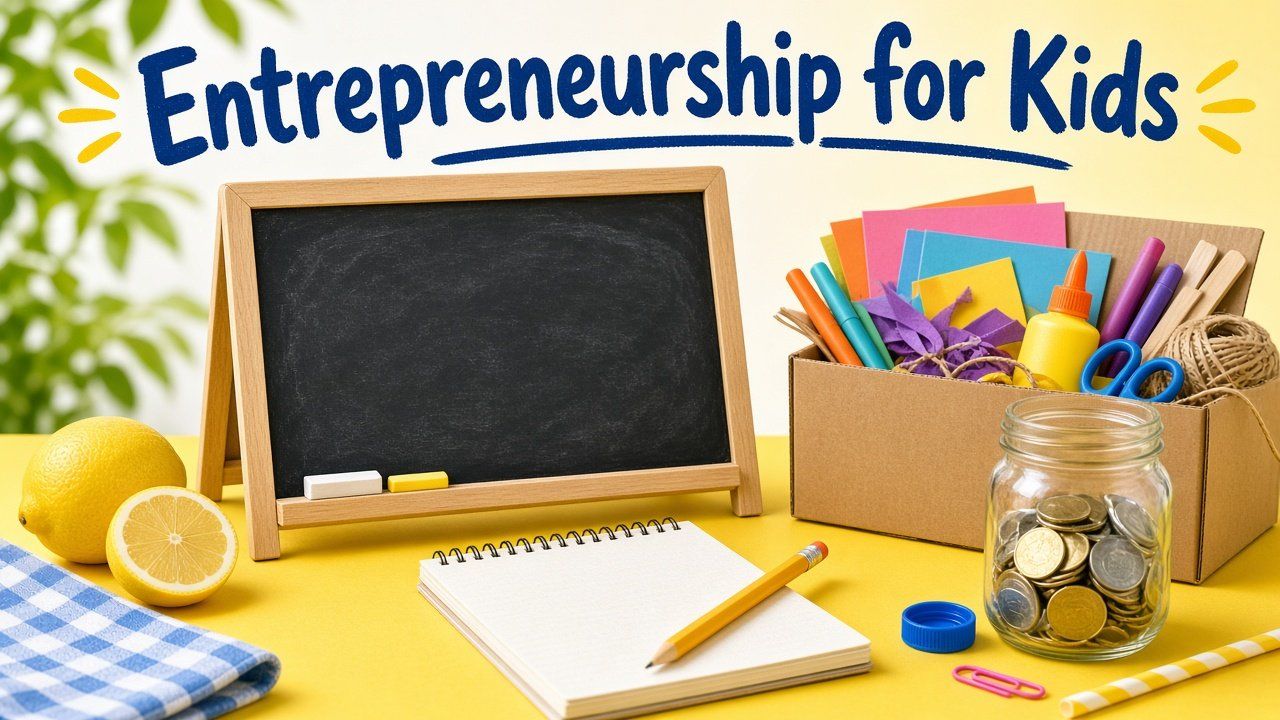
Entrepreneurship for Kids: How to Teach Business Without the Hype
The goal is not to turn every child into a founder. It is to help them notice needs, create value, test ideas and learn from evidence.
Begin with a person and problem
Ask who has a need and how the child knows. “I want to sell bracelets” becomes stronger when the child identifies a customer, occasion or design preference. Entrepreneurship for kids starts with curiosity about other people, not with a logo or a brand name.
Interview a family member, neighbor (with adult supervision) or classmate about a small inconvenience. What is annoying? What would help? Write the answer in the child’s words. A product idea that cannot name a person and a problem is still a hobby—and hobbies are fine, but they are not yet practice in creating value for someone else.
Elementary children can begin with needs, simple budgets and supervised projects; complexity can grow with age. Keep early problems local and kind. The skill is noticing and listening, not pitching strangers. When the child can name who benefits and why, the later steps—prototype, price, offer—have somewhere real to land.
Prototype before spending
Create a sample, sketch or service trial before buying supplies in bulk. Show it to potential users and ask what is useful, confusing or worth changing. Prototyping protects both money and ego: the child learns that feedback is normal, not a verdict on their worth.
A prototype can be paper, cardboard, a one-time free trial of a service or a single batch of a treat made for taste-testing at home. The question is whether someone would use it—and what they would change. Spending first and asking later teaches inventory risk the hard way; testing first teaches design. Capture feedback in three columns—useful, confusing, change—so the child sees revision as normal work rather than failure.
Teach simple unit economics
Calculate material cost, time, price, revenue and profit. Include packaging, platform fees and unsold inventory when they apply. Money math becomes meaningful when a decision depends on it: Can we afford another batch? Is the price covering time?
Keep the math on one page. List costs, choose a price, estimate how many might sell and what is left. If the numbers do not work, redesign—simpler materials, a higher price for a better finish or a smaller first batch. Avoid fantasy spreadsheets that assume everything sells. Honest unit economics is one of the most useful “business” lessons children can practice.
Marketing with ethics
Teach clear claims, permission, privacy and the difference between persuasion and manipulation. Children should not collect personal data or contact strangers without adult oversight. A flyer for a lemonade stand on a family block is different from messaging unknown buyers online.
Practice honest descriptions: what the product is, what it costs, what it cannot do. Praise clarity over hype. Marketing ethics is part of entrepreneurship education, not an optional add-on after the first sale. If a class or video encourages exaggeration or pressure tactics, it is teaching the wrong lesson.
A safe first project
Run a family or community market, design a small service for neighbors you know, or create a school-approved campaign. Adults handle legal, payment and safety responsibilities. Online selling raises privacy, legal, payment and safety issues that require adult control—children should not operate payment accounts or ship to strangers alone.
Choose a project small enough to finish in days or a few weekends. Success is completing the loop: need, offer, feedback, reflection. A tiny supervised bake sale or yard service can teach more than an unfinished “startup” website. Safety and permission are features of a good first project, not obstacles to creativity. If the child wants to sell online later, treat that as a separate adult-managed decision—not the default first step.
Reflect beyond profit
Ask: What problem was solved? What feedback changed the idea? What would the child do differently? Contribution and learning matter even if the project earns little. Profit is one signal; it is not the only measure of a worthwhile experiment.
Write a short after-action note together. Name one thing that worked, one surprise and one next test. Reflection builds the habit of learning from evidence—the same habit adults need in any field. Children who only celebrate cash can miss the skills entrepreneurship actually teaches: problem-solving, communication, budgeting, design, feedback and persistence.
Choose a course carefully
Avoid income promises. Look for customer research, prototyping, budgeting, feedback and age-appropriate safeguards. Programs that market “kid millionaires” or guaranteed earnings are selling hype, not education. Ask what projects students complete and how adults supervise outreach and money.
A strong class makes the learning visible: interviews, prototypes, cost sheets, revised offers and honest reflections. Features, prices and policies can change—review current provider information before enrolling. Match the course to the child’s age and your family’s comfort with public selling. The goal remains the same at home or in class: notice needs, create value, test ideas and learn from evidence—without turning childhood into a pitch competition.
Frequently asked questions
Elementary children can begin with needs, simple budgets and supervised projects; complexity can grow with age.
Online selling raises privacy, legal, payment and safety issues that require adult control.
It can teach problem-solving, communication, budgeting, design, feedback and persistence.
Review note
Programs, prices and policies can change. Review current provider information. Educational, developmental and health concerns should be discussed with qualified professionals familiar with your child.