

Pick a Theme and a Finish Line
Children choose a fun theme, decide who is racing to where, and draw a start and finish on a big sheet of paper.
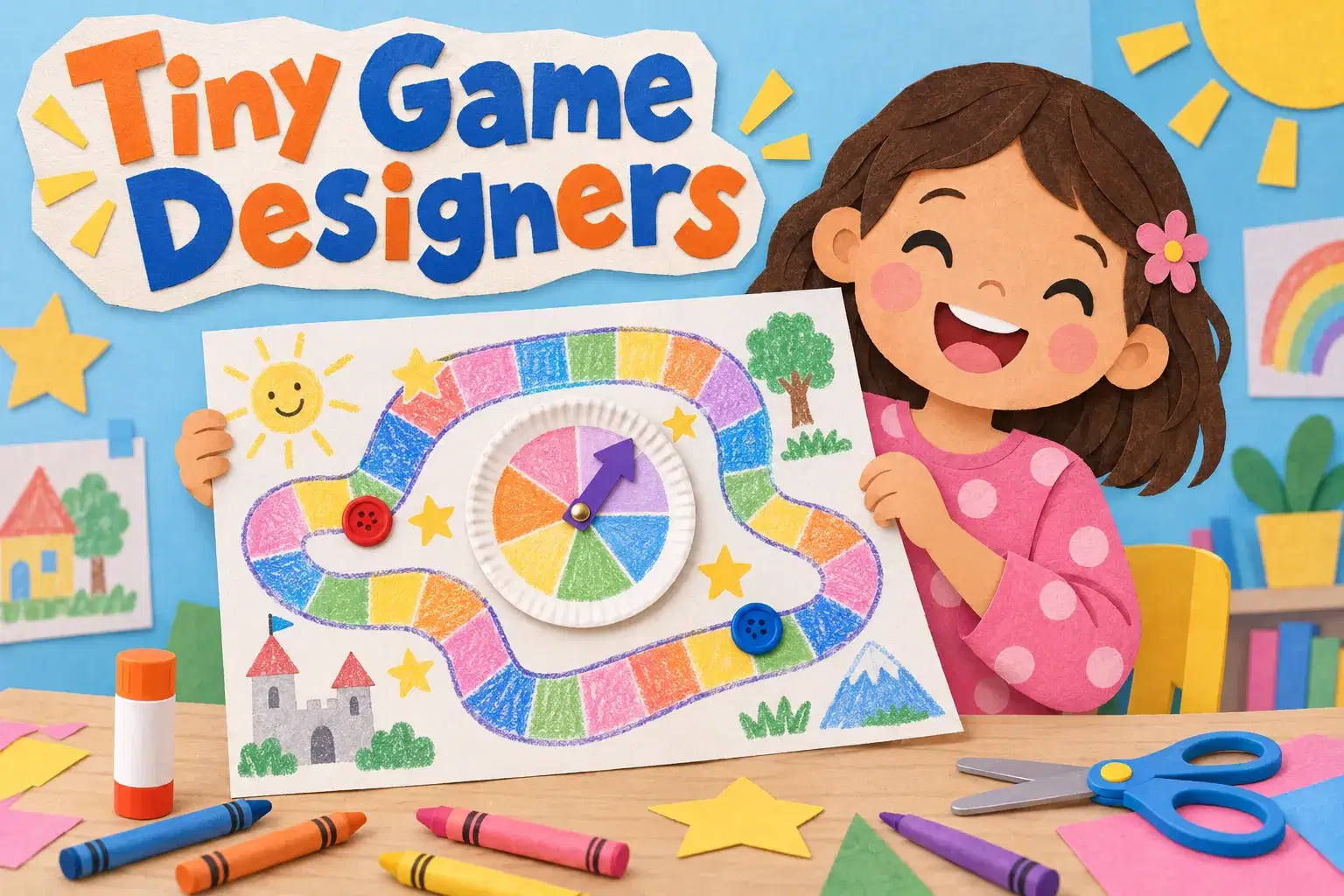
Young children ages 5 to 7 make their very own picture board game over four short classes, drawing a colorful path, inventing a few simple rules and proudly showing it off at the end.
Paid once.
Little ones love games, and here they get to be the inventors. Each child chooses a favorite theme, such as a bunny hopping home or a rocket heading to the moon, and turns it into a simple race-to-the-finish board drawn with crayons or markers.
Along the way they count spaces, add lucky and oops squares, and make picture rule cards that need little or no reading. Short, playful activities keep attention high, and children practise taking turns and solving small problems, like what happens if two players land on the same space. They finish by showing their game to the group.
The course meets once a week for four weeks, with short 30-minute classes that build on each other. Each week adds one part of the game through drawing, movement breaks and quick sharing, and the last class is a friendly show-and-play.
Week 1: Pick a Theme and a Finish Line – Children choose a fun theme, decide who is racing to where, and draw a start and finish on a big sheet of paper.
Week 2: Draw a Path and Count the Spaces – Kids draw a winding path of spaces, count them out loud and decorate special squares with stars, arrows and pictures.
Week 3: Lucky Squares, Oops Squares and Picture Rules – Children add squares that move players forward or back and draw simple picture cards that explain how to play.
Week 4: Show-and-Play Game Party – Kids play a round of their game with a grown-up or sibling and proudly show their finished board to the group.

Draw a board game with a clear start and finish
Count and move along spaces to play a game
Invent simple rules using pictures instead of words
Take turns and play fairly with others
Show and describe their own game to a group
No experience needed, and no reading is required since rules are drawn as pictures. Children need a device, a large sheet of paper, crayons or markers and a small toy or coin to use as a game piece. A grown-up nearby to help at the start is welcome.
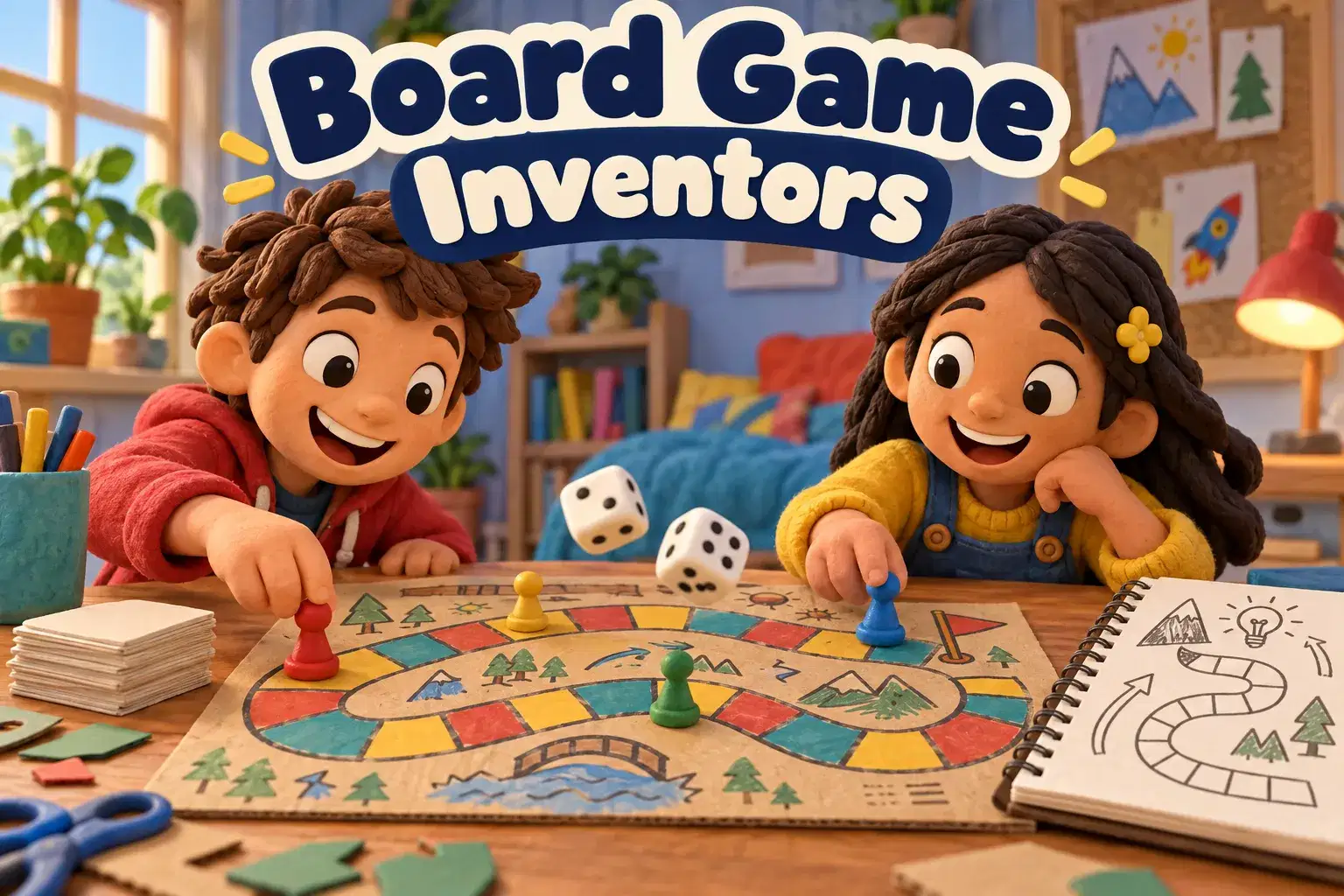
Children draw their game board on large paper, decorate it with stickers and markers, and use coins or small toys as game pieces.
A step-by-step plan of what your child learns, class by class. · 4 Weeks
Children choose a fun theme, decide who is racing to where, and draw a start and finish on a big sheet of paper.
Kids draw a winding path of spaces, count them out loud and decorate special squares with stars, arrows and pictures.
Children add squares that move players forward or back and draw simple picture cards that explain how to play.
Kids play a round of their game with a grown-up or sibling and proudly show their finished board to the group.
Next 7 days, US Eastern Time
Yes. No reading is needed. Rules are made as picture cards, such as a drawing of an arrow for move forward. Children count spaces out loud together, and the teacher explains each step with words and pictures. A grown-up nearby to help at the start is welcome.
A large sheet of paper or the inside of a cereal box, crayons or markers, a few stickers, child-safe scissors and one or two coins or small toys to use as game pieces. A device with a camera lets your child hold up their board to share.
Your child will make a colorful race-to-the-finish board game with a drawn path, special lucky and oops squares, and picture rule cards. In the last class they play it with someone at home and show it to the group.
There are four classes over four weeks, one class per week, and each lasts 30 minutes. Short sessions with movement and drawing breaks suit young attention spans, and each week adds one new part of the game.
No one is ever forced to speak. Children can share by holding up their drawing, giving a thumbs up or saying a single word. Many quieter children grow more comfortable by the final show-and-play, but it always happens at their own pace.
It may still work. The range of 5 to 7 is a flexible guide. If your child can sit for about 30 minutes, hold a crayon and count to ten with help, they can likely join, especially with a grown-up nearby for the first few minutes.
There is no homework. Everything is made during class, though children often love playing their game at home. There is no certificate. The keepsake is the board game your child creates.
You receive a full refund if you cancel before the second class starts. After that, classes already started count as used, and classes not yet started are refunded to store credit or your original payment method. Missed classes count as used, but for illness or emergencies you can contact support, who review each case.
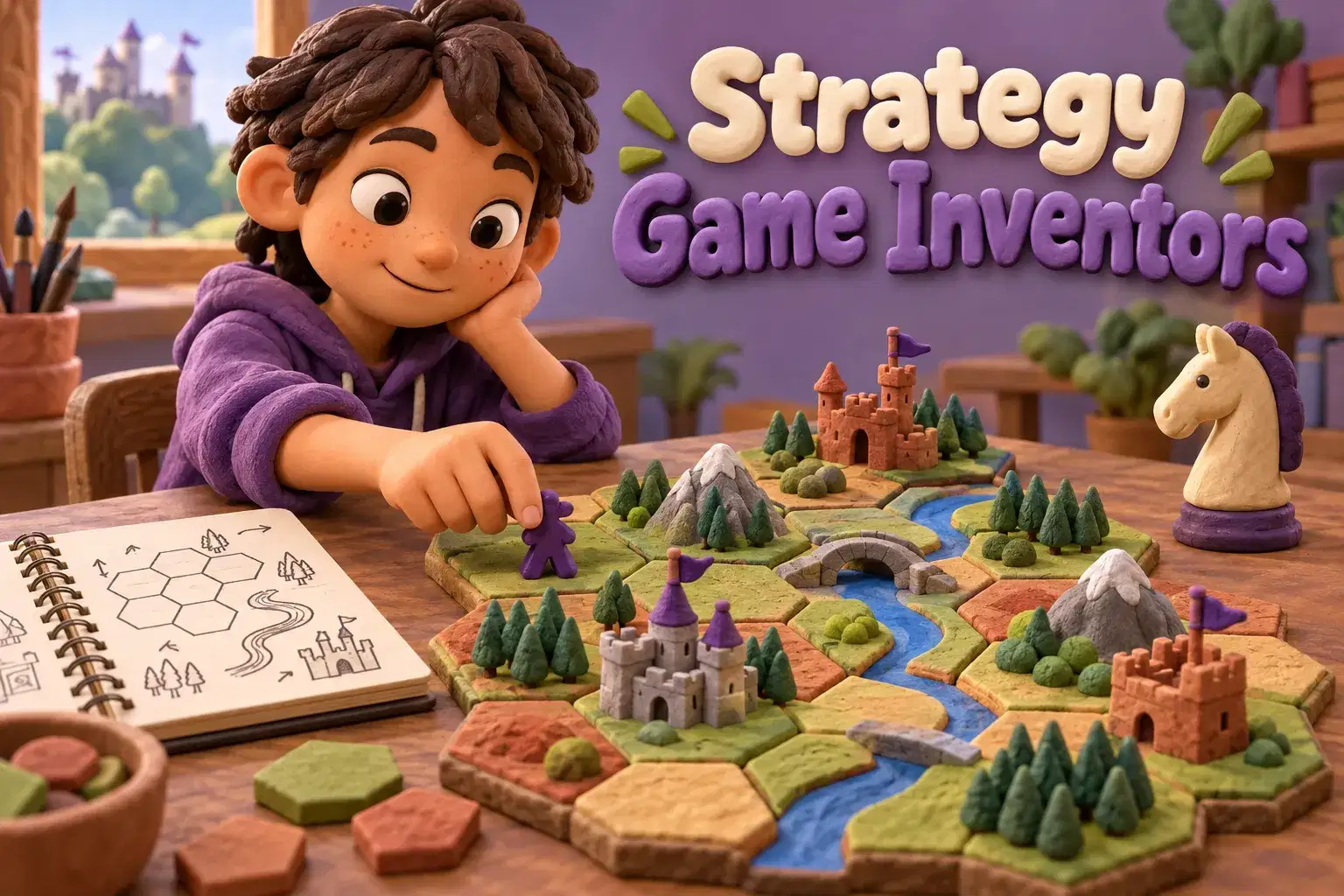
This educator leads interactive game design and coding classes that introduce learners to both 2D and 3D development workflows. Experience with engines such as Godot and Unity informs step‑by‑step lessons that combine scripting, level design, and asset use to build playable proje…
Rahul P.
Ages 10–14 · 45 min · 1 / Week
$19.00per classSee schedule
Nisha V.
Ages 7–11 · 30 min · 1 / Week
$16.00per classSee schedule

Raj K.
Ages 8–12 · 30 min · 4 / Week
$16.00per classSee schedule
Tanya S.
Ages 11–14 · 55 min · 1 / Week
$19.00per classSee schedule
Nandini K.
Ages 8–12 · 45 min · 4 / Week
$18.00per classSee schedule
Avni K.
Ages 12–16 · 50 min · 4 / Week
$20.00per classSee schedule
Harshita R.
Intermediate
Level
9–13
Ages
45 min
Duration
1 / Week
Classes
6
Weeks
Rahul P.
Beginner
Level
10–14
Ages
45 min
Duration
1 / Week
Classes
4
Weeks
Nisha V.
Beginner
Level
7–11
Ages
30 min
Duration
1 / Week
Classes
1
Weeks
Raj K.
Beginner
Level
8–12
Ages
30 min
Duration
4 / Week
Classes
1
Weeks
Anne M.
Beginner
Level
7–10
Ages
30 min
Duration
1 / Week
Classes
Ongoing
Weeks
Tanya S.
Intermediate
Level
11–14
Ages
55 min
Duration
1 / Week
Classes
6
Weeks
Nandini K.
Beginner
Level
8–12
Ages
45 min
Duration
4 / Week
Classes
1
Weeks
Avni K.
Beginner
Level
12–16
Ages
50 min
Duration
4 / Week
Classes
1
Weeks