Math, logic & chessAges 8–144 min read
By Charlotte ·
Mental Math Tricks for Kids That Actually Make Sense
Eight mental math tricks for kids aged 8 to 14, with why each one works: multiplying by 5, 9, 11 and 25, squaring, percentages and estimating.
Some children seem to pull answers from the air. They are not faster at the same method as everyone else; they are using a different method. These are easy to teach, and far more useful when a child understands why they work.
Mental math shortcuts come from breaking numbers apart and putting them back together. Teach one at a time, explain the reason, and practise in short, playful bursts.
Why mental math still matters
Calculators are everywhere, but quick mental calculation frees attention for the harder parts of a problem and makes it easier to notice a wrong answer. In math contests, where calculators are often banned, it is a real advantage.
Multiplication shortcuts
| To multiply by | Do this | Why it works |
|---|---|---|
| 5 | Multiply by 10, then halve | 5 is half of 10 |
| 9 | Multiply by 10, then subtract the number | 9 is one less than 10 |
| 11 (two digits) | Add the digits and put the sum in the middle; carry if needed | It is the number times 10 plus the number |
| 25 | Multiply by 100, then divide by 4 | 25 is a quarter of 100 |
| 4 | Double, then double again | 4 is 2 times 2 |
Try 36 times 25: 3,600 divided by 4 is 900. Or 43 times 11: 4, then 4 plus 3, then 3, giving 473.
 A live class on this1-on-1 Math Contest Confidence CoachingAges 8–14
Adding and subtracting
Working left to right is faster in the head than the school column method. For 47 plus 38, add 40 and 30 to make 70, then 7 and 8 to make 15, giving 85.
Round and adjust. For 99 plus 46, add 100 and take away 1. For 83 minus 29, subtract 30 and add 1.
Squares and percentages
Multiply the tens digit by the next number up and attach 25. For 35 squared: 3 times 4 is 12, so 1,225.
Move the decimal point one place.
Half of 10 per cent.
8 per cent of 50 is the same as 50 per cent of 8.
Games that build speed
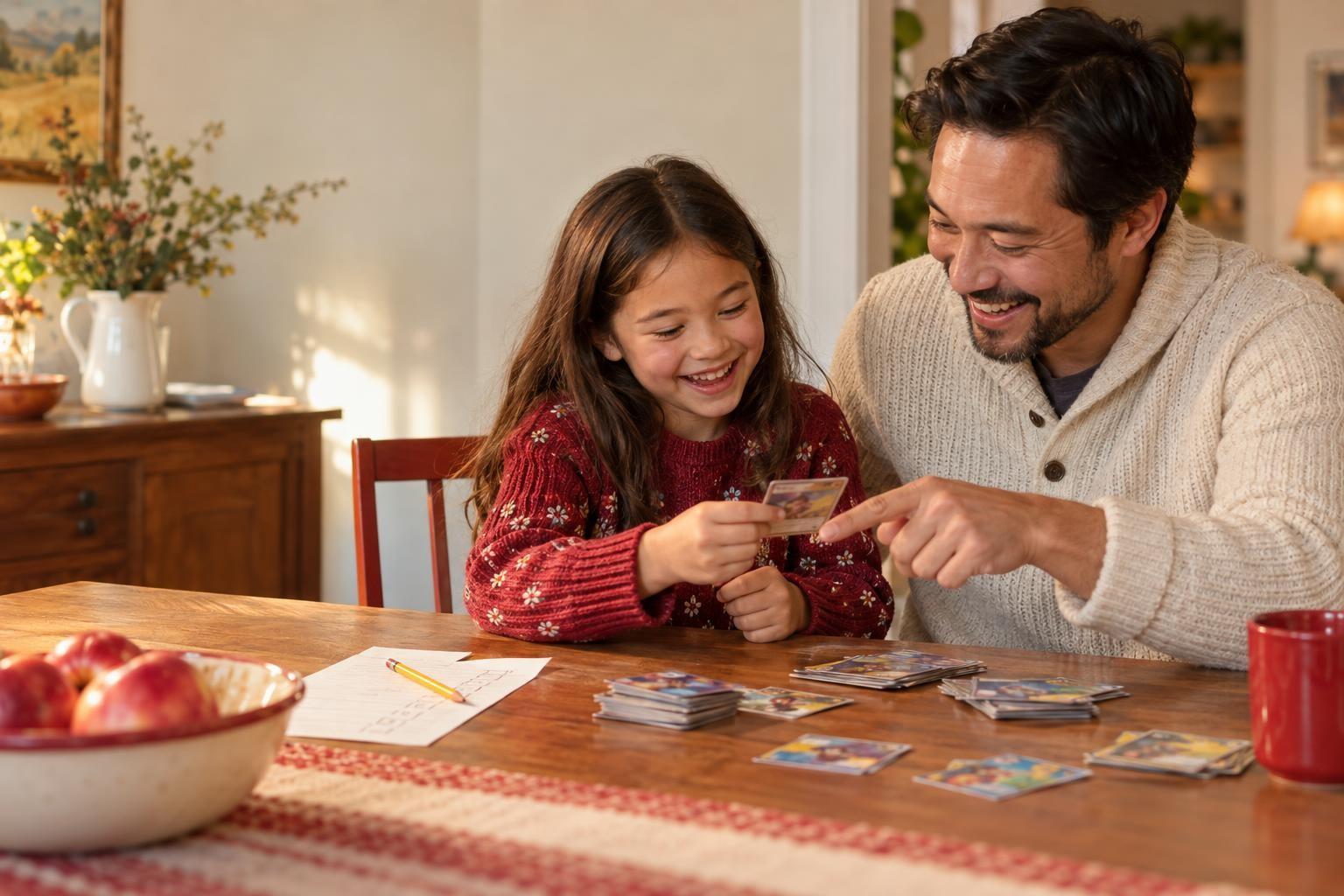
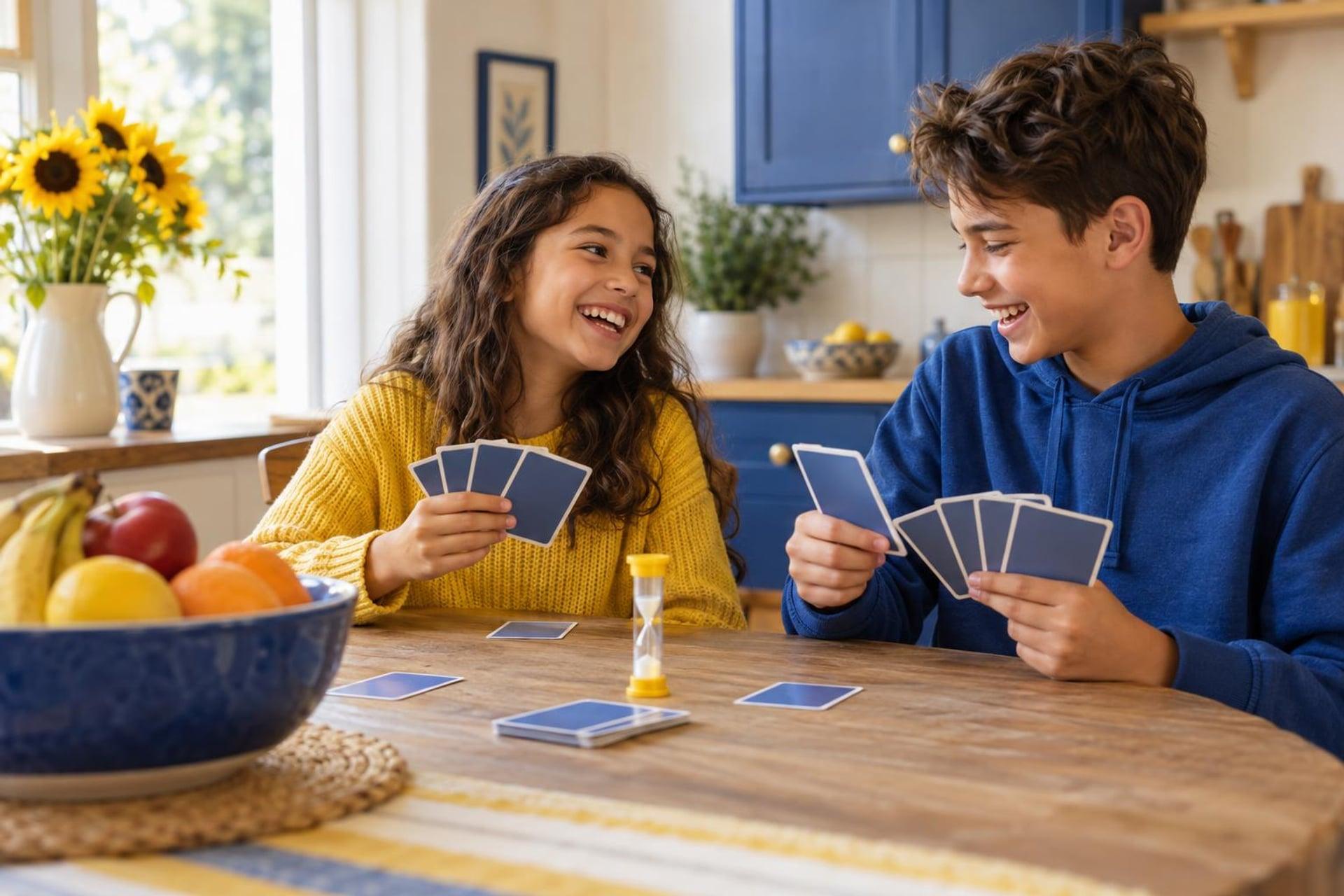
Shortcuts stick when they are used, and games give a reason to use them. Card games where players race to make a target number from four cards practise all four operations at once. Dice games that involve doubling and adding build fluency without a worksheet in sight.
In the car, try 'what is the quickest way?': give a calculation such as 16 times 25 and ask for two different routes to the answer. Comparing methods teaches more than getting it right.
Keep score against a personal best and make sure adults join in. Children love catching a parent out.
Estimating: the check that catches mistakes
Before working anything out, a rough answer tells a child what to expect. For 48 times 21, think 50 times 20, about 1,000. If the exact answer comes out as 108 or 10,080, something went wrong.
Tricks learned as magic. A shortcut that is not understood is forgotten quickly and misused under pressure. Always ask: why does that work?
If your child enjoys this, they may be ready for a first contest. See which math competition is right for my child.
What parents can do next
- Check which times tables are still slow and shore those up.
- Teach one shortcut this week and use it at the shops.
- Play a two-minute challenge against their own best time.
- Ask for an estimate before every calculation.
Frequently asked questions
At what age can children learn these?
Once times tables are mostly secure, usually from about age 8 or 9.
Will shortcuts confuse school methods?
No, if the reason behind each is understood. They deepen number sense.
How long should practice be?
Five minutes a day is plenty.
Are timed drills a good idea?
Timing against a personal best is motivating. Timing against others can put some children off.
Find a mental math class
Mental math clubs, camps and tutors, plus preparation for Math Kangaroo, Math Olympiad, MATHCOUNTS and the AMC papers.