By Erin Perry ·
Learning with Pokémon Cards: Reading and Math Through Play
How Pokémon cards build reading and math skills: kids read attack text and add and subtract HP and damage. Plus five easy learning activities at home.
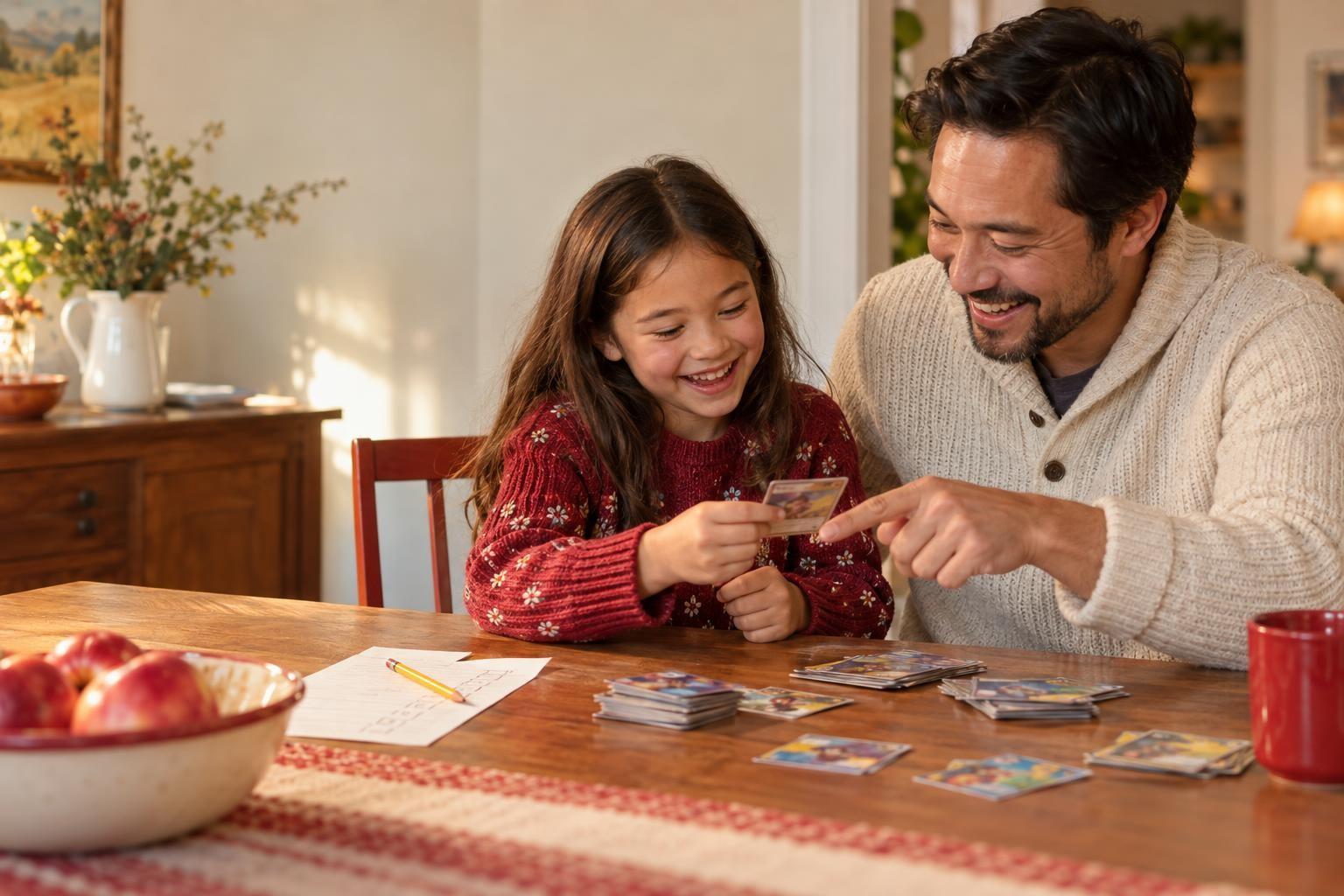
Pokémon cards turn reading and math into something kids actually want to do. To play, they read card text to learn what each attack does, then add and subtract damage and HP every turn. That's real reading and mental math practice, wrapped in a game they love, and you can try it at home even if you've never played.
Every card offers reading practice (attack text, Trainer card directions, new vocabulary) and math practice (subtracting damage from HP, counting by tens, doubling for weakness). You don't need to know the full game: simple activities like an HP battle or a damage calculator work with any pile of cards. Keep it playful, use paper instead of a calculator, and set clear rules about spending and trading.
Where the reading happens
Every card is packed with text. To use a card well, your child has to understand it.
- Attack descriptions: Short instructions like "flip a coin" or "discard an Energy" are real reading comprehension. Misread them and the plan fails.
- Trainer cards: These are mini rule sets. Kids learn to follow multi-step directions in order.
- Vocabulary: Words like "evolve," "retreat," "weakness" and "resistance" stretch a young reader.
- Names and types: Sounding out unusual Pokémon names is great decoding practice.
Kids often reread a card several times to get it right. That kind of motivated rereading is exactly what builds fluency.
Where the math happens
The Pokémon Trading Card Game runs on numbers. Each card shows HP (hit points), and attacks deal damage in amounts like 10, 20, 30 or more.
| Math skill | Where it shows up in the game |
|---|---|
| Subtraction | A Pokémon with 120 HP takes 50 damage. How much is left? Kids do this every turn. |
| Counting by tens | Damage counters each stand for 10 damage. Tallying them is skip-counting in action. |
| Doubling | Under the current rules, if a Pokémon has a weakness to the attacker's type, the damage doubles. Thirty becomes sixty. |
| Subtracting a fixed amount | Resistance usually lowers damage by 30 on modern cards. |
| Planning ahead | "If I attack twice, can I knock it out?" is early multiplication and problem-solving. |
| Probability | Coin flips spark natural talk about chances and luck. |
The official Pokémon TCG site has rules and play resources if you want to learn the full game.
Five activities to try at home
You don't need to master the full game to start. These activities work with any pile of cards.
1. HP battle
- Each player draws one Pokémon card.
- Read the HP numbers out loud together.
- The higher HP wins both cards. Ask, "How many more?" to practice subtraction.
2. Damage calculator
- Put one Pokémon in front of your child as the "defender."
- Pick an attack from another card and read its damage.
- Subtract the damage from the defender's HP. Keep attacking until HP reaches zero.
- Add weakness or resistance to make it harder.
3. Card sort and graph
Sort cards by type (Fire, Water, Grass and so on). Count each pile and make a simple bar graph on paper. Ask which type your child has the most of, and by how many.
4. Read and explain
Have your child pick a favorite card and explain in their own words what each attack does. If they can teach it to you, they understood it. This is a sneaky reading comprehension check.
5. Collection budget
Look up what a booster pack costs at your local store. Give a pretend budget and ask how many packs fit. It's a gentle way to talk about money and value.
Learning the real game
When your child is ready, try a starter or "battle" deck designed for new players. These come with a set deck and simple rules, so you can learn together. Our step-by-step guide on how to teach your child the Pokémon card game walks through the first game.
The official Pokémon TCG Live app is free and teaches the rules with tutorials. It's available on several devices, but it has in-game purchases and online play, so set it up with your child.
Playing with others helps too. A live class can teach strategy, good sportsmanship and the math behind smart decisions, with other kids who love the game.
Tips for making it stick
- Let them lead. Kids learn more when they explain the rules to you.
- Use paper and pencil. Track HP on scrap paper instead of a calculator or app.
- Ask "why" questions. "Why did you pick that attack?" builds reasoning.
- Keep it a game. If it starts feeling like homework, back off and just play.
What to watch for
- Spending: Booster packs are a form of chance. Set a clear budget and talk about it openly.
- Trading: Teach kids to agree on fair trades and check with you before swapping valuable cards.
- Apps and online play: Use parental controls, turn on purchase approval, and keep accounts private.
- Losing gracefully: Card games can bring big feelings. Practice "good game" as a family habit.
Frequently asked questions
What age can kids start learning with Pokémon cards?
Kids who are starting to read and count to 100 can enjoy simple HP games, often around ages 5 to 7. The full game suits most kids 7 and up.
Do I need to know how to play?
No. Start with the simple activities above. Starter decks and the official rules make it easy to learn alongside your child.
Does it really help with school skills?
It gives regular practice with reading instructions, subtraction and planning. It won't replace school lessons, but it's a fun way to keep skills sharp.
Turn a love of Pokémon into more learning
Live online Pokémon classes combine the game kids love with strategy, reading, math and teamwork alongside other young fans.