By Meredith Barnes ·
How to Choose the Right Club for Your Child
Choose the right online club for your child: start with their interests, check age range, group size and schedule, try a session, and review after a month.
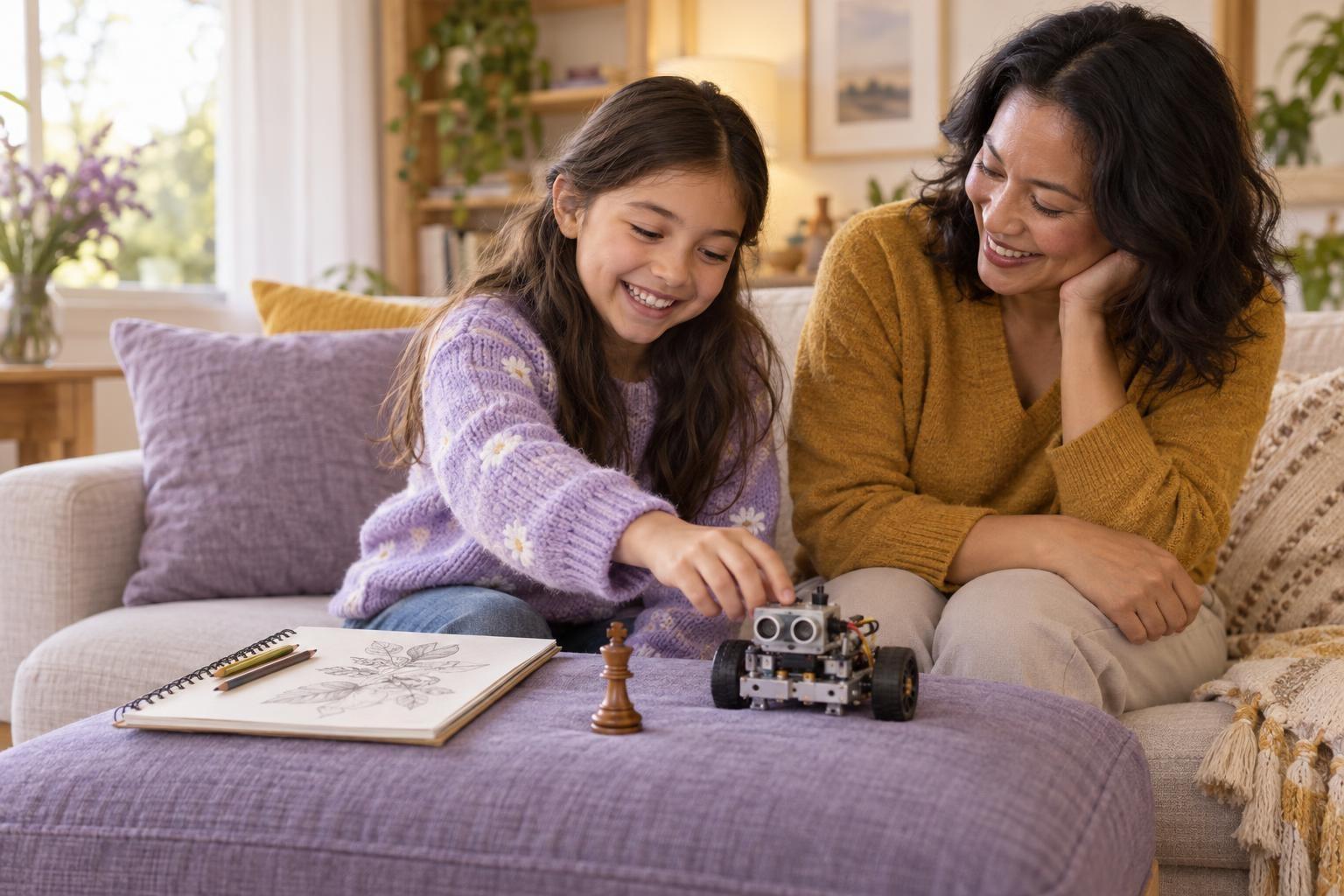
To choose the right club for your child, start with what they already talk about nonstop, then check three practical things: the age range, the group size and whether the meeting time fits your week without crowding out rest and play. Let your child have a real say in the choice, and agree to try it for a few weeks before judging.
A good club is one your child looks forward to, not one that only looks good on paper. Clubs usually have no finish line, grade or final project, so fit matters more than prestige. List your child's interests, name what you want the club to give, check age range, group size and teacher, try a session, and review after a month. One weekly club is a good starting point for most kids.
How clubs differ from courses
Clubs are different from courses. There is usually no finish line, no grade and no final project. Kids come back each week because they enjoy the topic and the people. That makes fit more important than prestige.
Step by step: picking a club
- Make a short list of interests. Ask your child what they would do with a free afternoon. Note the topics that come up again and again: drawing, coding, chess, books, science, games or a language.
- Decide what you want the club to give. Some families want social time with peers. Others want a hobby to deepen, or a gentle way to keep a school subject fresh. Naming the goal helps you compare options.
- Check the age range. A club for ages 8 to 10 will feel very different from one for 8 to 14. Narrower ranges usually mean kids who connect more easily.
- Look at group size. Small groups give more speaking time. Larger groups can be lively and fun for confident kids but may overwhelm a quiet one.
- Read about the teacher. Look for experience with the age group and a clear description of what a typical session looks like.
- Try before you commit. Use the first class to see whether your child engages and wants to go back.
- Review after a month. Ask your child what they like, what they would change and whether they want to keep going.
Matching the club type to your child
| If your child... | Try a club about | What to look for |
|---|---|---|
| Loves to build or tinker | Game design, Minecraft, engineering, robotics | Show-and-tell time so kids can share what they made |
| Loves to talk and argue | Debate, current events, book discussion | Clear turn-taking rules and a teacher who draws everyone in |
| Is creative and quiet | Drawing, writing, crafts | Small groups and time to work with optional sharing |
| Wants friends with the same interest | Fandom clubs, chess, games | A steady weekly group with the same members |
| Needs social skill practice | Social skills or conversation clubs | A teacher with experience supporting shy or neurodiverse kids |
How many clubs is too many?
One weekly club is a good starting point for most kids. Before adding more, look at the whole week: school, homework, sports, family time, sleep and unstructured play.
If your child seems tired, irritable or stops enjoying activities they used to love, that is a sign to cut back.
Ask your child to help decide. Kids who choose their activities are more likely to stick with them, and they learn to weigh their own time and energy.
Safety and screen time
An online club is interactive screen time, which is different from scrolling or watching videos. It still adds up, so it helps to plan where it fits. The American Academy of Pediatrics suggests creating a family media plan with screen-free times such as meals and bedtime and room for offline activities. Their guide How to Make a Family Media Plan walks you through it.
- Choose clubs that run on a platform where you create your child's account and can see messages.
- Check how the club handles safety. On Undoschool, for example, every live class is recorded for safety and every course is reviewed before it is listed.
- Set the device up in a shared space rather than a bedroom, especially for younger kids.
- Remind your child not to share their full name, school, address or other accounts in chat.
- Balance club time with physical activity and in-person play.
What to watch for in the first few weeks
- Engagement: Does your child talk about the club afterward, or bring up things other kids said?
- Energy: Do they log on willingly, or do you have to push every week?
- Fit with the group: Are the other kids around the same age and level?
- Teacher style: Does the teacher give everyone a turn, keep the group kind and keep things moving?
If two or three of these feel off, try a different club rather than giving up on clubs altogether. Sometimes a change in group or topic makes all the difference. Once your child has settled in, our guide on helping your child make friends in an online club has next steps.
Frequently asked questions
What age can kids start online clubs?
Many clubs start around age 5 or 6, with a parent nearby to help with the camera and mute button. By about age 8, most kids can join and take part on their own with you in the next room.
Should my child stay in a club they are bored with?
Talk about why they are bored first. If the topic is too easy, look for a club at a higher level. If they have simply moved on, it is fine to switch. Clubs are meant to be enjoyed.
Is a club better than a class for my child?
It depends on the goal. Choose a class or course when you want a set skill taught step by step. Choose a club when you want ongoing practice, a hobby and a regular group of peers.
How long should we try a club before deciding?
Agree to a few weeks, then review after about a month with your child: what they like, what they would change and whether they want to keep going.
Find a club your child will look forward to
Browse live online clubs by interest and age, from drawing and coding to chess, books and games, with small groups that meet every week.