



Big Idea Day: Theme, Goal and How to Win
Learners brainstorm a game theme, choose a clear winning goal and sketch a first map of their board on paper.
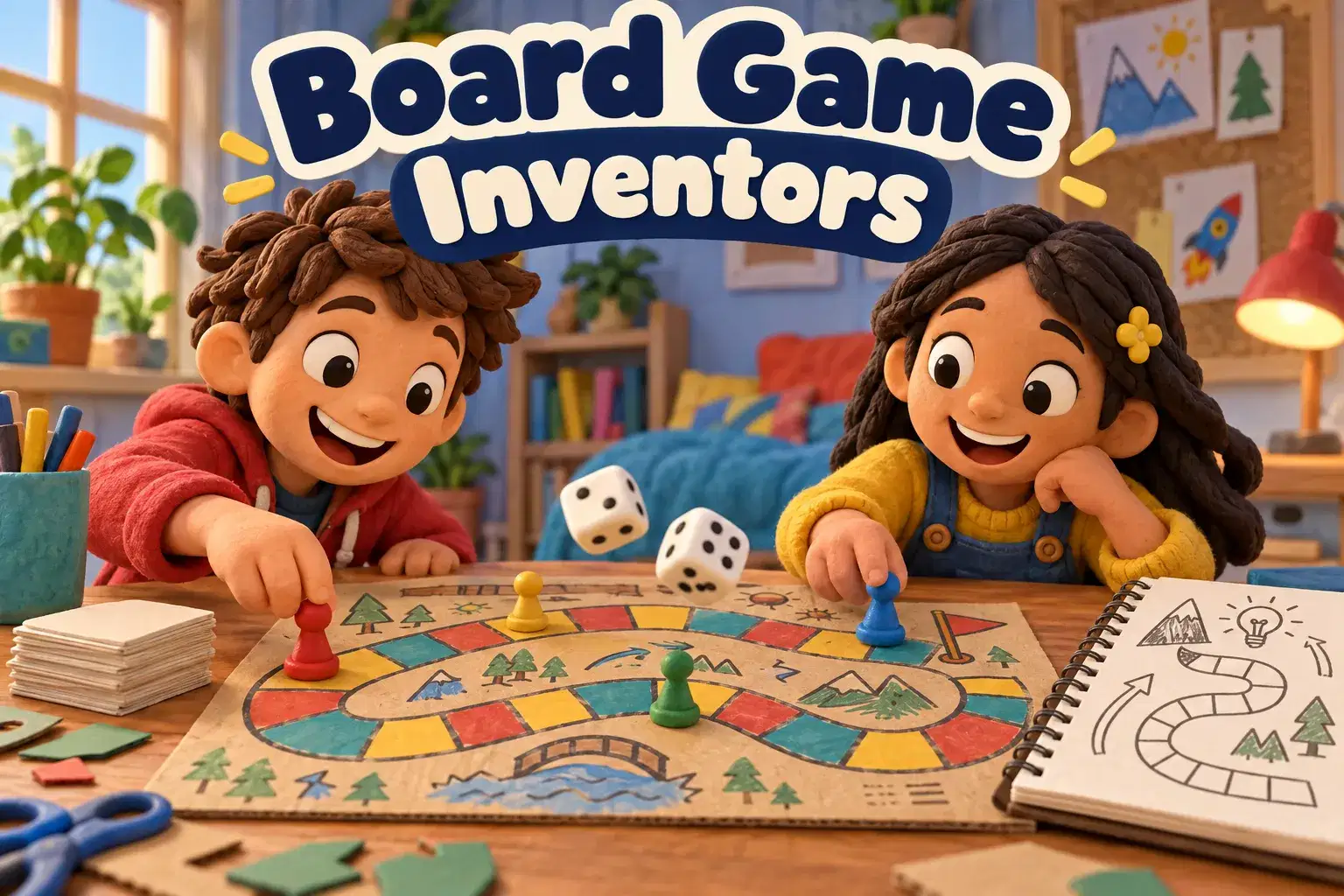
Kids invent an original board game in four days, sketching the board, writing the rules and building a paper prototype they playtest with family, then pitch it with a one-page game design sheet.
$72.00
4 classes · $18.00 per class
Paid once.
This camp turns a game idea into something kids can actually put on the table. Learners pick a theme they love, such as a jungle race, a space rescue or a dragon treasure hunt, then decide how players win, what they do on a turn and what makes the game tricky in a fun way.
Using paper, markers and a few household bits as tokens, each child draws a board, makes cards and writes simple rules. They test their game, spot the parts that feel unfair or slow, and fix them. By Friday they have a playable prototype and a short pitch explaining why people will want to play it.
This camp runs as four back-to-back daily sessions of 45 minutes in a single week. Each day picks up where the last one ended, moving from idea to board, rules, playtest and pitch. Learners work on their own game with live guidance and quick sharing moments.
Day 1: Big Idea Day: Theme, Goal and How to Win – Learners brainstorm a game theme, choose a clear winning goal and sketch a first map of their board on paper.
Day 2: Board Building and Game Pieces – Kids draw a full game board with paths or spaces, then make player tokens and dice alternatives from household items.
Day 3: Rules, Cards and the First Playtest – Learners write short turn-by-turn rules, create action cards, play a test round and note what felt confusing or unfair.
Day 4: Fix It, Polish It and Pitch Showcase – Kids improve their rules after feedback, fill in a one-page design sheet and present a short pitch of their finished game.

Turn a theme into a game with a clear goal
Write simple, step-by-step rules other players can follow
Build a playable paper board, cards and tokens
Use playtest feedback to fix unfair or slow parts
Pitch a game idea confidently in under two minutes
No experience needed. Learners should be able to read and write short sentences and need a device plus paper, markers, scissors, index cards and a few small household items to use as tokens.
Paper and markers become the game board, index cards turn into action cards, and coins or buttons serve as player tokens.
A step-by-step plan of what your child learns, class by class. · 1 Week
Learners brainstorm a game theme, choose a clear winning goal and sketch a first map of their board on paper.
Kids draw a full game board with paths or spaces, then make player tokens and dice alternatives from household items.
Learners write short turn-by-turn rules, create action cards, play a test round and note what felt confusing or unfair.
Kids improve their rules after feedback, fill in a one-page design sheet and present a short pitch of their finished game.
Next 7 days, US Eastern Time
Yes. No experience is needed. We start from a blank page and build one step at a time, from choosing a theme to writing rules. If your child can read and write short sentences and enjoys playing games, they have everything they need to begin.
Have paper, markers, scissors, index cards, tape and a handful of coins or buttons nearby. The paper becomes the board, index cards become action cards and the coins or buttons act as player pieces. A sturdy sheet of card or a cereal box panel makes a great board base if you have one.
Your child will finish with a playable paper board game, including a board, cards, tokens and written rules, plus a one-page design sheet. On the last day they present a short pitch explaining their theme, how to win and why the game is fun to play.
It is a one-week camp with four classes, one each day, and each class lasts 45 minutes. The sessions build on each other, so attending all four gives your child the full journey from idea to finished prototype and pitch.
Possibly. The age range of 8 to 12 is a guide, not a strict rule. A younger child who reads and writes short sentences comfortably and can focus for 45 minutes may do well. Older learners outside the range who meet the prerequisites are also welcome.
It helps, but it is not required. Playing one test round with a sibling or grown-up between sessions gives great feedback. If no one is free, learners can play both sides themselves and still spot rules that need fixing.
Yes, there is a little light homework: about 10 to 15 minutes finishing board art or cards so the next session can focus on playtesting. There is no certificate for this camp. The finished game itself is what your child takes away.
You get a full refund if you cancel before the second class starts. After that, classes already started count as used and classes not yet started are refunded, either as store credit or to your original payment method. You can cancel from the class in your parent dashboard.
Nandini brings a decade of focused experience introducing children to chess with warmth and structure. Her ten-week beginner course helps ages 6–11 learn board setup, piece movement, special rules like castling and en passant, basic openings, and common checkmate patterns through…
Sonia K.
Ages 7–12 · 50 min · 1 / Week
$20.00per classSee schedule
Bhavya M.
Ages 9–12 · 45 min · 1 / Week
$19.00per classSee schedule
Avni K.
Ages 12–16 · 50 min · 4 / Week
$20.00per classSee schedule
Harshita R.
Club · Ages 13–17 · 50 min · 1 / Week
$18.00per classSee schedule
Aditi K.
Club · Ages 10–13 · 45 min · 1 / Week
$15.50per classSee schedule
Ishita P.
Club · Ages 8–13 · 55 min · 1 / Week
$16.50per classSee schedule
Sonia K.
Beginner
Level
7–12
Ages
50 min
Duration
1 / Week
Classes
6
Weeks
Harshita R.
Intermediate
Level
9–13
Ages
45 min
Duration
1 / Week
Classes
6
Weeks
Anne M.
Beginner
Level
7–10
Ages
30 min
Duration
1 / Week
Classes
Ongoing
Weeks
Bhavya M.
Beginner
Level
9–12
Ages
45 min
Duration
1 / Week
Classes
1
Weeks
Avni K.
Beginner
Level
12–16
Ages
50 min
Duration
4 / Week
Classes
1
Weeks
Harshita R.
Beginner
Level
13–17
Ages
50 min
Duration
1 / Week
Classes
Ongoing
Weeks
Aditi K.
Beginner
Level
10–13
Ages
45 min
Duration
1 / Week
Classes
Ongoing
Weeks
Ishita P.
All Levels
Level
8–13
Ages
55 min
Duration
1 / Week
Classes
Ongoing
Weeks