By Allison Parker ·
Easy Engineering Design Challenges to Try at Home
Eight easy engineering design challenges for kids using household materials, sorted by age, plus a simple design process and safety tips.
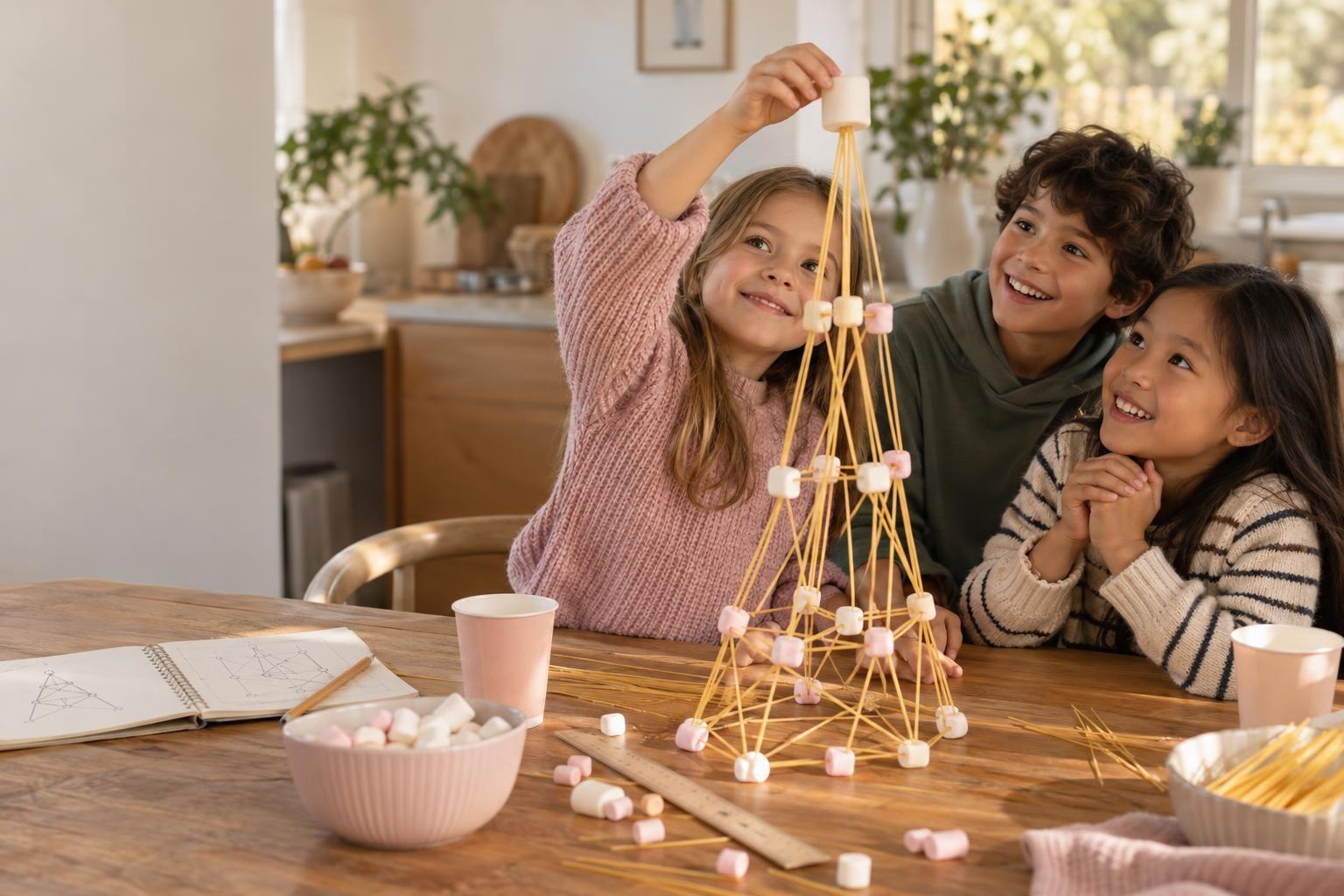
The easiest engineering design challenges at home use cheap household materials, a clear goal and a simple test, like building the tallest tower that holds a book or a parachute that lands softly on a target. Give your child the problem, a time limit and a few materials, then let them build, test and improve.
That loop of trying, failing and fixing is exactly how engineers work. Limit the materials, say how success will be measured, keep the first round short and always run a second round: the redesign is where the learning happens.
The engineering design process, kid-sized
NASA's Jet Propulsion Laboratory shares a flow chart of the engineering design process that works well at the kitchen table. In plain terms, it goes like this:
- Define the problem. What exactly needs to happen? "Hold a paperback book 20 cm off the table" is clearer than "build a tower."
- Brainstorm ideas. Sketch two or three different designs before touching any materials.
- Pick one idea. Choose the design that seems most likely to work with the materials on hand.
- Build a prototype. Make a quick first version. It does not need to be pretty.
- Test it. Run the test the same way each time so results are fair.
- Improve and repeat. Change one thing, test again, and keep going until it works. Then share what you learned.
Print or draw these steps on a sheet of paper and tape it near your workspace. Kids love checking off each stage.
Eight easy challenges by age
| Challenge | Best ages | Materials | The test |
|---|---|---|---|
| Paper cup tower | 4 to 7 | Paper cups, index cards | Tallest tower that stands for 10 seconds |
| Foil boat | 4 to 8 | Aluminum foil, a tub of water, coins or pennies | Most coins held before sinking |
| Parachute drop | 5 to 9 | Napkins or plastic bags, string, tape, a small toy | Slowest fall and closest landing to a target |
| Spaghetti and marshmallow tower | 6 to 12 | Dry spaghetti, mini marshmallows | Tallest tower that holds one large marshmallow on top |
| Robotic grabber arm | 7 to 12 | Cardboard strips, brads, string, tape | Pick up and move three small objects |
| Straw rocket | 8 to 12 | Drinking straws, paper, tape | Farthest flight in three tries |
| Egg drop | 8 to 14 | Raw egg, paper, straws, tape, cotton balls | Egg survives a drop from a set height |
| Water filter | 10 to 14 | Cut plastic bottle, gravel, sand, coffee filters, muddy water | Clearest water out the bottom (not for drinking) |
Many of these are adapted from classroom lessons. JPL Education lists free versions of the robotic arm, pasta building, parachute and straw rocket activities in its engineering lessons for grades 3 to 5 and grades K to 2, with teacher notes you can borrow.
How to run a challenge at home
- Set up a materials tray. Limit the supplies. Constraints make kids think harder and keep cleanup quick.
- State the goal and the rules. Say what counts as success and how you will measure it, such as a ruler, a timer or a count of coins.
- Give a time limit. Ten to twenty minutes of building works well for younger kids. Older kids can handle thirty to forty-five.
- Test, then ask questions. "Where did it break?" and "What would you change?" are more useful than "Good job."
- Do a second round. The redesign is where the learning happens. Most kids beat their first result.
- Record results. A notebook with sketches and scores lets kids see their progress and compare designs.
Kids can work as a team or compete with identical materials. Friendly competition often sparks better ideas, and comparing two designs side by side shows kids why one shape or material works better than another.
Safety and screen time
- Cutting tools. Younger kids should use child scissors. Save craft knives and cutting plastic bottles for an adult.
- Raw eggs. Wash hands and surfaces after an egg drop, and do it outdoors or over a tray.
- Launching. Set a clear launch zone for straw rockets and never aim at faces or pets.
- Muddy water. Make it clear the filtered water is for observing, not drinking.
Marshmallows, coins and brads are choking hazards for toddlers, so keep them away from little siblings.
These challenges are a nice screen-free break. If you want a guided version, a live online engineering class can run the same kind of challenges with a teacher and a small group of kids, so your child gets feedback and fresh ideas each week.
Frequently asked questions
What if my child gets frustrated when the design fails?
Treat failure as data. Ask what the test showed, and point out that real engineers rebuild many times. Keeping the first round short helps kids reach the redesign before they lose interest.
How often should we do a challenge?
Once a week is plenty. A regular slot, such as a weekend morning, builds a habit and gives kids time to think up ideas between sessions.
Do I need to know engineering myself?
No. Your job is to set the goal, keep things safe and ask good questions. Learning alongside your child models curiosity, which matters more than having the answers.
Which challenge should we try first?
Pick one from the age range that fits your child and uses materials you already have. The paper cup tower and foil boat are quick wins for younger kids; the straw rocket and egg drop suit older kids who want more of a test.
Keep the build-test-improve habit going
If your child loves a good design challenge, live online engineering classes run hands-on challenges with a teacher and a small group, so they get feedback and fresh ideas every week.