Math, logic & chessAges 5–144 min read
By Olivia ·
Cuemath or Brighterly vs Live Group Math Classes
Cuemath and Brighterly offer one-to-one online math tutoring. Here is how that compares with a live small-group math class, and who each suits.
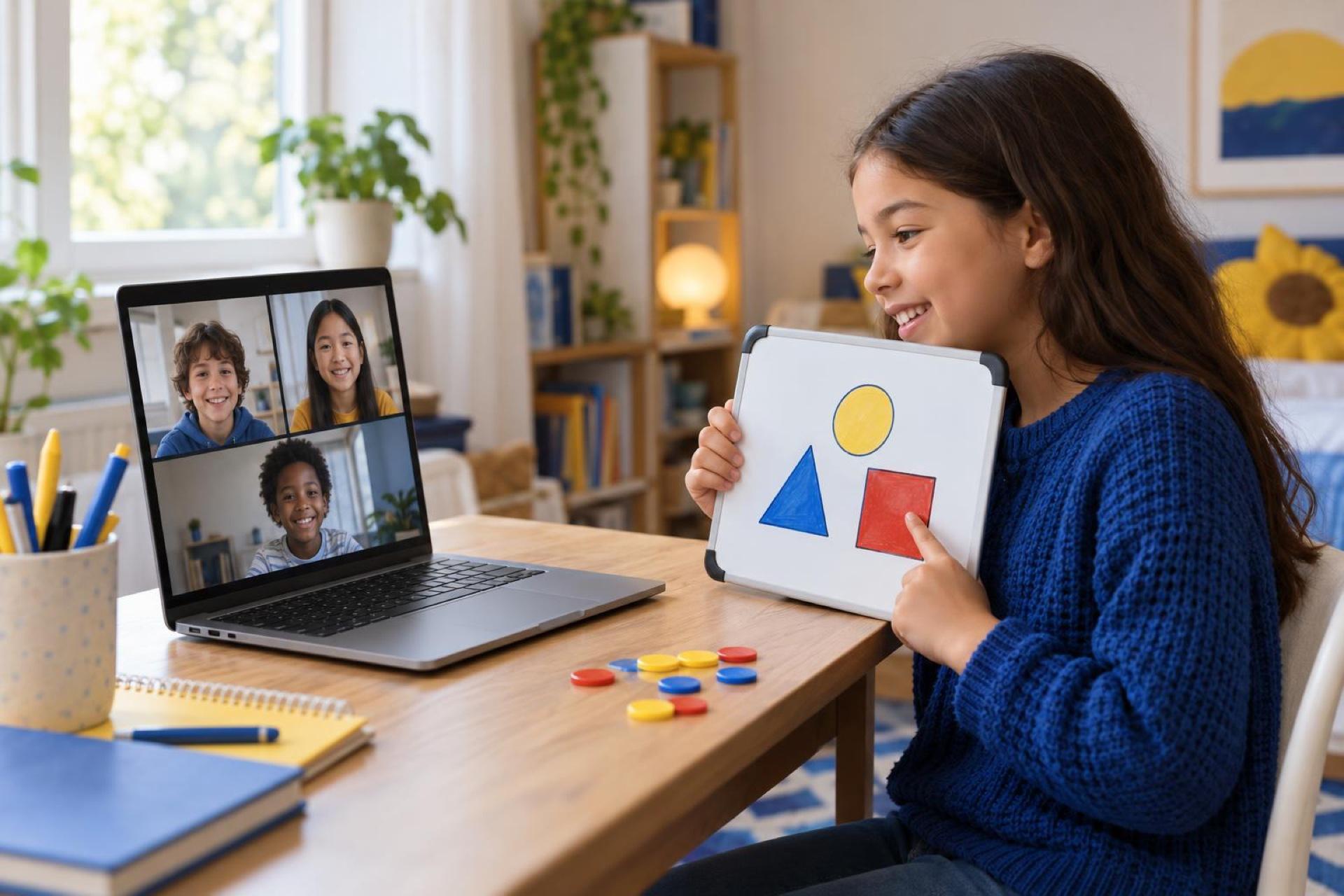
Cuemath and Brighterly both sell one-to-one online math tutoring, usually as a package of sessions on a set curriculum. A live group class is a different thing. Which one helps depends on whether your child needs private attention or the energy of other children.
One-to-one programs such as Cuemath and Brighterly suit a child who has gaps, needs a patient pace or is shy in groups. Small-group classes cost less per hour and suit children who enjoy games, discussion and a little friendly competition. Many families use a group class for enjoyment and add tutoring when a topic gets stuck.
What each option is
An online math program built around one-to-one sessions with a tutor who follows the company's own curriculum and worksheets.
An online one-to-one math tutoring service for school-age children, with lessons built around games and visual activities.
Small groups meeting by video with one teacher, organised as a course, weekly club or short camp.
Details of other products are described as we understand them at the time of writing. Plans, prices and features change, so check each provider's own site before you decide.
Side by side
| One-to-one program | Live group class | |
|---|---|---|
| Attention | All on your child | Shared between a few children |
| Pace | Follows your child | Follows the group |
| Curriculum | Usually the provider's own | Set by the teacher for that course |
| Motivation | Depends on the tutor | Other children, games and discussion |
| Cost per hour | Higher | Lower |
| Commitment | Often a package or subscription | Often one course, or week to week for clubs |
 A live class on this1-on-1 Math Tutor for Grade 6: Ratios, Fractions and Negative NumbersAges 10–12
When a one-to-one program fits
- Your child is more than a few months behind in one area.
- They go quiet in groups and will not ask questions.
- You want sessions at a time that suits only your family.
Will my child have the same tutor each week? Can sessions follow our school curriculum? What happens to unused sessions?
When a live group class fits
- Your child is roughly at grade level and needs practice or stretch.
- They enjoy math more with other children around.
- You want to try a topic for a few weeks before committing.
Group size matters. With five children or fewer, a teacher can still watch each child's working and give feedback. Ask how the class is organised: the best ones mix a short explanation with problems the children solve and explain to each other, so nobody sits and watches for long.
Using both together
The two work well together. A weekly club keeps math enjoyable, and a short block of tutoring before a test or after a difficult unit fills the gap. Our guide to how online math tutoring works explains what a good session looks like.
What parents can do next
- Decide whether the main need is catching up or staying interested.
- Ask each provider for a trial session.
- Check who teaches, how progress is reported and how to stop.
- Review after six weeks and change format if it is not working.
Frequently asked questions
Is one-to-one always better than a group?
No. One-to-one is better for closing gaps. Groups are often better for motivation and for children who learn by talking things through.
How many children should be in a group class?
For live online math, small is better. Around five or fewer lets the teacher give each child feedback.
Do these programs follow my child's school curriculum?
Some follow their own sequence. Ask directly, and share your child's school topics with the tutor.
Can we switch between formats?
Yes. Many children move from tutoring to a group once the gap is closed.
Find a 1-on-1 math tutor
Private online math tutoring matched to your child's grade, with group classes and clubs alongside.