



Hand Sewing & Mending Basics
Vipul Tendolkar4.5
Ages 11–14 · 50 min · 1 / Week
$20.15per classSee schedule
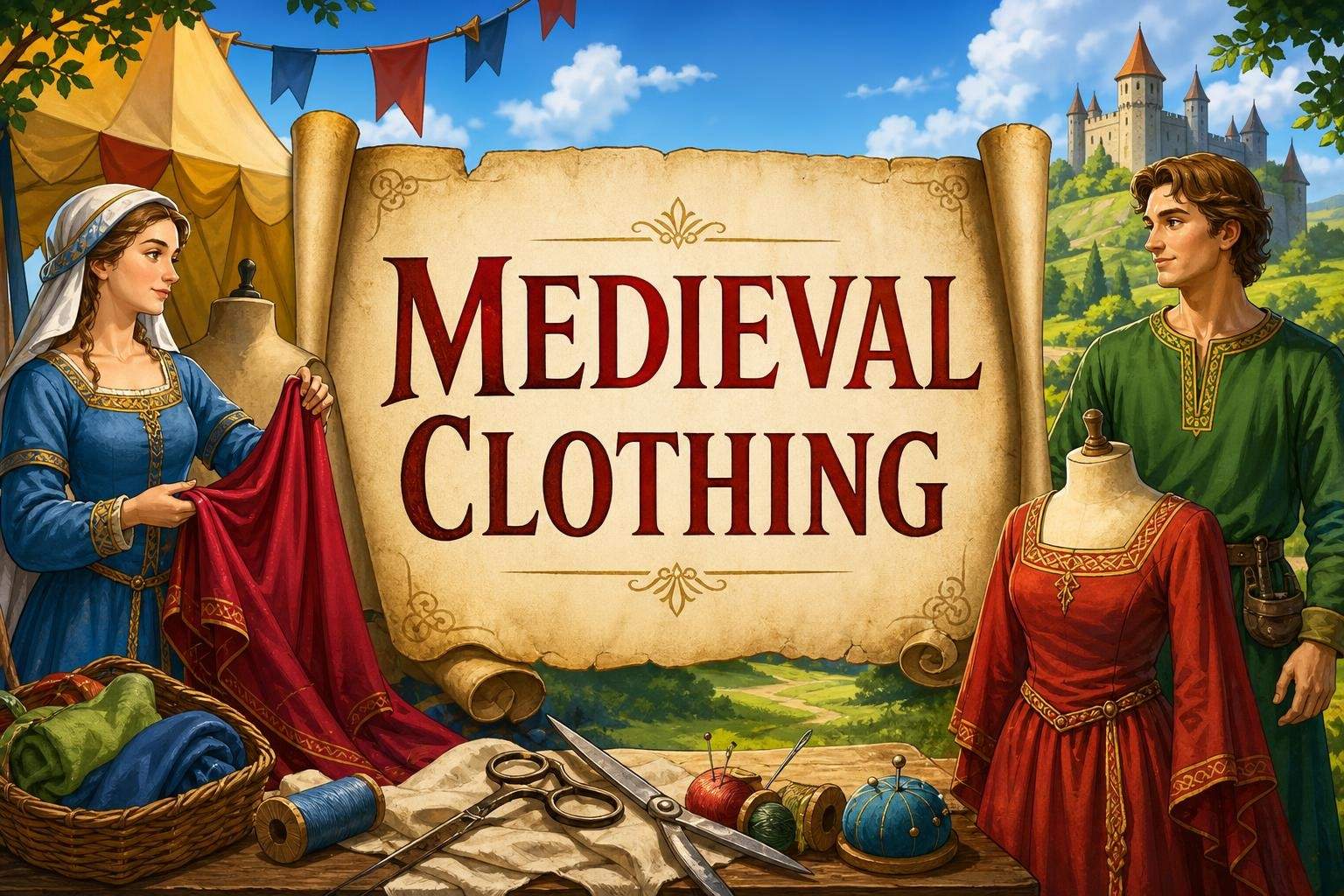
Learn hand-sewing techniques and historical context to construct a medieval shift and kirtle through guided, step-by-step sessions.
Paid once.
A practical workshop focused on the everyday wardrobe of 1300–1500: the shift and the kirtle. Students follow step-by-step instruction on patterning, cutting, hand-stitching, fitting, and finishing while learning about the garments' social and regional variations and possible uses for reenactment or costume.
Beginning sewists are welcome, but learners should have basic hand-sewing skills: cutting fabric, threading a needle, taking small stitches, etc.
Materials needed:
Students will need to purchase fabric and notions -
Fabric Notes:
The shift should be 100% linen or cotton, in a light to medium weight. White or slightly off-white in color.
The kirtle should be 100% linen in a medium weight or a lightweight 100% wool.
Wealthy people would wear shifts of lighter weight and color, and their kirtle would be made in darker, richer colors - greens, oranges, reds, pinks, blues, and purples.
Peasants would wear fabrics in colors close to the color of the natural material they were made from... light tans and browns for linen shifts & kirtles and shades of cream and brown for wools. Natural dyes might be used to obtain more muted shades of green, orange, yellow, etc.
If students want to wait until after our first class to purchase their colored kirtle fabric, we won't need it until week 4.
Please feel free to contact me for additional advice regarding sources or if you have any questions!
Shift: 4 yards (white or off-white linen)
Kirtle: 4 yards (linen or wool)
Additional Notions:
White/Cream Thread to Match Shift
Colored Thread to Match Kirtle
***All amounts are approximate, as amounts of fabric needed will vary based on the student's measurements and the width of fabric purchased. Some fabrics may have enough "leftovers" for other pieces, such as a veil, purse, or bag, and supplemental info will be shared with students who wish to make such items for their collection on their own.
Students should also have:
Fabric Scissors
Thread Snips or Embroidery Scissors
Hand Sewing Needles in assorted sizes
Straight Pins (and pincushion/magnet)
Thimble (metal or leather are most authentic, but whatever is most comfortable for the student)
Flexible Tape Measure
Ruler and/or Yardstick
Roll of Wrapping Paper or Craft Paper (for drafting patterns - paper with a 1" grid on the backside is extra nice!)
Pencil
Sharpie (for marking patterns)
T-Shirt that fits loosely to use as a pattern-making guide
PLEASE NOTE:
I understand that truly authentic fabric can be VERY cost-prohibitive - especially for a first project! I never intend to make historic sewing beyond anyone's grasp by demanding exorbitantly expensive supplies. Historically accurate fabric is *wonderful* to work with, and I'm always going to encourage it if possible... but please know that there are truly amazing pieces that have been made from thrifted white cotton bed sheets, old curtains, and discount fabric! Choose what works for YOU and your budget, makes you happy, and feels nice against your skin. Remember that natural fibers are always cooler in hot weather and often hold up better when washed. I aim to help students create a historically accurate outfit... and quality fabric helps the finished product look and feel the best it can... Most importantly, you are learning the skills to construct them and offer your best efforts. :)
Choose a time that works best for you. All times are shown in Coordinated Universal Time.
With over 40 years of sewing experience, this teacher specializes in alterations, tailoring, historical costuming, and cosplay construction. Workshop teaching blends traditional hand-sewing techniques with practical pattern drafting, mending skills, and period-appropriate constru…
4.8
10 reviews for this class
Ratings are specific to this class, not the teacher's overall profile.
Only reviews with written feedback are shown below.
Vipul Tendolkar4.5
Ages 11–14 · 50 min · 1 / Week
$20.15per classSee schedule

Aniruddh Merchant4.4
Ages 10–14 · 75 min · 1 / Week
$24.22per classSee schedule
Niharika Dhar4.4
Ages 7–12 · 55 min · 1 / Week
$11.68per classSee schedule
Ms. Nikita Phadke4.4
Ages 9–11 · 45 min · 1 / Week
$24.29per classSee schedule

Geeta Saini4.1
Ages 10–14 · 60 min · 2 / Week
$20.17per classSee schedule
Rupa Dwivedi4.5
Ages 10–13 · 55 min · 1 / Week
$21.06per classSee schedule

Vipul Tendolkar4.4
Ages 13–18 · 85 min · 1 / Week
$17.21per classSee schedule

Dr. Hari Sadhu4.0
Ages 9–12 · 40 min · 1 / Week
$24.56per classSee schedule
Vipul Tendolkar
Beginner
Level
11–14
Ages
50 min
Duration
1 / Week
Classes
4
Weeks
Aniruddh Merchant
Beginner
Level
10–14
Ages
75 min
Duration
1 / Week
Classes
4
Weeks
Niharika Dhar
Beginner
Level
7–12
Ages
55 min
Duration
1 / Week
Classes
8
Weeks
Ms. Nikita Phadke
Beginner
Level
9–11
Ages
45 min
Duration
1 / Week
Classes
4
Weeks
Geeta Saini
Beginner
Level
10–14
Ages
60 min
Duration
2 / Week
Classes
1
Weeks
Rupa Dwivedi
Beginner
Level
10–13
Ages
55 min
Duration
1 / Week
Classes
3
Weeks
Vipul Tendolkar
Mixed Level
Level
13–18
Ages
85 min
Duration
1 / Week
Classes
10
Weeks
Dr. Hari Sadhu
Beginner
Level
9–12
Ages
40 min
Duration
1 / Week
Classes
8
Weeks