By Sydney Hamilton ·
How to Plan a Winter Break Routine for Kids
Plan a winter break routine for kids: a steady wake-up time, one morning anchor like an online camp, daily movement, and an easy path back to school.
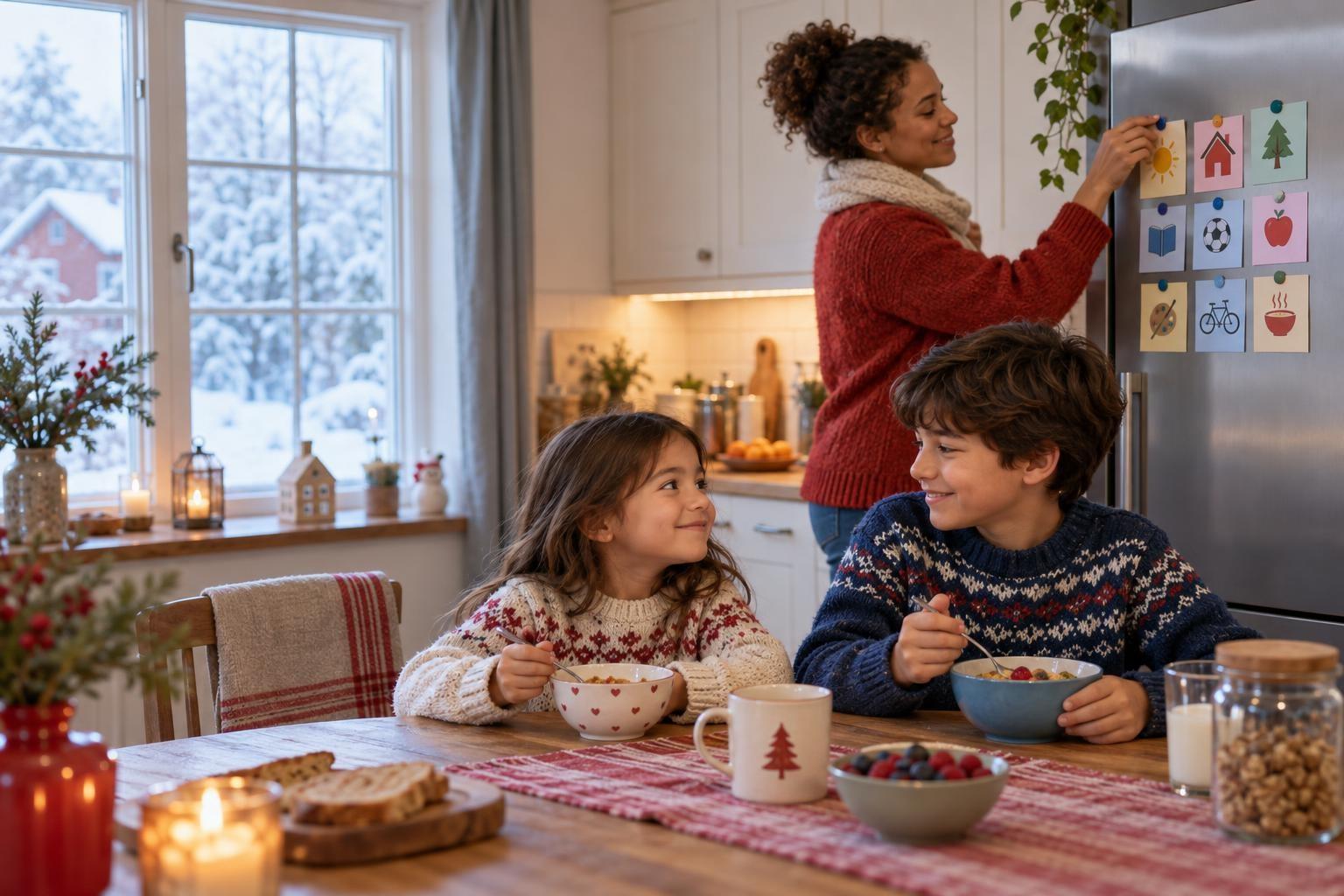
The easiest winter break routine has three anchors: a steady wake-up time, one planned activity each morning such as an online camp, and time to move every day. Keep holidays and travel days loose, but go back to the same rhythm on ordinary days. That mix gives kids a real break without the chaos of two weeks with no plan.
Mark fixed dates first, then plan only your ordinary days. Give each one a morning anchor, movement afterward and open afternoons for free play. Let travel and holiday days run on their own rhythm, keep a few small habits that travel with you, and shift bedtimes back toward the school schedule two or three days before school restarts.
Step by step: build your winter break routine
- Mark the fixed dates first. Put travel, family visits, religious and cultural celebrations, and work days on one calendar. Those are the days the routine pauses.
- Count your ordinary days. Most families end up with somewhere between five and eight "regular" days across the break. Those are the days to plan.
- Choose one morning anchor. Pick one thing that happens at the same time on ordinary days: a short online camp, a library visit, a reading hour or a family project.
- Add movement after the anchor. Outdoor play, sledding, a walk or an indoor dance party. Put it on the plan so it does not get skipped on cold days.
- Leave afternoons open. Free play, rest and boredom are part of a real break. Kids often invent their best games when nothing is scheduled.
- Plan the last two days. Shift bedtimes back toward the school schedule before classes restart, so the first school morning is not a shock.
A sample winter break day by age
Use this as a starting point and move the blocks to fit your family.
| Block | Ages 4–7 | Ages 8–12 | Teens |
|---|---|---|---|
| Morning | Breakfast, outdoor play | Breakfast, chores | Sleep in a little, breakfast |
| Anchor | 30-minute story or craft camp | One-hour themed camp (art, coding, science) | Longer skill camp or project |
| Movement | Snow play or dance break | Sledding, biking or a walk | Sport, gym or a walk with friends |
| Afternoon | Quiet time, free play | Free time, friends, reading | Free time, friends, a job or volunteering |
| Evening | Family meal, early bedtime | Family meal, game night | Family meal, screen-free hour before bed |
Handling travel and holiday days
Travel days break every routine, and that is fine. What helps is keeping a few small habits that travel with you: the same bedtime story, a book in the bag, a short walk after a long car ride. These tell kids that some things stay the same even when the place changes.
If you are hosting, give kids a job. Setting the table, making place cards or helping with a recipe keeps them busy and makes them part of the event. On the day after a big celebration, plan a quiet morning. Most kids, and most parents, need a slow start after a late night.
If relatives are in other time zones, plan video calls for times that work for your child's energy, not just the adults' schedules. A short call where your child shows a drawing or a project usually goes better than a long one with nothing to share.
Using online camps during winter break
A short online camp works well as the morning anchor because it happens at a set time, needs no driving in bad weather, and gives kids a small goal for the week. Winter-themed options, like drawing a snowy scene, building a winter world in a game, or a holiday craft, make it feel like part of the season rather than more school.
A few tips for choosing one:
- Check the dates against your calendar. Pick a camp that lands on your ordinary days, not the week you travel.
- Keep it short for younger kids. Thirty to forty-five minutes is plenty for most children under seven.
- Follow an interest. A child who loves drawing will look forward to a holiday drawing class far more than a subject you picked for them.
- Try one session first. If you are unsure, a single live class with the same teacher is a low-stakes way to test the fit.
For low-pressure ways to keep skills fresh on the other days, see how to keep kids learning over winter break.
Safety and screen time
Breaks can quietly turn into all-day screen time. The American Academy of Pediatrics offers a free Family Media Plan tool that helps families set screen-free times and spaces. Counting a camp as part of the day's screen time, rather than on top of it, keeps the total in check.
Keep sleep steady too. The American Academy of Sleep Medicine recommends 9 to 12 hours a night for ages 6 to 12 and 8 to 10 hours for teens. Late nights now and then are fine, but a stable wake-up time makes the return to school easier.
The AAP's frostbite prevention advice is simple: dress kids in layers and bring them inside at regular intervals to warm up. The CDC recommends that kids ages 6 to 17 get 60 minutes or more of physical activity each day, and that can include indoor play on very cold days.
Frequently asked questions
Is it okay to have no plan at all over winter break?
Some downtime is healthy, and many kids need it after a busy term. The problem is usually not rest but drift, where bedtimes slide and screens fill the gaps. One small daily anchor is often enough to prevent that.
How do we handle a routine when relatives are visiting?
Pause it. Use the routine on ordinary days only, and let holidays and visits run on their own rhythm. Kids handle the switch well when they know which days are which.
When should we start shifting back to school bedtimes?
Two or three days before school restarts is a good target. Move bedtime and wake-up earlier by 15 to 30 minutes a day until you are back on the school schedule.
How long should a winter camp session be for a young child?
Thirty to forty-five minutes is plenty for most children under seven. Older kids can manage an hour or a longer project.
Give winter break a simple morning anchor
Live online winter camps run at set times with seasonal themes, so your child has something to look forward to on ordinary days of the break.