By Chloe Bryant ·
How to Build a Starter Craft Kit for Kids
What to put in a starter craft kit for kids, by age, plus how to store it, choose non-toxic supplies and keep crafting safe.
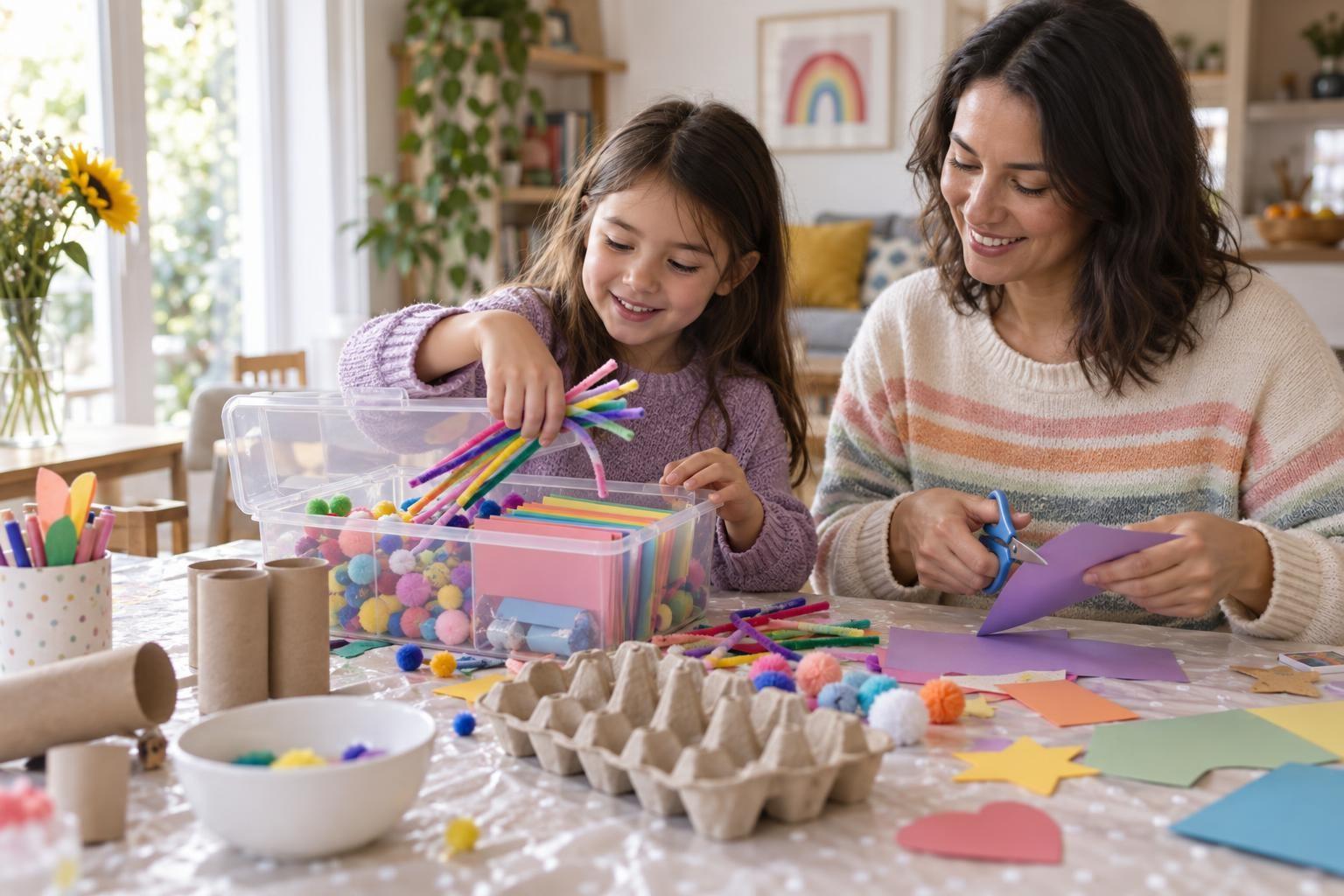
A good starter craft kit for kids holds a small set of safe, reusable basics in one portable box. Choose non-toxic supplies, match them to your child's age, and add new materials as their interests grow.
Start with washable glue, child-safe scissors, paper and card, markers or crayons, tape and a few fun extras like pipe cleaners or yarn. Look for the AP seal on art materials, keep small parts away from toddlers, and refresh the kit every few months so it stays exciting.
Why build your own kit
Pre-packaged craft kits are fun but usually make one project. A homemade kit full of open-ended supplies lets your child make many things, from cards and puppets to cardboard castles. It also teaches kids to plan, choose materials and clean up, which are skills they carry into school projects.
Building your own kit is often cheaper too. Many supplies are already in your home, and the rest can be bought in small amounts.
How to build a starter craft kit, step by step
- Pick a container. A clear plastic box with a lid or a tackle-style organizer works well. Clear sides let kids see what they have.
- Add the core supplies. Start with paper, cardstock, glue sticks, washable white glue, tape, child-safe scissors, crayons or markers, and colored pencils.
- Add a few texture extras. Pipe cleaners, pom-poms, craft sticks, yarn, buttons, stickers and tissue paper make projects feel special.
- Save recyclables. Keep a bag of clean cardboard tubes, egg cartons, cereal boxes and bottle caps nearby. They make great building material.
- Include a protective layer. A plastic tablecloth, a tray or an old shirt saves your table and clothes.
- Label sections. Use small bags or cups so kids can find and put back each item. A quick picture label helps non-readers.
- Refresh every few months. Replace dried markers and glue, and add one new material to spark fresh ideas.
What to include by age
| Age | Core supplies | Good extras | Hold off on |
|---|---|---|---|
| 3 to 5 | Chunky crayons, washable markers, glue sticks, safety scissors, construction paper | Large pom-poms, stickers, jumbo craft sticks, play dough | Small beads, buttons, glitter, hot glue |
| 6 to 8 | Markers, colored pencils, white glue, kid scissors, cardstock, tape | Pipe cleaners, yarn, felt sheets, googly eyes, washable paint | Craft knives, hot glue without an adult |
| 9 to 12 | Fine markers, sketch paper, glue, sharp-tip scissors, ruler, cardboard | Embroidery floss, polymer clay, a beginner sewing set, origami paper | Unsupervised hot glue or craft knives for younger kids in this range |
| 13 and up | Quality art paper, fine-line pens, glue, cutting mat | Low-temp glue gun, craft knife, sewing or knitting tools, jewelry-making supplies | Solvent-based adhesives without good ventilation |
What to watch for
A few safety checks go a long way with craft supplies.
- Look for the AP seal. The Art and Creative Materials Institute (ACMI) awards its AP (Approved Product) seal to art materials that have been reviewed by a medical expert and found to contain no materials in amounts that are toxic or harmful to people, including children. It is a quick way to choose paints, markers, crayons and glue.
- Hot glue and blades. Low-temperature glue guns and craft knives should be used with an adult close by.
- Clean hands. Have kids wash up after using clay, paint or glue, and never eat while crafting.
Beads, buttons, googly eyes and pom-poms are small enough to swallow. The U.S. Consumer Product Safety Commission bans small parts in products meant for children under 3, but a craft box for older kids can still contain them, so keep it away from toddlers.
Making crafting a habit
Set out the kit at a regular time each week, like a rainy afternoon or Sunday morning. Offer a loose prompt, such as "make something that moves" or "make a gift for Grandma," instead of a step-by-step project. That leaves room for your child's own ideas.
Display finished work on a shelf, a string with clothespins or the fridge. Seeing their projects on show tells kids their effort matters. Snap a photo of bulky pieces before they get recycled so you can keep a record without keeping every cardboard robot.
If your child wants to learn a specific skill, like sewing, crochet or polymer clay, a live online crafts class can teach the technique step by step while kids work with their own supplies at home.
Frequently asked questions
How much should a starter craft kit cost?
You can build a solid kit with modest spending by using supplies you already own and adding a few basics. Spend more on the things that get used most, like good scissors and markers, and less on novelty items.
How do I stop glitter from taking over the house?
Skip loose glitter for young kids. Glitter glue, glitter paper or stickers give the same sparkle with far less mess.
What if my child loses interest quickly?
Keep the kit small and rotate items. A box with fewer, well-chosen supplies feels less overwhelming, and swapping in something new every few weeks makes it exciting again.
How can I tell if art supplies are non-toxic?
Look for the ACMI AP (Approved Product) seal on paints, markers, crayons and glue. It shows the product has been reviewed by a medical expert and found not to contain harmful amounts of toxic materials.
Turn a craft box into new skills
When your child is ready to learn a specific technique, such as sewing, crochet or polymer clay, live online crafts classes teach it step by step while they work with their own supplies at home.