By Eliana ·
Halloween Science Activities Kids Want to Try
Discover how spooky, hands-on Halloween science activities can help kids ages 7–12 explore chemistry, physics, biology, and engineering.
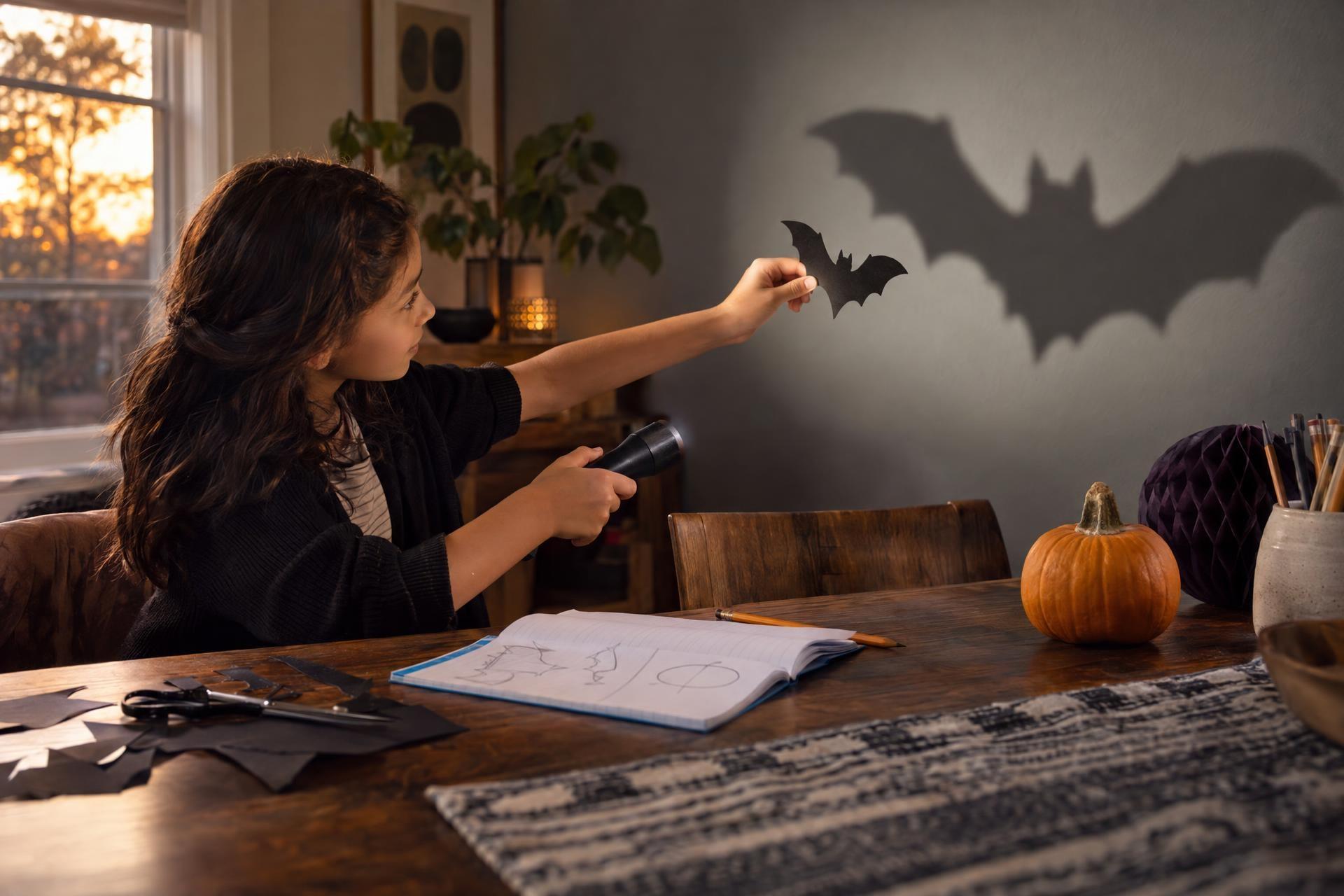
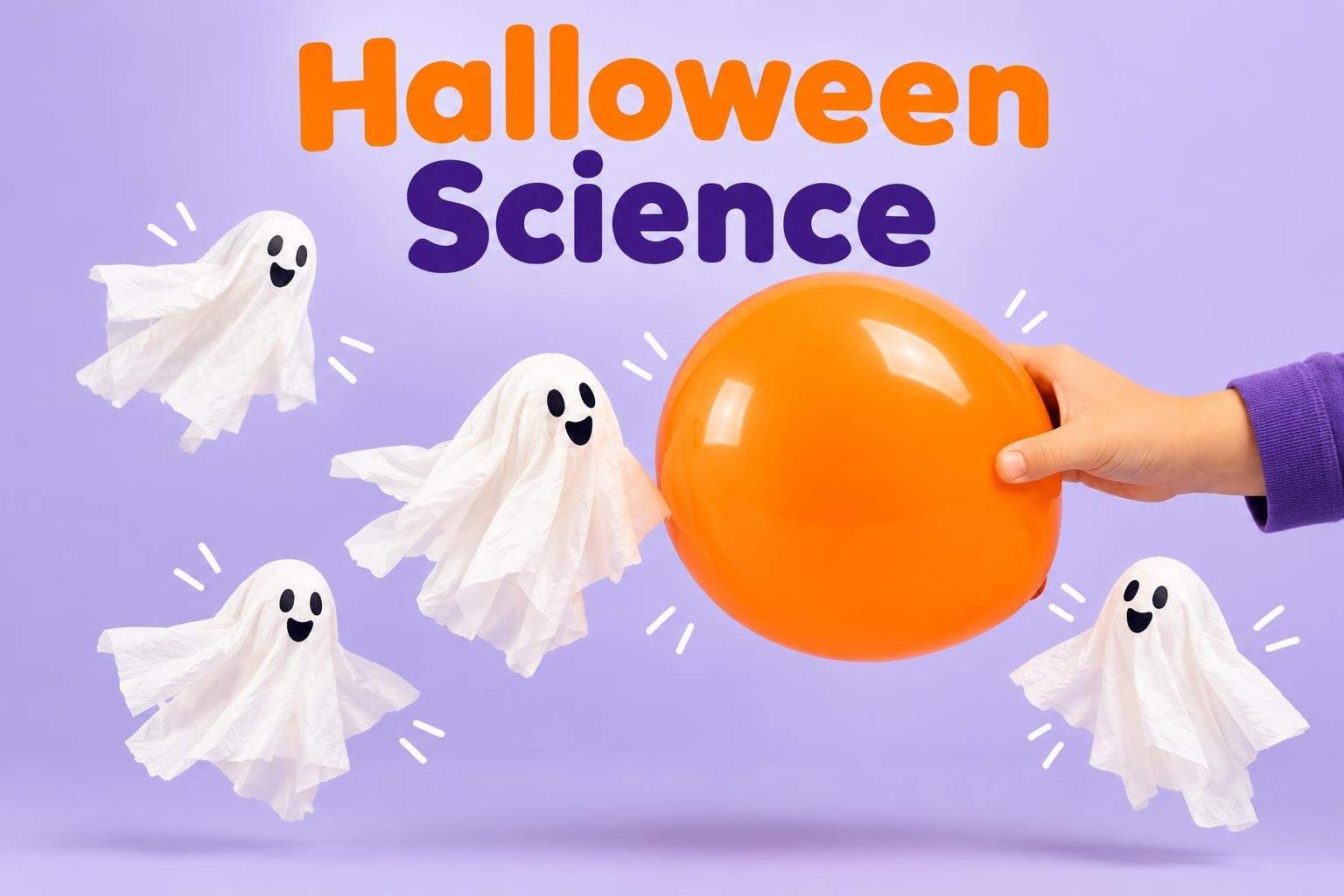
A bubbling “potion,” an enormous bat-shaped shadow, or a haunted-house marble run can earn a child’s attention faster than a worksheet—and that is exactly what makes Halloween such a useful setting for science. The theme gives children a familiar mystery to investigate. The science is still real; it simply begins with a question that feels playful enough to pursue.
Halloween science works because it pairs real phenomena with ideas children already find intriguing: things that fizz, move, glow, fall, make sounds, or seem mysterious. A worthwhile activity does not need elaborate supplies or a dramatic finale. Start with one safe question, let your child predict what might happen, test an idea with adult supervision, and talk about what they noticed. That process can bring chemistry, physics, biology, and engineering into a seasonal afternoon without making it feel like another assignment.
Why spooky science is such a strong invitation
Halloween gives ordinary materials and scientific questions a story. A flashlight becomes a tool for investigating monster shadows. A pumpkin becomes a chance to look closely at seeds and plant life cycles. A ramp, marble, and cardboard tube become part of a haunted-house contraption.
That story matters because it gives a child a reason to care about the next question. Instead of asking, “Do you want to learn about forces?” you might ask, “Can you make this tiny ghost travel all the way through the haunted house without getting stuck?” The underlying idea is the same, but the task has a purpose.
The goal is not to disguise every learning experience as fun. It is to notice that curiosity is a legitimate starting point for learning. A child who wants to make a shadow larger, slow a falling object, or identify a mystery sound has a concrete problem to explore.
The memorable part is not only the spooky reveal. It is the moment a child asks, “How did that happen?” and has room to find out.
The real science underneath the theme
Halloween does not have to turn science into pretend magic. Playful names can set the mood, while a simple explanation keeps the investigation grounded in what children can observe: a change in temperature, a growing shadow, a different sound, a slower fall, or a design that finally works.
| Halloween-style question | Science ideas to explore | What a child might do |
|---|---|---|
| How can we make a “potion” fizz differently? | Observable chemical change, comparing variables | Notice bubbles, listen, describe changes, and compare one carefully chosen adjustment in an adult-supervised activity. |
| Why did the bat shadow get bigger? | Light, shadow, distance, and position | Move a flashlight or paper shape and observe how the shadow changes on a wall. |
| Which monster parachute falls most slowly? | Forces, air resistance, design | Compare lightweight designs made from safe craft materials and revise one feature at a time. |
| What is inside a pumpkin seed? | Plant structures, reproduction, observation | Examine, sketch, and compare seeds from a pumpkin or squash. |
| What made that sound behind the screen? | Sound, evidence, inference | Listen for clues, make a guess, and explain which observations support it. |
A single activity may touch several ideas at once. A haunted-house marble run, for example, invites children to think about motion and alignment while also practicing design: Where does the marble stop? What needs to change? What happens if the ramp is raised or the turn is widened?
Move from “cool!” to “how did that happen?”
A dramatic result is a fine beginning. It becomes a science experience when a child has a chance to observe, compare, test, and explain. Parents do not need to lecture or have all the answers. A few well-timed prompts can keep the child in the investigator’s seat.
Questions that keep the investigation going
- What do you notice before we change anything?
- What do you think will happen if we move, add, remove, or redesign this one part?
- What changed? What stayed the same?
- Was the result what you expected?
- What would you try differently next time?
Try to ask one question, then wait. A child may need a little time to look, listen, or replay what happened. Their explanation does not need to use formal vocabulary to be valuable. “The shadow got huge because the flashlight was close to it” is a useful observation that can later lead to more precise language.
Change one feature at a time when possible. If a child alters the ramp height, marble, and track shape all at once, the result may still be fun—but it is harder to tell what caused the difference.
Choose an activity your family can actually enjoy
The most effective seasonal experiment is often the one that fits the time, space, cleanup tolerance, and supervision your family has that day. You do not need a laboratory setup. A few materials, one clear question, and enough time to retry can be plenty.
Choose a question a child can see or hear the answer to: What makes it move, fall, cast a shadow, or sound different?
Use familiar, age-appropriate supplies rather than making the activity depend on a special kit.
Plan for the level of support the materials and your child need, especially with reactions, tools, or cleanup.
Leave space for a second attempt or a small redesign; that is often where the learning becomes most interesting.
Not every Halloween activity labeled “science” is suitable for every home. Avoid projects that involve mixing household chemicals, flames, sharp tools, ingesting materials, or handling unknown substances. Select a trusted, age-appropriate activity, read it through first, and adapt it for your child’s sensory preferences and your available supervision.
Five spooky project ideas with room to tinker
Build a shadow creature theater
Cut or use ready-made paper shapes, shine a flashlight toward a blank wall, and investigate what happens as the light source or shape moves. A child can make predictions about shadow size, sharpness, and direction before testing them.
Design a monster parachute
Create a small, lightweight character from safe craft materials and test different canopy shapes or sizes. The challenge is not simply to make it fall; it is to decide what “slower” means, compare trials fairly, and improve a design.
Investigate pumpkin and squash seeds
Look at the outside and inside of seeds, compare size and shape, and make a labeled sketch. Questions might include: How might these seeds travel? What does a seed need in order to begin growing? Use the pumpkin as a specimen to observe, not just a decoration.
Create a mystery-sound challenge
One person makes a sound with a household object behind a screen while another listens and gathers clues. The listener can name a hypothesis, ask for a repeat, and explain why one possible answer seems stronger than another.
Troubleshoot a haunted-house marble run
Use cardboard, paper tubes, and other safe construction materials to guide a marble through a spooky route. When it stops or flies off course, treat the interruption as useful information: Is the angle too shallow? Is a joint uneven? Is a turn too tight?
Make space for different ways of participating
Children can engage with the same investigation in different ways. One may want to handle every material and run repeated trials. Another may prefer to watch closely, draw what they see, or be the person who records results. Neither role is a lesser one.
Offer a choice without turning it into pressure. “Would you rather make the prediction, hold the flashlight, or draw the results?” can help a hesitant child enter the activity. For a child who wants more challenge, invite measurement, a results chart, or a redesigned version. For a child who is ready to stop after the first reveal, a short conversation about what they noticed may be enough.
Mess is optional, too. Shadow investigations, sound mysteries, sketches, and engineering challenges can be satisfying alternatives to activities involving liquids or sensory-heavy materials.
What parents can do next
- Ask your child which Halloween mystery interests them most: a strange sound, a flying creature, a shadow, a fizz, a seed, or a moving contraption.
- Choose one safe, manageable activity and read the full instructions before inviting your child to begin.
- Set up a simple way to capture ideas—a notebook, a few sketches, photos of design attempts, or a short list of predictions.
- During the activity, ask one observation question and one “what would you test next?” question rather than explaining every result immediately.
- End by letting your child share their best explanation, including what did not work and what they would change.
Frequently asked questions
Does a Halloween activity need a big “wow” moment to count as science?
No. A quiet seed investigation or a careful shadow test can be just as scientific as a dramatic demonstration. What matters is that the child has something to observe and a question to explore.
What if my child only wants to make the project and not discuss the science?
Let the making lead. You can offer a single low-pressure observation—“That turn changed the marble’s path”—and see whether they want to continue. Interest often grows through repeated chances to build, test, and notice rather than a required explanation.
How can I make an experiment less frustrating?
Keep the goal small, use a limited number of materials, and expect adjustments. If a design fails, narrow the question: What is one change we could try? A backup activity, such as a flashlight-and-shadow investigation, can also help when a project takes an unexpected turn.
Can seasonal science be worthwhile if we only do it once?
One activity can offer a meaningful moment of observation and discovery. If your child wants to continue, the same question can become a new challenge later—testing another design, trying a different material, or investigating a related idea.
Follow the questions your child wants to chase
For families looking for a more guided seasonal experience, Halloween-focused classes can offer a structured way to explore spooky reactions, mysteries, creatures, and inventions through real science questions.