By Brianna Wells ·
How to Set Up Your Home for Online Dance Class
Set up a safe home space for online dance class: clear six feet of floor, pick a non-slip surface, frame the camera for full body, and keep water nearby.
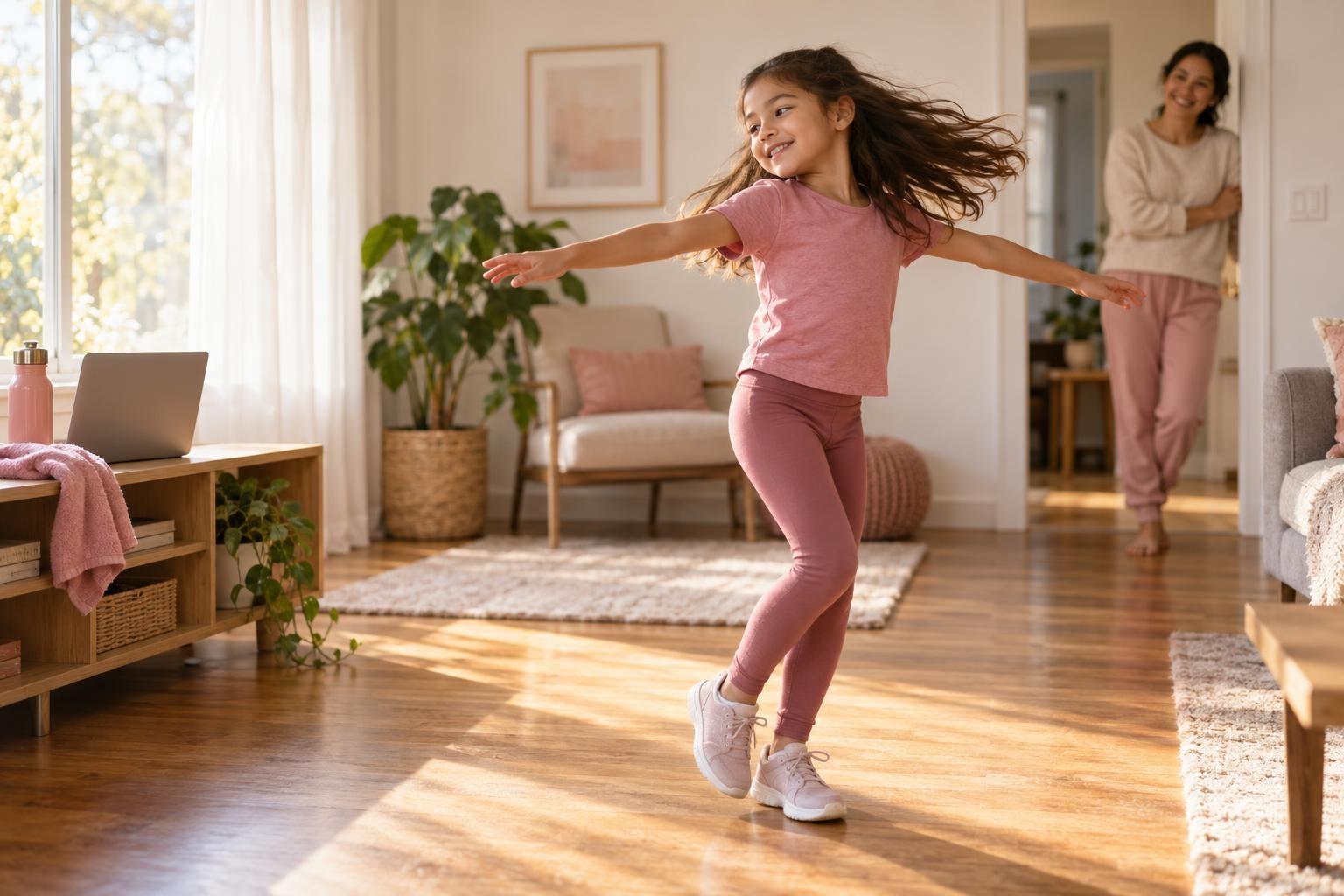
To set up for an online dance class, clear about six feet of floor, use a non-slip surface, and place the camera far enough back to show your child's whole body. Keep water nearby. With those basics in place, most kids can dance safely in a living room, bedroom or basement, and the whole setup takes about 15 minutes.
Clear a roughly six-by-six-foot space, check the floor (no plain socks on smooth floors), set the camera eight to ten feet back at about waist height for a head-to-toe view, put the light in front of your child, and mute their microphone during music. Water, tied-back hair and a five-minute early start do the rest.
Step 1: Choose and clear the space
Look for the largest open area you have. It doesn't need to be a studio, just a spot where your child can move without bumping into things.
- Measure roughly six feet by six feet. Have your child stretch their arms out and spin slowly. If they touch nothing, you're in good shape.
- Move furniture with sharp corners. Coffee tables, chairs and floor lamps are the usual problems.
- Check the ceiling. Ceiling fans and low light fixtures matter for jumps and arm movements. Turn fans off.
- Remove tripping hazards. Pick up toys, cords and loose rugs.
- Clear a little extra in front. Many classes include traveling steps toward the camera.
Step 2: Get the floor right
The floor matters more than anything else. A good surface protects ankles and knees and helps your child feel confident.
| Floor type | How it works for dance | Tips |
|---|---|---|
| Wood or laminate | Good for most styles; can be slippery | Use bare feet, sneakers or dance shoes, not socks. |
| Low carpet | Fine for hip hop and creative movement | Hard to turn on. Sneakers help. |
| Thick or shag carpet | Can catch feet and twist ankles | Put a flat board or mat on top if possible. |
| Tile or concrete | Hard on joints for jumping | Add a thin rubber or foam mat. Avoid big jumps. |
Avoid dancing in plain socks on smooth floors. They slip easily. If a rug stays down, make sure it has a non-slip backing.
Ask the teacher what footwear the class uses. Ballet, tap, jazz and hip hop each have different needs, and some classes prefer bare feet.
Step 3: Set up the camera
The teacher needs to see your child from head to toe to give useful feedback. This is the step families most often get wrong.
- Use a laptop or tablet if you can. A bigger screen makes it easier for your child to follow the teacher. A phone works if that's what you have.
- Place it across the room. Usually eight to ten feet back from where your child stands. Test it rather than guessing.
- Raise it to about waist height. A table, shelf or stack of books works. Avoid pointing it up from the floor.
- Do a full-body check. Have your child stand in the space, raise their arms and step side to side. Head, hands and feet should stay in frame.
- Turn the device sideways if needed. Phones and tablets often fit more of the body in one orientation. Try both.
- Keep the screen visible. Your child needs to see the teacher while dancing, so don't hide the device behind them.
Step 4: Light and sound
Good lighting helps the teacher see movement clearly. Put the main light in front of your child, not behind them. A bright window behind the dancer turns them into a dark shadow on camera.
Sound needs a little thought too. Laptop speakers are often quiet. A small external speaker makes it easier to hear music and counts.
Mute your child's microphone during music unless the teacher asks otherwise. Music played on two ends at once can create echo and lag.
Step 5: Final checklist before class
- Water bottle within reach, off the dance floor.
- Hair tied back and comfortable clothes that allow movement.
- Device charged or plugged in, with the cord out of the dance area.
- Pets and siblings in another room if possible.
- The class link open five minutes early to check audio and video.
- A towel nearby for active classes.
Safety and screen time
Dancing at home is safe when the space is prepared, but a few points are worth keeping in mind.
- Warm up first. Most teachers lead a warm-up. If your child joins late, have them march and stretch gently before joining in.
- Skip moves that don't fit the space. Big leaps or floor work may need to be adapted. It's fine for your child to mark a move smaller.
- Stay within earshot. Younger kids especially benefit from a nearby adult if they get hurt or the connection drops.
- Think about what's on camera. Check what's visible in the background before class.
- Balance screen time. A dance class is active screen time, but it still counts. Pair it with time outside or offline play.
On Undoschool, classes are recorded for safety and every course is reviewed before it's listed. That gives parents an extra layer of reassurance.
Making it feel like a real class
Small touches help kids take home dance seriously. Some families tape a small "X" on the floor to mark the center spot. Others keep a dedicated pair of dance shoes by the space.
A live teacher who knows each child by name makes a real difference. In a small group, the teacher can correct posture and cheer on progress just as they would in a studio.
Frequently asked questions
What if we only have a small room?
Many styles work in a smaller space, especially hip hop, creative movement and tap. Let the teacher know so they can suggest ways to adapt traveling steps.
Should my child dance barefoot or in shoes?
It depends on the style and floor. Bare feet or dance shoes work on smooth floors; sneakers help on carpet. Avoid plain socks on wood or tile.
Can we use a phone instead of a laptop?
Yes. A phone can work, but the small screen makes it harder to follow the teacher. If possible, cast it to a TV or use a tablet.
How far back should the camera be?
Usually eight to ten feet, at about waist height. Have your child raise their arms and step side to side to check that head, hands and feet stay in frame.
Find a dance class your child will love
In a small live group, a dance teacher can learn your child's name, correct posture and cheer on progress just as they would in a studio.