By Megan Bailey ·
How to See the Space Station from Your Backyard
See the International Space Station from home with NASA's free Spot the Station app: how alerts work, when to look up, and how to spot it in the sky.
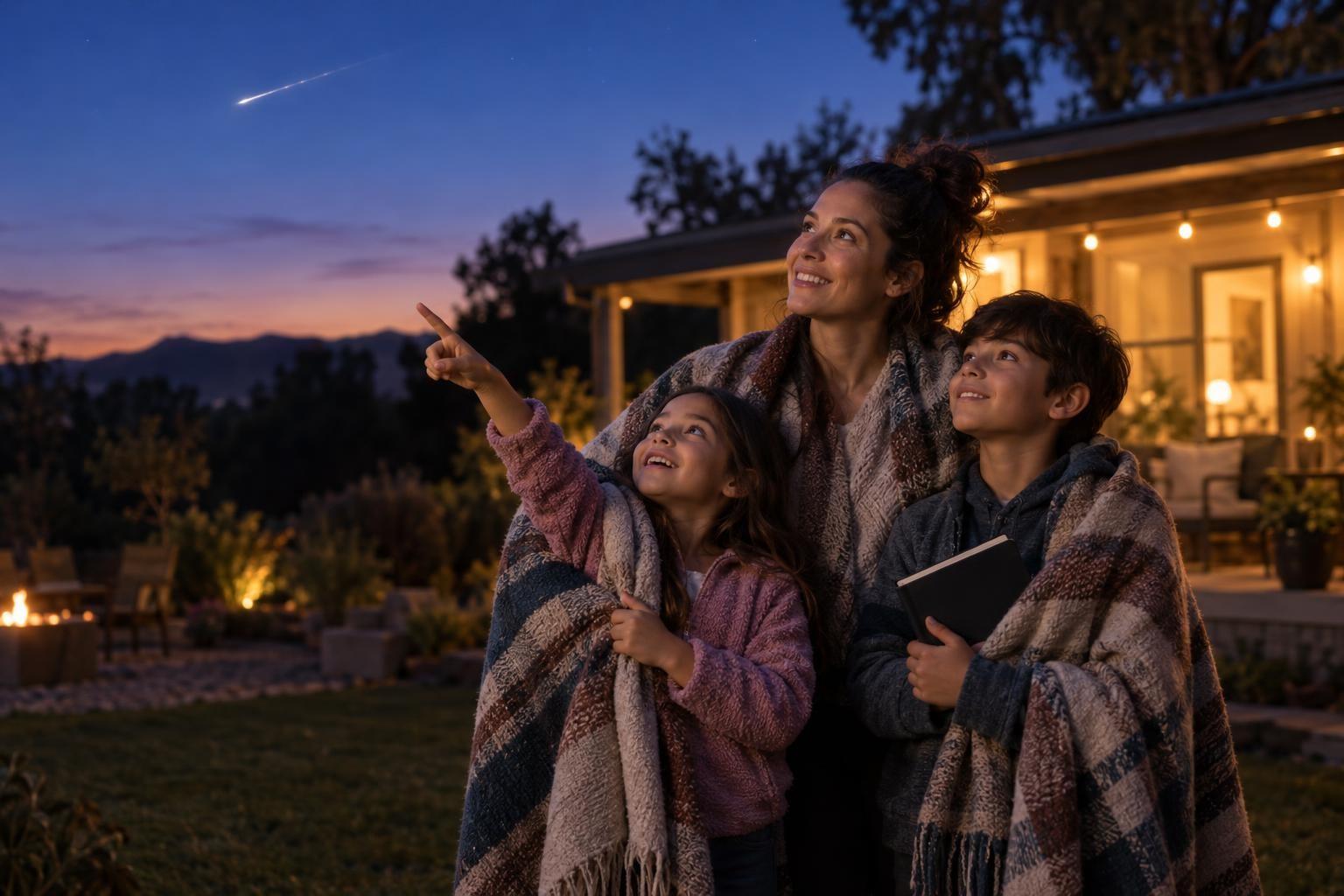
You can see the International Space Station from your backyard with no telescope at all. The easiest way to know when to look is NASA's free Spot the Station app, which sends alerts when the station will pass over your area. On a clear night, it looks like a bright, steady light gliding across the sky.
The station shines by reflecting sunlight, so the best views come near dawn and dusk. Install Spot the Station, turn on alerts, check the time, direction and maximum height for the next pass, then head to an open spot on a clear night a few minutes early. Look for a steady, non-blinking light moving smoothly across the sky.
Why you can see the space station
The space station does not make its own light. Like the Moon, it shines by reflecting sunlight.
That is why the best views come around dawn or dusk. The sky is dark where you are, but the station, high above, is still lit by the Sun. During the day the sky is too bright to see it.
The station orbits the Earth roughly every 90 minutes, so it passes over many parts of the world. It is not always visible from your home, though. You need the right timing, a dark sky and a pass that comes close enough to your location.
Step 1: Get the Spot the Station app
NASA's Spot the Station app is free for iPhone and Android. NASA retired the older email and text alert service from its website in 2025, so the app is now the main way to get NASA alerts.
- Download Spot the Station from the App Store or Google Play.
- Allow location access, or enter your location, so the app can find passes near you.
- Turn on notifications so you get alerts about upcoming sightings.
- Open the app to see the next good sighting and when to look up.
Step 2: Read the sighting details
Sighting predictions usually include a few key details. Here is what they mean.
| Detail | What it tells you |
|---|---|
| Time | When the station will first appear |
| Duration | How long it will be visible, often a few minutes |
| Max height | How high it will climb, in degrees above the horizon (90° is straight overhead) |
| Appears / disappears | The direction where it rises and where it fades from view |
Higher passes are usually easier to see, since trees and buildings will not block them. Your fist held at arm's length covers roughly 10 degrees of sky.
Step 3: Get ready to watch
- Check the weather. Clouds will hide the station, so look for a clear night.
- Pick an open spot. A backyard, park or field with a wide view of the sky works best.
- Find the starting direction. Use the app's compass or a phone compass to face where the station will appear.
- Go out a few minutes early. Give everyone's eyes time to adjust, and avoid looking at bright screens.
- Look for a steady moving light. It will be brighter than most stars and move smoothly across the sky.
How to tell it from a plane
Kids often ask, "Is that it?" Here is how to check.
- The space station does not blink. Planes usually have flashing lights.
- It moves faster than most planes but much slower than a shooting star.
- It makes no sound and leaves no trail.
- It may fade out gradually before reaching the horizon, as it moves into Earth's shadow.
If you miss it
Don't worry if clouds roll in or you step out too late. Passes repeat, and the app will show the next opportunity. Sometimes several good passes happen within the same week, followed by a stretch with none.
Turning a missed sighting into a planning game also helps. Kids can check the app each day and mark the next good pass on a calendar.
Make it a family event
Spotting the station is a short event, so a little preparation makes it memorable.
- Before heading out, talk about what astronauts do on board. NASA's website has photos and videos from the station.
- Have your child sketch the path of the station after it passes.
- Keep a sighting log with the date, time, direction and how bright it looked.
- Wave! Astronauts cannot see you, but kids love it anyway.
Curious kids often have big questions afterward, like how astronauts sleep or eat. A live class with a space-loving teacher is a great place to explore them.
Safety and screen time
- Stay with young kids outside after dark, and bring a flashlight for the walk out.
- Choose a safe viewing spot away from roads.
- Binoculars are optional. Telescopes are hard to aim at something moving so fast.
- If the app's notifications become distracting, turn them off after your sighting and check the app manually instead.
Frequently asked questions
How often can we see the space station?
It depends on where you live. NASA says sightings can range from about once a month to several times a week.
Do we need a telescope or binoculars?
No. The station is easy to see with your eyes alone on a clear night.
Why are all the sightings early morning or evening?
The station needs sunlight to shine, but your sky needs to be dark. That combination happens near dawn and dusk.
How do we know it isn't a plane?
The space station doesn't blink, makes no sound and glides smoothly. Planes usually have flashing lights.
Keep exploring space with your child
After a sighting, kids often want to know how astronauts eat, sleep and work. Live space classes are a great place to chase those questions with a space-loving teacher.