By Emma Stewart ·
Easy First Knitting and Crochet Projects for Kids
Easy first knitting and crochet projects for kids, how to pick yarn, hooks and needles by size, and tips for teaching the first stitches.
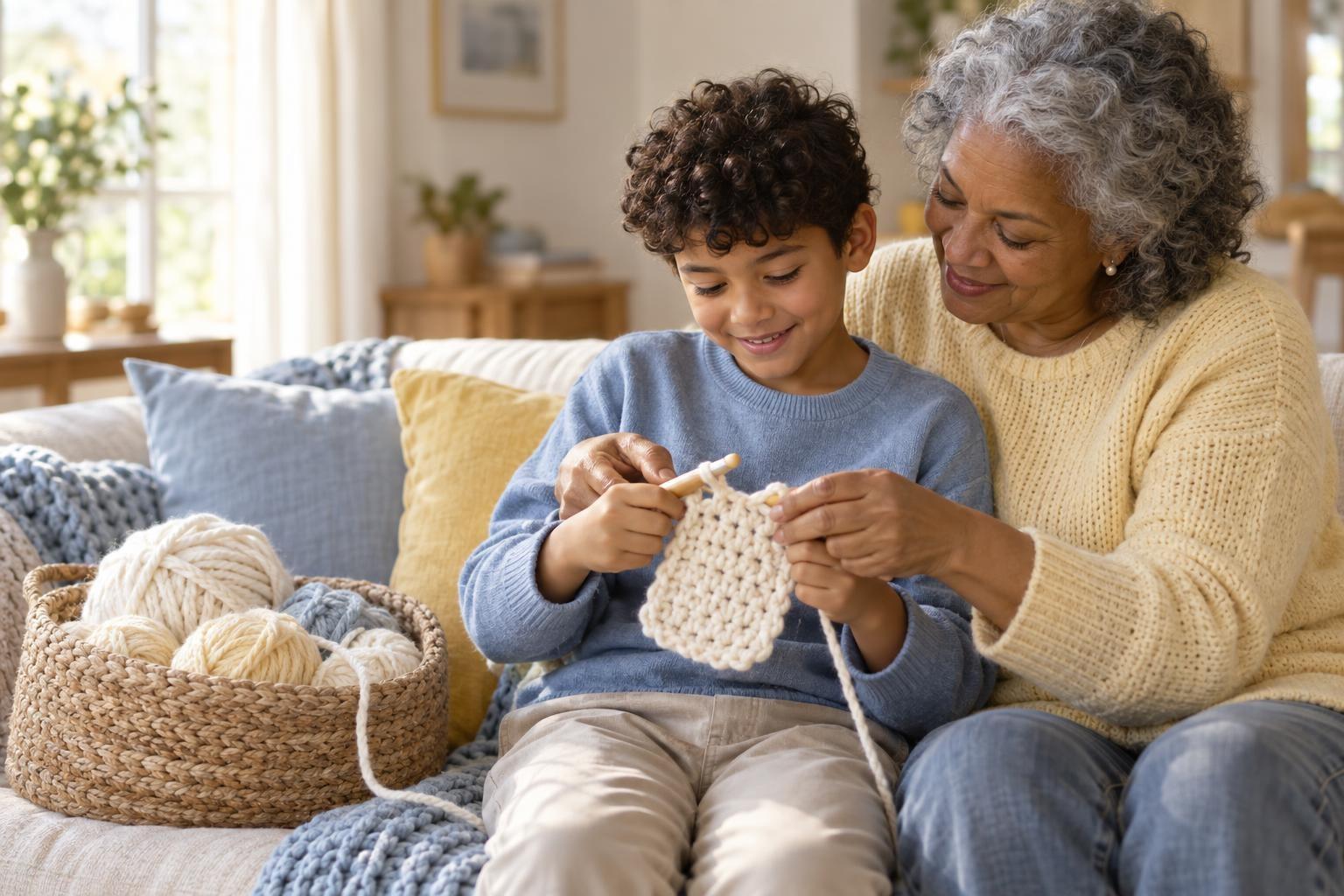
The easiest first knitting and crochet projects for kids are small, flat and use thick yarn, like a dishcloth, a coaster, a bookmark or a short scarf. With the right yarn and a project that uses one basic stitch, most kids aged 7 and up can finish a first piece in a few sessions.
Pick a medium or bulky yarn in a light, solid color, a matching hook or needles, and a project labeled Basic. Cast on or chain for your child, keep sessions to 15 to 20 minutes, and let small mistakes go: finishing matters more than perfection.
Knitting or crochet: which first?
Both are great hand skills, and kids often try one and then pick up the other. The main difference is the tool.
- Crochet uses one hook and has one active loop at a time, so dropped stitches are less of a problem. Many kids find it easier to start.
- Knitting uses two needles and holds a whole row of loops at once. It takes a bit more coordination but produces a smooth, stretchy fabric that many kids love.
If your child has already tried finger knitting or a loom, either craft is a natural next step. If they want quick results, crochet often feels faster at the start.
How to choose yarn and tools
The Craft Yarn Council's standard yarn weight system numbers yarn from thinnest to thickest. For beginners, look for a 4 (medium, often called worsted) or 5 (bulky) on the label.
| Yarn weight | Common names | Typical crochet hook | Typical knitting needles | Good for |
|---|---|---|---|---|
| 4 Medium | Worsted, aran | US I-9 to K-10½ (5.5 to 6.5 mm) | US 7 to 9 (4.5 to 5.5 mm) | Dishcloths, coasters, bookmarks, ages 8 and up |
| 5 Bulky | Chunky, craft | US K-10½ to M-13 (6.5 to 9 mm) | US 9 to 11 (5.5 to 8 mm) | Scarves and quick projects, ages 6 to 9 |
These sizes come from the Craft Yarn Council's guidelines. Always check the yarn label too, since it lists a recommended hook or needle size.
- Pick a light, solid color. Stitches are much easier to see on cream, yellow or light blue than on dark or variegated yarn.
- Choose smooth yarn. Fuzzy or textured yarns hide stitches and tangle easily.
- Try shorter needles. Shorter needles, or bamboo or wood ones, are easier for small hands to manage and slip less.
- Add a tapestry needle and blunt scissors. You need these to weave in ends at the finish.
Five easy first projects
- Dishcloth or washcloth. A small square in cotton yarn is perfect practice, and it is useful when done.
- Coaster. Even smaller than a dishcloth, it gives a quick win in one or two sittings.
- Bookmark. A long, narrow strip that teaches kids to keep edges straight. Add a tassel for fun.
- Short scarf. Bulky yarn and a simple stitch make this a satisfying first wearable. Keep it doll-sized or short to finish before interest fades.
- Granny square or pot holder. A good second crochet project once your child knows a few stitches.
The Craft Yarn Council also rates patterns by project skill level. Look for patterns labeled Basic, which use basic stitches with little or no shaping.
How to teach the first stitches
- Start the foundation for them. Cast on or make the starting chain yourself so your child can jump straight into the main stitch.
- Use a simple rhyme. Short rhymes help kids remember the steps of a knit stitch or single crochet.
- Keep sessions short. Fifteen to twenty minutes is plenty at first. Hands get tired, and frustration builds fast.
- Do not fix every mistake. A few uneven stitches are fine in a first project. Finishing matters more than perfection.
- Celebrate the finish. Help weave in the ends and let your child use or gift the piece.
Some kids learn best with a teacher showing each move up close. A live online crochet or knitting class lets a teacher watch your child's hands on camera and correct grip or tension in real time.
What to watch for
- Tension and grip. Kids often pull yarn too tight, which makes stitches hard to work. Remind them to keep a relaxed hold.
- Sharp points. Store needles and hooks in a case, and keep them away from toddlers.
- Breaks for hands and eyes. Encourage short stretches and good lighting to avoid sore hands and eye strain.
Long strands of yarn are a strangulation risk for babies and toddlers, so tidy up after each session.
Frequently asked questions
What age can kids start knitting or crocheting?
Many kids are ready around 7 or 8, when fine motor skills and patience are stronger. Younger kids can start with finger knitting or a knitting loom.
Is crochet easier than knitting for kids?
Often, yes, because crochet has only one live loop at a time. But some kids prefer the rhythm of knitting. Let your child try both and choose.
How long does a first project take?
A coaster or bookmark can take one to three short sessions. A dishcloth or small scarf usually takes a week or two of regular practice.
What yarn should we buy first?
A smooth, light, solid-colored yarn labeled 4 (medium or worsted) or 5 (bulky), with the hook or needle size recommended on the label.
Learn the next stitch with a teacher
If your child has finished a first coaster or scarf and wants more, live online crafts classes can teach new stitches and projects with a teacher who can see their hands on camera.