By Jessica Owens ·
Calming Breathing Exercises for Kids
Teach your child box breathing and four more simple calming breathing exercises, with step-by-step instructions, age tips and how to make them stick.
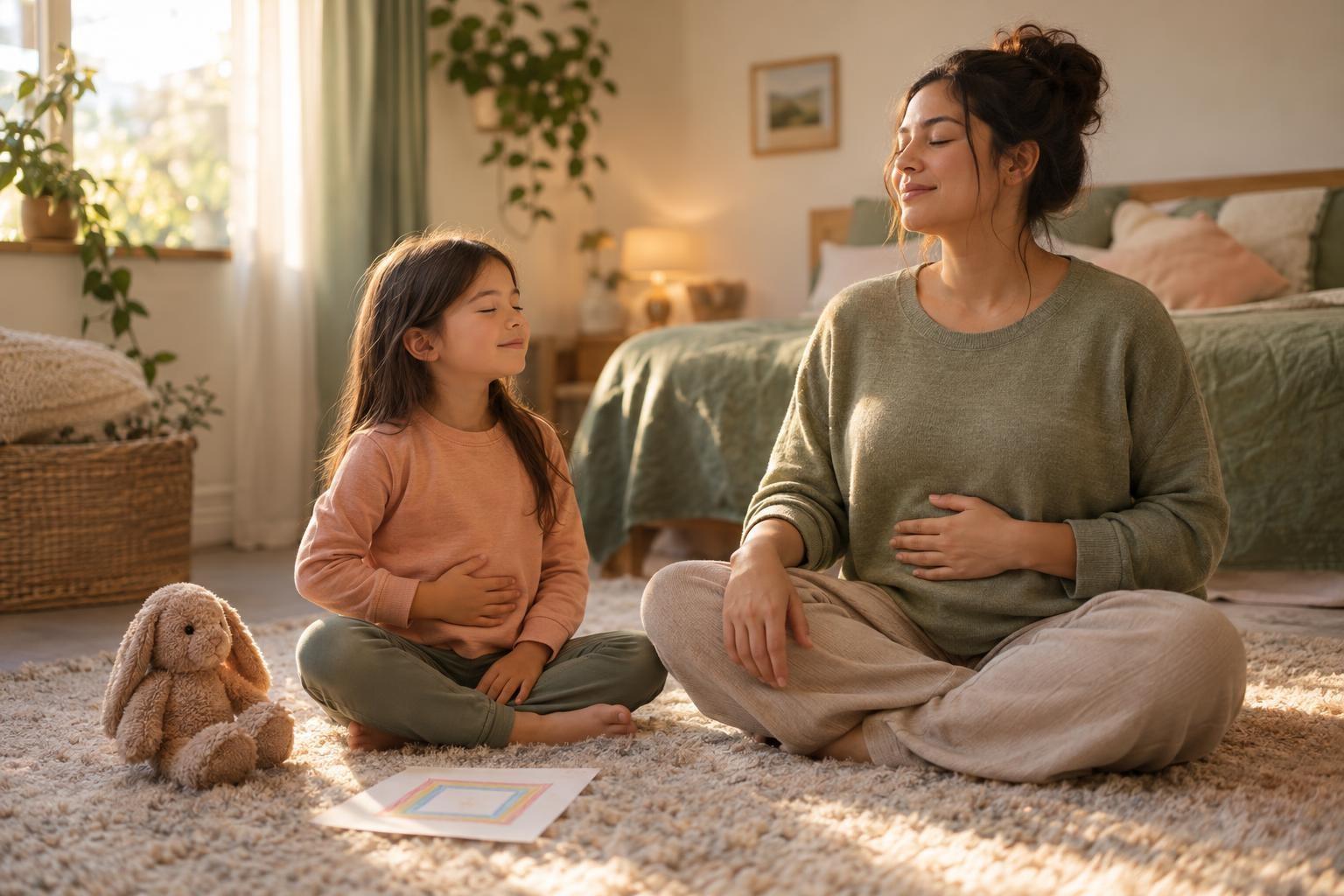
A great first calming exercise is box breathing: breathe in for four counts, hold for four, breathe out for four, and hold for four. Practice it when your child is calm, so it's ready to use when they're upset.
Teach one simple breathing exercise in a calm moment, practice it for a minute or two each day, and give it a family name like "Let's do our square." Pretend-play exercises suit preschoolers, while counted box breathing usually clicks around age 7 or 8. Breathing is one helpful tool, not a fix for every hard moment.
Why slow breathing helps
When kids feel scared, angry or overwhelmed, their breathing often gets fast and shallow. Slowing the breath down, especially the out-breath, can help the body settle. It also gives your child a pause before they react.
Breathing isn't a magic fix for every hard moment. Think of it as one tool in your child's toolbox, alongside naming feelings and asking for help.
How to teach box breathing
- Pick a calm moment. Bedtime, a car ride or a quiet afternoon all work. Never introduce it in the middle of a meltdown.
- Draw a square. Sketch a box on paper. Each side is one step. Kids can trace it with a finger as they breathe.
- Breathe in for four. Trace the first side while breathing in through the nose. Count slowly: 1, 2, 3, 4.
- Hold for four. Trace the second side while gently holding the breath.
- Breathe out for four. Trace the third side while breathing out through the mouth, slow and steady.
- Hold for four. Trace the last side, back to the start.
- Repeat three or four times. Then ask, "How does your body feel now?"
Holding for four can feel hard. Start with counts of two or three. You can also skip the holds and just breathe in and out slowly.
Four more exercises kids love
Smell the flower, blow out the candle
Hold up one finger as a "flower" and take a slow sniff in through the nose. Then turn it into a "candle" and blow out slowly through the mouth. This one is perfect for preschoolers.
Balloon belly
Have your child lie down and place a hand or small stuffed animal on their tummy. Breathe in so the belly rises like a balloon. Breathe out and watch it sink. Seeing the toy move helps kids breathe deeply instead of into their shoulders.
Five-finger breathing
Your child holds up one hand and traces the outline with a finger from the other hand. Breathe in going up each finger, and out going down. Five fingers make five slow breaths, and it's easy to do quietly at school.
Bubble breaths
Pretend to blow one giant, careful bubble. A fast breath pops it, so kids naturally slow their out-breath. You can practice with real bubbles outside first.
Which exercise for which age?
| Age | Try first | Why it works |
|---|---|---|
| 3–5 | Smell the flower, bubble breaths | Pretend play makes it fun and concrete |
| 5–8 | Balloon belly, five-finger breathing | Something to see or touch keeps attention |
| 8 and up | Box breathing | Counting and structure appeal to older kids |
Making it stick
The key is practice when things are easy. If your child only hears about breathing during a meltdown, it can feel like a punishment or just another instruction.
- Make it a daily ritual. Three box breaths at bedtime or before school takes under a minute.
- Do it together. Kids copy what they see. Let them catch you using it when you're stressed.
- Give it a name. A family phrase like "Let's do our square" is an easy cue later.
- Use visuals. A drawn square on the fridge or a breathing card in a backpack can remind them.
- Let them choose. Kids are more likely to use the exercise they picked as their favorite.
Some kids learn best with peers. A live mindfulness class can let them practice with other kids and a teacher who makes it feel normal, not awkward.
Using it in a hard moment
- Stay calm yourself first. Take a slow breath where your child can see.
- Keep words short: "Let's do our square." Long explanations can add stress.
- Breathe alongside them instead of telling them what to do.
- If they refuse, that's okay. Give space and try again once things settle.
- Afterward, talk briefly about what helped.
What to watch for
- Dizziness: Breathing too deeply or too fast can make kids lightheaded. Remind them to breathe gently, and stop if they feel dizzy.
- Breathing conditions: If your child has asthma or another breathing condition, ask their doctor which exercises suit them.
- When to get more support: If worries, anger or fears are frequent, intense or getting in the way of school, sleep or friendships, talk with your pediatrician or a mental health professional.
Frequently asked questions
What age can kids start breathing exercises?
Many preschoolers can do simple ones like "smell the flower, blow out the candle." Counted exercises like box breathing usually click better around age 7 or 8.
How long should we practice each day?
A minute or two is plenty. Short, regular practice works better than long sessions. Bedtime is an easy place to fit it in.
What if my child says it doesn't work?
That's normal at first. Try a different exercise, keep practicing in calm moments, and remind them it's a skill that gets easier. It won't fix every feeling, and that's okay.
Should I bring it up during a meltdown?
Only as a short cue if your child already knows the exercise. Teach it in calm moments first, keep words brief in the hard moment, and breathe alongside them rather than giving instructions.
Help your child understand big feelings
Live classes on emotions and mindfulness give kids a friendly place to practice calming skills with peers and a teacher who makes it feel normal.