By Sofia ·
What Art Classes Help Kids Explore Beyond Projects?
See how art and creativity classes help kids ages 8–15 explore ideas, techniques, storytelling, design, and new ways to make.
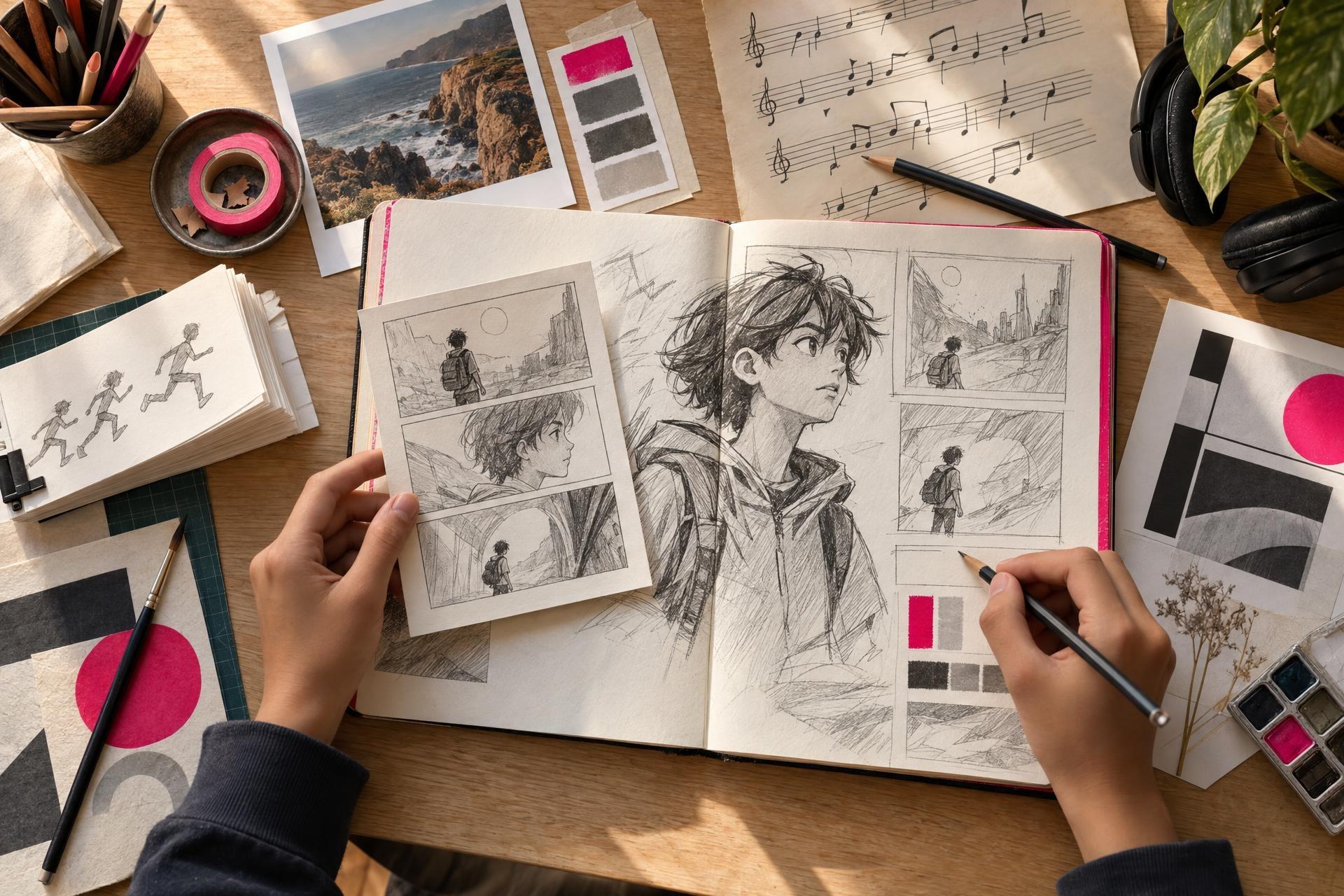
A finished painting, comic, song, or short video can be exciting to share. But for many children, the most meaningful part of a creative class happens well before the final reveal: choosing an idea, testing a material, learning a technique, changing course when something does not work, and deciding what they want to say.
Art and creativity classes can give children ages 8–15 a structured way to explore the things they already enjoy: comics, movies, music, stories, fashion, photography, design, and imaginary worlds. The point is not to identify one perfect talent or produce a polished project right away. Look for an approachable format, a teaching style, and a level of challenge that fits your child now—then leave room for their interests to change.
That is why art and creativity learning can be a useful category to explore even if your child does not identify as “artistic.” It is not limited to drawing lessons or craft projects, and it does not need to be tied to a future career. A child who loves comics, movies, decorating, music, stories, fashion, photography, or inventing imaginary worlds may simply be looking for a more structured way to try the things they already enjoy.
For parents, the goal is not to identify one perfect talent early. It is to find a creative format, teaching style, and level of challenge that gives a child a reason to keep making.
Creative learning is broader than art class as many adults remember it
“Art class” can bring to mind paint, paper, and a project everyone completes in the same way. Those experiences can be enjoyable, but creativity reaches much further. Children may explore visual art, illustration, design, creative writing, music, theater, photography, animation, filmmaking, or digital creation.
Each format gives a child a different way to work with ideas. A child who does not enjoy observational drawing may love designing a fantasy creature. Someone who is hesitant to paint may become absorbed in planning a short film. A child who says they are not good at art may be eager to write dialogue, arrange photographs, make beats, or create a comic-strip storyline.
The finished project matters because it gives effort a destination. But the learning often lives in the process:
- Imagining: turning an interest, observation, question, or story into a starting point.
- Practicing: trying a technique repeatedly, whether that is shading, composition, character movement, rhyme, or camera framing.
- Experimenting: comparing materials, tools, colors, layouts, sounds, or approaches.
- Revising: noticing what is unclear or unfinished and making a purposeful next choice.
- Explaining choices: putting words to why a character looks a certain way, why a scene is framed closely, or why a song changes at a particular point.
Not every class will emphasize all of these elements, and it does not have to. The useful question is whether the experience offers a kind of making that feels inviting to your child right now.
Start with what your child already does for fun
Parents do not need a formal aptitude test—or even a child who asks for “an art class”—to find a starting point. Everyday habits can offer helpful clues. Notice what your child returns to when they have free time, what they point out in movies or books, and what kind of projects they choose when no one assigns one.
| What you notice | Possible creative directions to explore |
|---|---|
| They fill notebooks with heroes, creatures, or comic panels. | Character drawing, visual storytelling, illustration, comic creation |
| They enjoy rearranging a room, decorating slides, or choosing colors. | Beginner design, color, layout, visual communication, creative project planning |
| They quote movies, make videos, or think about how scenes are made. | Storyboarding, filmmaking fundamentals, editing concepts, scriptwriting |
| They make up stories, dialogue, poems, or alternate endings. | Creative writing, world-building, storytelling, playwriting |
| They hum tunes, sing, create rhythms, or enjoy performing. | Songwriting, music-making, voice, theater, performance |
| They take photos of pets, food, friends, or interesting details outdoors. | Photography, composition, visual storytelling, photo-based projects |
| They like making things with their hands. | Sculpture, clay, mixed media, wearable art, tactile design projects |
These are possibilities, not labels. A child who loves drawing may be curious about animation one month and clay the next. A child who loves video may discover that their favorite part is writing a script rather than editing it. Exploration is useful precisely because a child does not have to know the answer in advance.
What different creative formats invite children to practice
Creative interests are often grouped together, but the experience of making a comic is different from writing a song or taking photographs. That difference can help a child find a format that feels natural.
Visual art and illustration
Drawing, painting, sketching, and illustration classes may introduce materials and techniques while inviting children to observe, interpret, and develop images from their own ideas. A child who likes visual detail may enjoy learning how lines, texture, light, color, or perspective affect a picture.
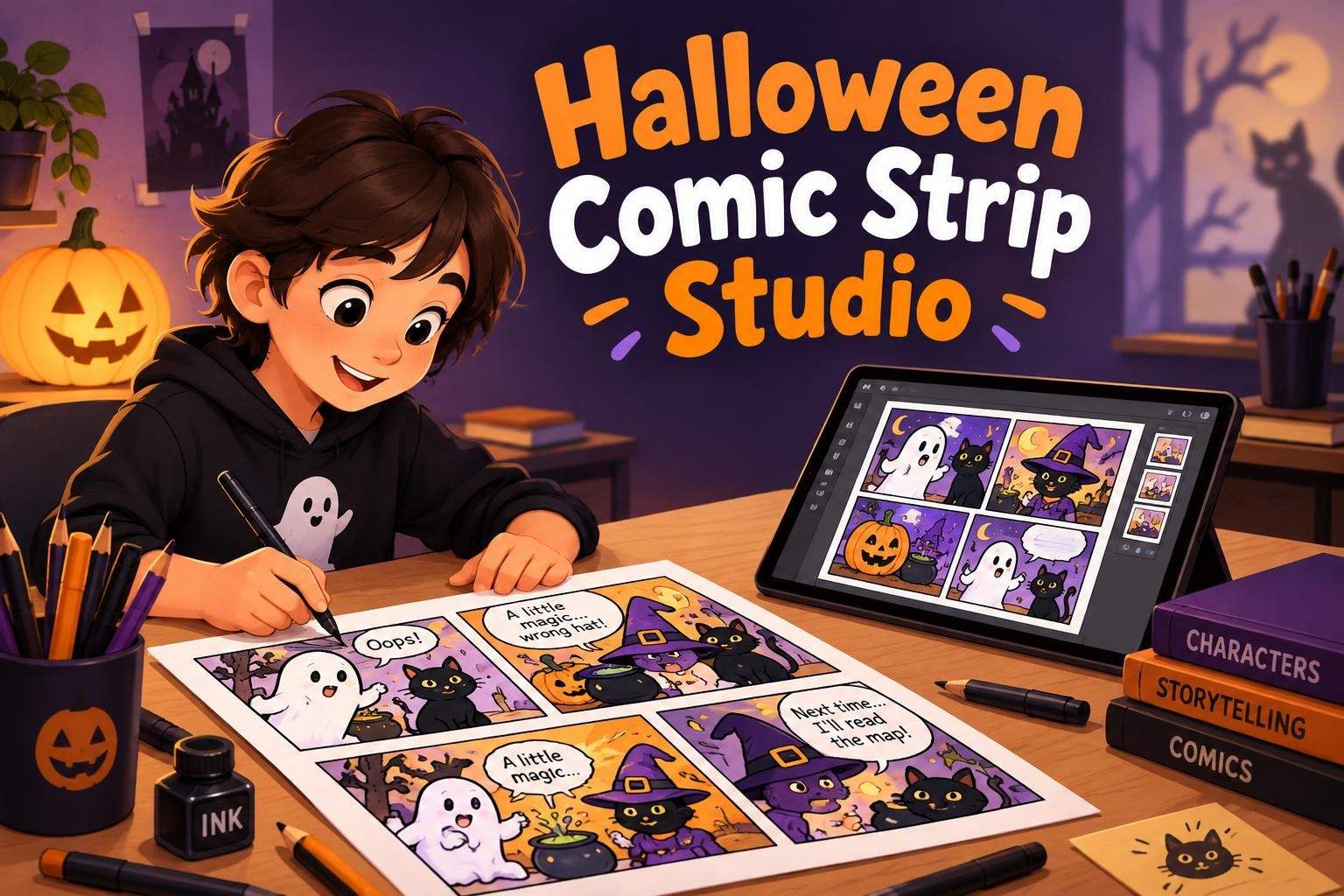
For example, an 8-year-old who fills notebooks with comic characters might enjoy a class on visual storytelling, character drawing, or creating a short comic strip. The appeal may not be “learning art” in the abstract; it may be finding a way to make a favorite character more expressive.
Design and digital creation
Design-oriented classes can focus on how images, colors, type, space, and organization work together. Digital art can introduce different tools and techniques, but it does not need to be treated as more advanced or more important than making by hand. It is simply another creative medium.
An 11-year-old who loves decorating presentations or thoughtfully arranging their room may be interested in beginner design, color, layout, or planning a creative project. A 15-year-old who already enjoys digital art may prefer a class that gives them a new technique to try or a structure for completing a personal piece.
Stories, writing, and performance
Some children think most clearly in words, voices, scenes, or characters. Creative writing, storytelling, theater, songwriting, and scriptwriting can give them ways to shape an idea over time. These formats can be especially appealing to children who may not want to spend an hour drawing but love inventing plot twists, dialogue, or personalities.
Photography, animation, and filmmaking
Photography and filmmaking invite children to make choices about what an audience sees and when they see it. Animation brings together drawing or design with sequence and movement. These formats can feel concrete for children who love movies, online video, or documenting what is around them.
A 13-year-old interested in movies might explore storyboarding, filmmaking fundamentals, editing concepts, or scriptwriting. They do not need to decide whether they are a “film person.” A short class can simply help them see which part of the process they enjoy most.
How to choose a class that fits your child now
The best creative class is not automatically the most advanced one, the one with the fanciest materials, or the one that produces the most polished final piece. A better fit is often a class that meets your child’s current interest and gives them a manageable next step.
Use these questions as a practical filter:
- What is the hook? Look for a specific subject your child genuinely likes: fantasy creatures, fashion sketches, comics, songs, clay animals, short films, or photo stories. A clear theme can make trying something new feel less intimidating.
- What kind of making do they prefer? Do they want to draw, write, build, perform, photograph, compose, or work digitally? If they do not know, choose a small project that lets them sample one option.
- How much structure feels helpful? Some children enjoy step-by-step guidance and clear demonstrations. Others prefer a prompt, a few techniques, and room to make their own choices. Neither preference is better; it is a fit question.
- Is the pace right? Beginners may benefit from time to pause and practice. A child with experience may be ready for a more focused technique or a longer personal project.
- What is the project experience like? Consider whether the class centers on a single guided piece, a series of skill exercises, open-ended exploration, or a project the child develops over several sessions.
- What supplies or technology are required? Before enrolling, make sure the materials are realistic for your household. A simple pencil-and-paper class may be the easiest entry point; a digital class may require access to a compatible device or software.
It can also help to ask your child one straightforward question: Would you rather learn how to make this exact thing, or have someone help you create your own version? Their answer can reveal whether they are looking for direct instruction or more open-ended exploration.
When a child says, “I’m not good at art”
Many children use “good at art” to mean “my work does not look like the example” or “I cannot draw realistically.” That is a narrow definition of creative ability, and it can make starting feel risky.
You do not need to argue them out of the feeling. Instead, make the first step smaller and more specific. Rather than suggesting a broad art course, try a low-pressure, project-based theme: designing a fantasy creature, making fashion sketches, shaping a clay creation, writing a song, or creating a short comic.
Specific themes give children something to work toward without requiring them to arrive with a creative identity already formed. They can try a technique, make choices, and decide afterward whether they want to do more.
A first creative class does not need to prove talent. It can simply help a child discover whether they enjoy the process of making.
Let interests change without treating them as quitting
Creative learning is rarely linear. A child may begin with drawing, become interested in animation, then realize that writing characters is their favorite part. Another may start with singing and later want to write lyrics or learn about performance. Changing direction is not necessarily a sign that an activity was a poor choice; it may be how a child finds a more precise interest.
That is why short, interest-led experiences can be valuable. They give families a way to explore without turning every new curiosity into a long-term commitment. Keep an eye on what your child asks about afterward, what they continue working on independently, and what they would like to try differently next time.
What parents can do next
- Choose one creative interest your child already shows, whether that is comics, music, stories, photography, design, video, or making things by hand.
- Match it to one approachable experience with a clear theme, rather than asking your child to choose a broad category such as “art.”
- Check the medium, pace, project style, guidance, and supply requirements before enrolling.
- Keep the aim modest: a chance to make something, learn a little about the process, and notice what holds their attention.
- Let what they want to try next guide the next step—even if it is different from where they started.
Find an art or creativity class around their current interest
Families looking for live learning experiences can explore Undoschool’s Art & Creativity classes across visual art, design, storytelling, music, performance, and digital creation.